

Table of Contents
Introduction
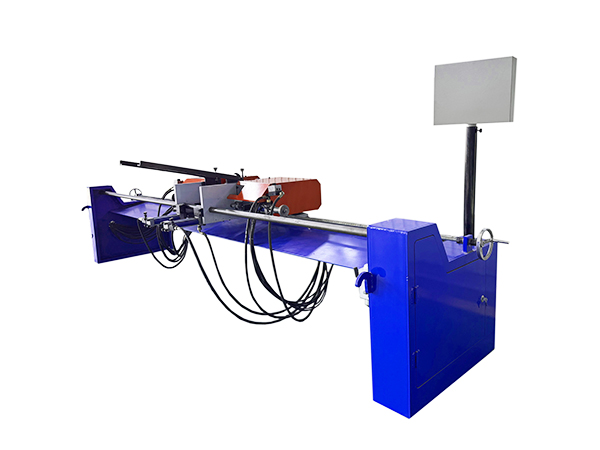
A production line does not become efficient simply because every individual machine performs well. The real result depends on how those machines interact with materials, workpieces, operators, fixtures, tooling, quality requirements, and the processes before and after them.
This is why machine tools and manufacture should be considered together.
The connection is especially important in conveyor roller production. Manufacturing a roller can involve tube cutting, tube-end preparation, shaft machining, milling or grooving, bearing installation, assembly, welding, and inspection. Each operation changes the condition of the component that enters the next stage.
If these operations are planned independently, manufacturers may encounter unnecessary handling, inconsistent positioning, mismatched production capacity, repeated adjustments, and quality variation. A better approach is to treat machine tools as elements of one manufacturing system.
This article explains how to connect machine selection with real production requirements and focuses on several practical principles:
- Start with the manufacturing process rather than individual machine models.
- Define workpiece inputs and outputs for every production stage.
- Use fixtures and datums to control repeatability between operations.
- Match automation to actual sources of production variation.
- Balance machine capacity across the complete line.
- Consider tooling and maintenance before finalizing equipment.
- Build quality control into the process rather than relying only on final inspection.
- Evaluate machine tools according to long-term manufacturing stability.
For production managers, engineers, and companies planning roller manufacturing equipment, these principles can help turn separate machines into a more predictable production process.
What Is the Relationship Between Machine Tools and Manufacture?
A machine tool is fundamentally designed to control the relationship between a workpiece and a tool or processing mechanism. In industrial production, however, that relationship is only one part of a larger manufacturing sequence.
Manufacture answers a broader set of questions:
What component are you making?
Which features need to be produced?
In what sequence?
What variation is acceptable?
How will the component move to the next operation?
How often will specifications change?
Machine tools provide the physical capability to perform an operation. Manufacturing engineering determines how that capability should be applied.
A machine is one link in the process
Consider a roller shaft.
A shaft may need:
- Length preparation
- End machining
- Flats
- Grooves
- Threads
- Bearing-related features
- Mounting features
Producing one of these features accurately is useful, but the finished shaft must also remain compatible with the roller tube, bearing arrangement, bracket, and subsequent assembly process.
This means machine tools and manufacture cannot be separated when production consistency is the objective.
The output of one process becomes the input of another
A simple rule can help when planning production:
Every machine should receive a predictable input and create a predictable output.
When the output from one operation varies too much, the next operation must compensate for it.
That compensation may appear as:
- Manual measurement
- Repositioning
- Extra adjustment
- Additional inspection
- Reworking
- Longer setup
- Operator-dependent decisions
A well-planned production process tries to remove these compensations before they become normal operating habits.
Start With the Product Before Selecting Machine Tools
One of the most practical ways to connect machine tools and manufacture is to begin with the finished product and work backward.
For conveyor rollers, start by identifying the roller configurations you actually need to produce.
Important variables can include:
- Roller diameter
- Roller length
- Tube wall thickness
- Tube material
- Shaft diameter
- Shaft length
- Shaft-end configuration
- Bearing arrangement
- Seal arrangement
- Groove positions
- Flat-milling requirements
- Welding structure
- Surface requirements
Once those parameters are clear, they can be translated into manufacturing operations.
Build a process route
A simplified roller production route might look like this:
Raw tube
→ Tube cutting
→ End processing
→ Shaft preparation
→ Shaft milling or grooving
→ Bearing-related assembly
→ Roller assembly
→ Welding
→ Inspection
Not every roller uses exactly the same process, but mapping the sequence exposes relationships between machines.
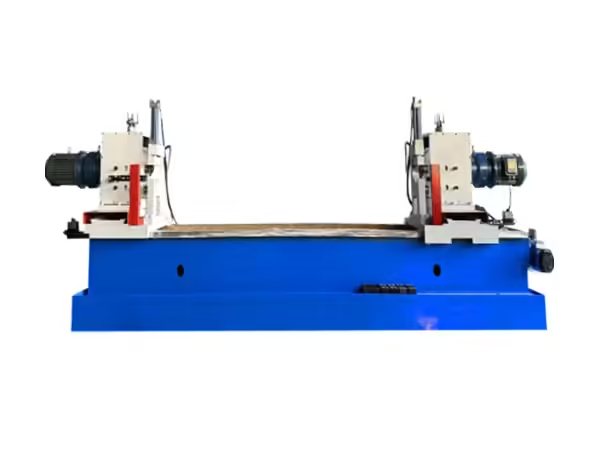
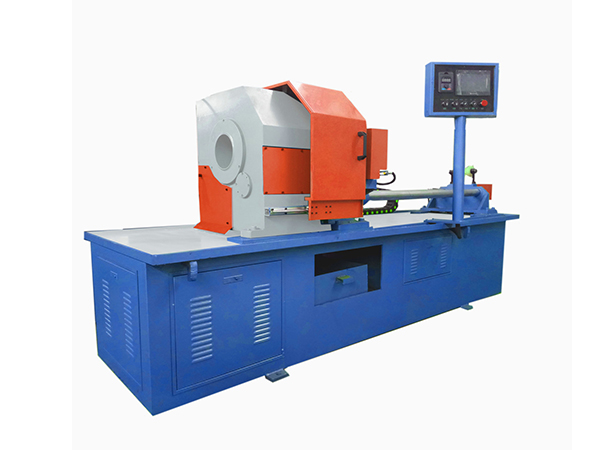
A dedicated conveyor roller processing machine configuration can therefore be evaluated according to where each piece of equipment fits in this sequence rather than simply according to its standalone specifications.
Define critical features
Not every dimension requires the same level of control.
Some dimensions directly influence:
- Assembly
- Rotation
- Bearing position
- Installation
- Alignment
- Interchangeability
These should receive greater attention during machine selection.
For example, if a shaft-end feature determines how the roller mounts into a conveyor bracket, maintaining its position consistently may be more important than achieving an unnecessarily tight tolerance on a non-functional surface.
Good manufacturing planning distinguishes critical dimensions from dimensions that simply need to remain within a reasonable range.
Machine Structure Must Support the Manufacturing Operation
Machine construction is sometimes evaluated using general descriptions such as heavy-duty, rigid, or reinforced.
Those descriptions are not enough.
Machine structure should be evaluated according to the forces and movements involved in the actual process.
Cutting and milling create different demands
A tube cutting machine experiences forces differently from a shaft milling machine.
A bearing assembly machine operates differently from a welding machine.
Therefore, machine tools and manufacture should be matched through application-specific structural design.
Important areas include:
- Frame rigidity
- Guide arrangement
- Spindle support
- Fixture mounting
- Tool orientation
- Workpiece support
- Moving component stability
The objective is not simply to build the heaviest possible structure. It is to maintain predictable relationships between the tool, machine, fixture, and workpiece.
Long components need appropriate support
Roller tubes and shafts often have relatively long geometries.
If these components are inadequately supported, bending or vibration during processing can affect feature location and machining consistency.
This becomes particularly important when:
- machining shaft ends;
- cutting longer tubes;
- milling flats;
- producing grooves;
- locating bearing-related features.
The manufacturing process should therefore consider both the machining position and the way the remaining workpiece is supported.
Fixtures Connect Machine Accuracy With Part Accuracy
One of the strongest connections between machine tools and manufacture can be found in fixture design.
A machine may have highly accurate movement, yet final parts can still vary when workpieces are positioned inconsistently.
Fixtures determine the relationship between machine coordinates and the physical component.
Establish a repeatable datum
Each processing operation needs a clear reference.
Depending on the component, that reference may be:
- A tube end
- A shaft end
- An outside diameter
- A centerline
- An existing machined surface
- A previously produced feature
A good fixture repeatedly places the same reference in the required position.
Without consistent datums, small errors can accumulate through several processes.
Datum transfer matters between machines
Imagine that Machine A references the left end of a shaft while Machine B references the opposite end.
This is not automatically incorrect, but the engineering team should understand how dimensional variation transfers between the two operations.
Poor datum planning can create tolerance accumulation.
A stronger process establishes a logical relationship between successive datums so that later operations do not unintentionally amplify earlier variation.
Clamping should control without distorting
More clamping force does not always produce better accuracy.
Thin tube walls can deform. Long shafts can bend. Components can also shift if force is applied in the wrong direction.
Fixture design should balance:
- Locating
- Supporting
- Clamping
- Machining access
- Loading convenience
- Repeatability
This is one area where manufacturing experience becomes particularly valuable.
Automation Should Be Designed Around Manufacturing Variation
Modern machine tools often incorporate PLC control, automatic feeding, servo positioning, sensors, automatic clamping, stored programs, and coordinated machining cycles.
These technologies are useful when they solve a defined manufacturing problem.
Automation itself should not be the goal.
Ask what the automation controls
For each automated function, ask:
What variation does this remove?
For example:
Automatic feeding may reduce repeated manual length measurement.
Automatic positioning may reduce operator-dependent location errors.
Stored programs may reduce incorrect settings during product changes.
Automatic clamping may improve cycle consistency.
Sensors may help confirm workpiece position before machining begins.
When evaluated this way, automation becomes part of manufacturing control rather than a list of machine features.
Automation should simplify routine decisions
A well-designed automatic process reduces unnecessary operator judgment while still giving operators enough information to understand machine status.
Routine interfaces should clearly communicate:
- Active production program
- Machine status
- Relevant parameters
- Alarm conditions
- Maintenance information
- Cycle interruptions
Overly complicated interfaces can undermine the intended benefits of automation.
Machine tools and manufacture work best together when automation makes a stable process easier to repeat.
Machine Tools and Manufacture Depend on Production Line Balance
One fast machine does not automatically create a fast production line.
This is an important distinction when selecting equipment for multiple roller-processing stages.
Consider the following simplified example:
| Production Stage | Nominal Cycle Time | Main Concern |
|---|---|---|
| Tube cutting | 22 sec | Feeding and length consistency |
| Shaft processing | 31 sec | Feature positioning |
| Groove/milling process | 28 sec | Tooling and datum control |
| Bearing-related assembly | 25 sec | Position and assembly consistency |
| Welding | 34 sec | Fixture stability and welding cycle |
| Inspection | 27 sec | Measurement and handling |
These figures are illustrative rather than performance claims, but they demonstrate an important manufacturing principle.
If welding requires 34 seconds while cutting takes 22 seconds, increasing cutting capacity alone does not necessarily increase finished roller output.
Find the actual constraint
Production output is influenced by the slowest effective operation or by the stage that causes the greatest interruption.
The bottleneck might result from:
- Machine cycle time
- Manual loading
- Product changeover
- Tool replacement
- Inspection
- Material movement
- Unstable upstream quality
- Frequent adjustments
This means capacity analysis should include more than the machining cycle listed on a technical specification.
Examine the complete cycle
A realistic production cycle can include:
Loading
→ Positioning
→ Clamping
→ Processing
→ Unclamping
→ Unloading
→ Inspection
→ Transfer
Ignoring these activities can lead to unrealistic expectations about line output.
When machine tools and manufacture are planned together, these non-machining activities become part of equipment design.
Tooling Should Be Treated as Part of the Production System
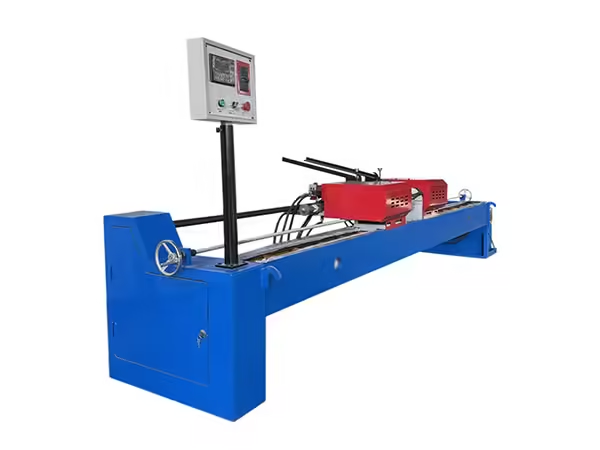
Tooling is where machine motion becomes an actual manufacturing operation.
Cutting blades, milling cutters, grooving tools, welding fixtures, positioning components, and other tooling need to suit both the machine and the workpiece.
The broader manufacturing and processing machinery used in roller production covers different operations, meaning tooling requirements can change substantially from one processing stage to another.
Select tools according to the operation
Tool selection can depend on:
- Component material
- Geometry
- Depth of cut
- Wall thickness
- Feature dimensions
- Production frequency
- Required surface condition
- Tool access
A tool that performs successfully during one demonstration cycle may behave differently after repeated operation.
For continuous production, engineers should also consider:
- Tool wear
- Replacement frequency
- Adjustment
- Chip or debris management
- Tool access
- Setup repeatability
Tool replacement should not destroy the setup
Replacing a normal wear tool should ideally require as little disturbance as practical to the rest of the machine setup.
If every tool replacement requires extensive re-alignment, production consistency may depend heavily on individual technician experience.
Good machine design anticipates normal maintenance activities.
Quality Control Should Begin During Manufacturing
Final inspection is important, but relying entirely on the last inspection stage is inefficient.
Machine tools and manufacture should be designed so important variations are controlled where they originate.
Prevent variation upstream
Consider tube length.
If tube length influences later assembly, controlling positioning during cutting is better than repeatedly sorting incorrect components at the end of production.
Likewise, if groove position affects installation, the shaft processing fixture should establish that location consistently.
This creates a simple quality principle:
Control the variable as close as possible to the process that creates it.
Build quality checkpoints around critical features
A practical quality plan can distinguish between three categories.
Process-critical features
These affect the next manufacturing operation.
Examples might include component length or locating surfaces.
Function-critical features
These affect the final roller’s operation or installation.
Examples can include alignment, bearing fit, and shaft-end geometry.
General features
These still need control but may not require the same inspection frequency.
This classification helps avoid both under-inspection and unnecessary measurement.
Repeatability Matters More Than One Perfect Sample
A single accurate component demonstrates what a machine can achieve.
Production demands something different: the ability to achieve acceptable results repeatedly.
This makes repeatability an important connection between machine tools and manufacture.
Sources of production variation
Common sources include:
- Workpiece material differences
- Loading position
- Clamping
- Tool wear
- Mechanical movement
- Sensor position
- Temperature
- Operator interaction
- Fixture wear
- Program selection
A professional machine design tries to control the most important sources rather than assuming they will remain constant.
Test multiple production cycles
Machine evaluation should therefore include repeated processing.
A useful test may examine:
- Several consecutive components
- More than one common workpiece size
- Normal loading methods
- Actual fixtures
- Normal tooling
- Relevant dimensional results
The aim is not to produce a special demonstration component under ideal conditions.
The aim is to understand how the process behaves when repeated.
Flexibility Matters When Manufacturing Multiple Roller Types
Some production lines manufacture a narrow range of nearly identical components.
Others need to produce several tube diameters, lengths, shaft sizes, or mounting configurations.
The required machine design will differ.
A wide specification range is not enough
Machine flexibility should not be measured only by the difference between minimum and maximum dimensions.
The more useful question is:
How easily can the machine move between the products you actually manufacture?
Changeover may involve:
- Fixtures
- Tooling
- Program selection
- Mechanical stops
- Position parameters
- Feed settings
- Supports
- Inspection methods
A machine with a very wide nominal range may still be inconvenient if every product change requires extensive manual adjustment.
Separate frequent and occasional products
When planning equipment, divide specifications into:
- High-frequency products
- Regular products
- Occasional products
- Possible future products
Optimize routine production around the first two groups.
A machine should not become unnecessarily complicated merely to accommodate an extreme specification that is rarely manufactured.
This is another example of why machine tools and manufacture should be planned around actual production behavior.
Maintainability Is Part of Manufacturing Performance
Equipment performance changes over time if tooling, bearings, guides, fixtures, sensors, lubrication points, and wear surfaces are not properly maintained.
Maintenance should therefore influence machine design from the beginning.
Identify normal wear points
Machine manufacturers should be able to explain which components require routine attention.
Typical areas can include:
- Cutting tools
- Milling tools
- Guides
- Bearings
- Belts
- Clamping surfaces
- Sensors
- Seals
- Lubrication points
- Fixture contact surfaces
The easier these components are to inspect and service, the easier it becomes to maintain consistent machine behavior.
Accessibility matters
Maintenance personnel should not need to dismantle unrelated parts of the machine to reach frequently serviced components.
Good access can improve:
- Inspection efficiency
- Tool replacement
- Cleaning
- Adjustment
- Fault diagnosis
This does not directly change machining accuracy on the first day of operation, but it can strongly influence how well the machine performs later.
A Practical Framework for Evaluating Machine Tools and Manufacture
A useful equipment evaluation should connect machine capability with manufacturing requirements.
The following framework can be adapted for roller production projects.
| Evaluation Area | What to Check | Manufacturing Value |
|---|---|---|
| Process fit | Does the machine match the actual operation? | Reduces unnecessary process compromises |
| Working range | Does it cover normal product specifications? | Supports product flexibility |
| Fixtures | Are workpieces located consistently? | Improves repeatability |
| Machine structure | Is the operation adequately supported? | Improves process stability |
| Tooling | Does tooling match material and geometry? | Supports machining quality |
| Automation | What variation does automation remove? | Reduces operator dependency |
| Cycle balance | Does capacity match adjacent processes? | Prevents avoidable bottlenecks |
| Changeover | How are product specifications changed? | Supports mixed production |
| Maintenance | Are normal service points accessible? | Supports long-term stability |
| Quality control | How is repeatability verified? | Provides evidence of process capability |
The value of this framework is consistency.
Instead of comparing machines using different marketing claims, you can evaluate each proposal against the same manufacturing questions.
Common Mistakes When Connecting Machine Tools With Production
Several equipment-selection mistakes occur because machines and manufacturing processes are evaluated separately.
Choosing the machine before defining the process
If the workpiece, feature, tolerance, and production sequence are unclear, the machine specification is likely to contain assumptions.
Define the manufacturing problem first.
Focusing only on maximum capability
Maximum diameter, length, or processing speed describes a limit.
Continuous production should normally be planned around a stable operating range rather than treating every maximum specification as a normal condition.
Ignoring the next operation
A machine does not need only to complete its own job.
Its output needs to enter the next stage predictably.
Over-automating an unstable process
Automation can repeat a poor process very efficiently.
Before adding automation, identify the source of variation and make sure the mechanical process itself is sound.
Underestimating fixtures
Control systems receive considerable attention because their specifications are easy to compare.
Fixtures can have an equally important effect on final part consistency.
Optimizing each machine independently
The fastest possible version of every machine does not necessarily create the best production line.
Output, transfer, quality control, and maintenance need to work together.
What a Well-Planned Roller Production Line Looks Like
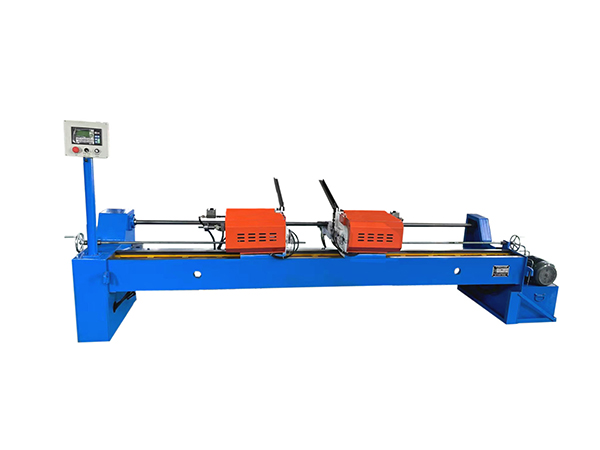
A well-planned production line does not necessarily have the greatest number of automated devices.
Instead, its operations have clear relationships.
Materials enter each station in a predictable condition.
Fixtures establish repeatable references.
Machines create clearly defined features.
Operators understand the process.
Inspection focuses on meaningful characteristics.
Products move to the next operation without unnecessary correction.
The line is also balanced well enough that one process does not continually overwhelm another.
This is the practical outcome of integrating machine tools and manufacture.
Instead of purchasing independent equipment and connecting it afterward, the production system is planned around material flow and part requirements from the beginning.
Conclusion
Machine tools and manufacture should be viewed as two parts of the same production strategy.
Machine tools provide cutting, milling, turning, grooving, positioning, assembly, welding, and other capabilities. Manufacturing engineering determines how those capabilities should work together to create repeatable components.
For conveyor roller production, this means starting with the roller specification and mapping every required operation.
Machine structure should suit the process. Fixtures should establish repeatable datums. Tooling should match the workpiece and be practical to maintain. Automation should remove real sources of variation. Machine capacities should be balanced across the line, and quality controls should focus on features that affect later operations or final roller performance.
The result should not simply be a collection of capable machines.
It should be a manufacturing system in which each machine receives a predictable input, performs a controlled operation, and delivers a predictable output to the next process.
That is where machine tools and manufacture create the greatest practical value: not in isolated specifications, but in making the complete production process easier to control, repeat, maintain, and improve.
FAQ
What is the relationship between machine tools and manufacture?
Machine tools perform operations such as cutting, milling, turning, grooving, and positioning, while manufacture organizes these operations into a complete production process. Effective production depends on matching machine capability with workpiece requirements, process sequence, quality control, and output needs.
Why should machine tools be selected around the manufacturing process?
A machine can perform well independently but still create problems if its output does not suit the next operation. Selecting equipment around the entire process helps control workpiece flow, capacity, datums, repeatability, automation, and quality across connected manufacturing stages.
How does automation affect machine tools and manufacture?
Automation can reduce repetitive measuring, positioning, clamping, loading, and parameter-setting tasks. Its greatest value comes from controlling known sources of production variation. Automation should simplify a stable process rather than add unnecessary complexity to an unsuitable manufacturing method.
Why are fixtures important in machine tool manufacturing?
Fixtures establish how each component is positioned, supported, and clamped. If workpiece location changes between cycles, accurate machine movement alone cannot guarantee consistent parts. Well-designed fixtures connect machine accuracy with actual manufacturing repeatability.
How should machine tools for roller production be evaluated?
Evaluate process compatibility, workpiece range, machine structure, fixtures, tooling, repeatability, automation, complete cycle time, changeover, maintenance access, and quality verification. Each machine should also be assessed according to how effectively it integrates with adjacent production operations.
 English
  French
  Spanish