
Table of Contents
Introduction
Industrial equipment relies on reliable mechanical components to maintain stable operation, improve production efficiency, and reduce unexpected downtime. Among these components, roller sets play an important role in supporting movement, guiding materials, and improving the performance of various mechanical systems.
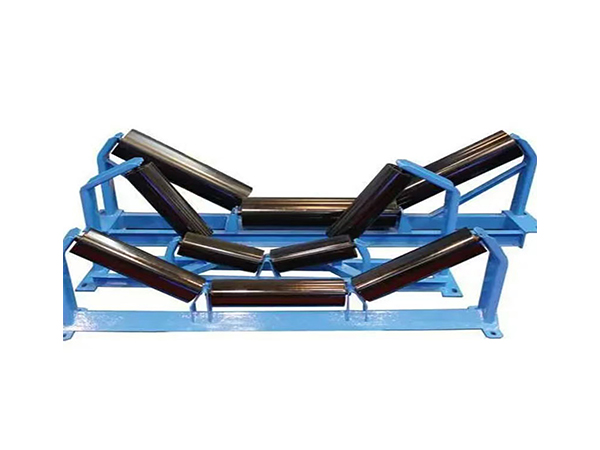
A roller set is typically composed of multiple rollers and related supporting structures designed to provide controlled movement and load distribution. Depending on the application, roller sets can be used in conveyor systems, material handling equipment, manufacturing machinery, and other industrial processes where smooth and consistent movement is required.
Selecting suitable roller sets requires more than simply considering size or load capacity. Factors such as operating conditions, material characteristics, roller design, maintenance requirements, and application environment all influence performance.
With the continued development of automated manufacturing and advanced industrial systems, high-quality roller sets have become an important factor in improving equipment reliability and operational efficiency. This article explains the structure, applications, benefits, selection factors, and future trends of roller sets to help businesses better understand their role in modern industrial operations.
Understanding the Structure and Function of Roller Sets
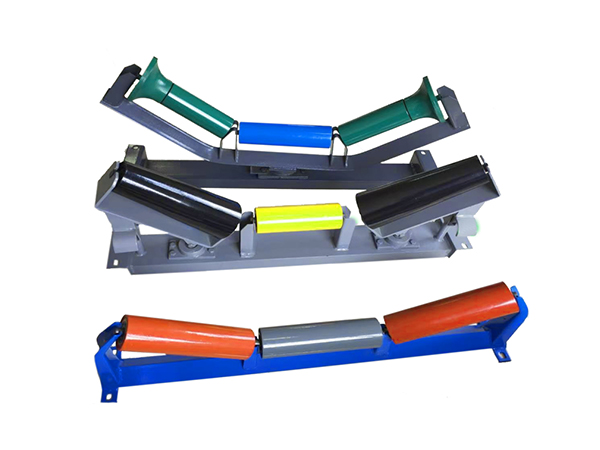
Roller sets are mechanical assemblies consisting of multiple rollers arranged to support, guide, or transport materials during operation. They are designed to distribute loads evenly while allowing smooth movement between components.
The main purpose of roller sets is to reduce friction, improve positioning accuracy, and provide stable support for moving objects or materials.
A typical roller set may include:
| Component | Function |
|---|---|
| Rollers | Provide movement support and load transfer |
| Shafts | Connect and stabilize rollers |
| Bearings | Enable smooth rotation |
| Frame or brackets | Maintain roller positioning |
| Sealing components | Protect internal parts |
The design of roller sets varies depending on the working environment and application requirements. Heavy-duty industrial systems may require stronger structures, while precision applications may focus more on smooth movement and accurate positioning.
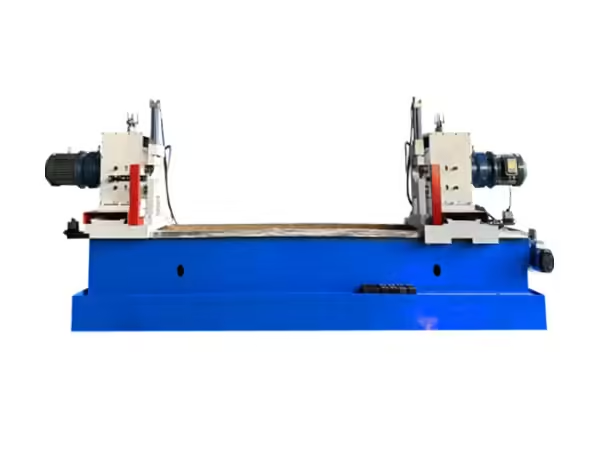
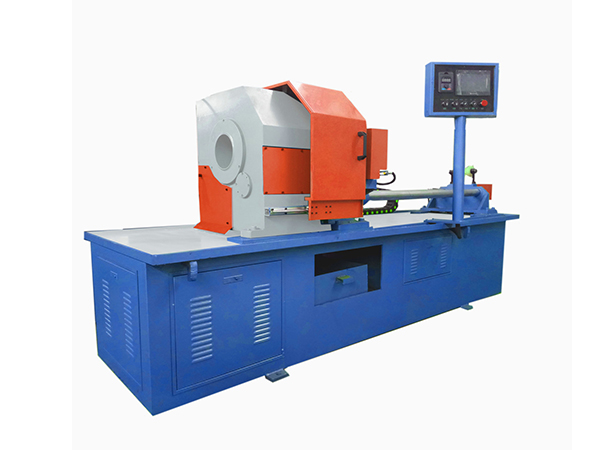
Professional suppliers offering manufacturing and processing machinery help industries develop efficient production systems by providing equipment solutions designed for different operational needs.
A properly designed roller set improves equipment stability and contributes to longer service life for the entire mechanical system.
Different Types of Roller Sets Used in Industrial Systems
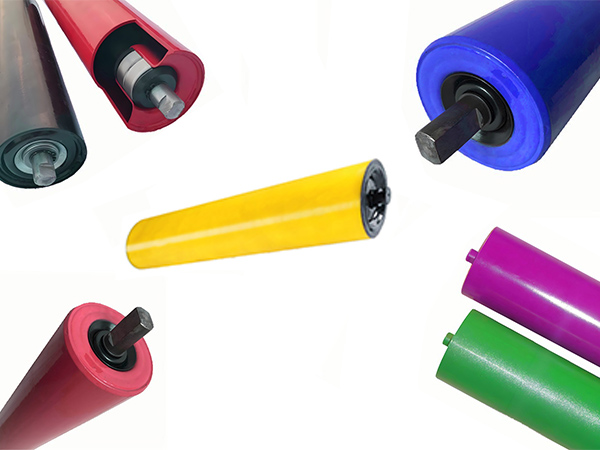
Different applications require different roller set configurations. Understanding these variations helps manufacturers select suitable solutions for their operational requirements.
Conveyor Roller Sets
Conveyor roller sets are widely used in material handling systems to support and move products or bulk materials.
Their main functions include:
- Supporting conveyor belts or transported products
- Reducing resistance during movement
- Maintaining stable material flow
- Improving transportation efficiency
These roller sets are commonly found in production lines, warehouses, and industrial transportation systems.
Guide Roller Sets
Guide roller sets are designed to control movement direction and maintain accurate positioning.
They are often used where precise alignment is important, including:
- Manufacturing equipment
- Processing machinery
- Automated production systems
Guide rollers help reduce unnecessary movement and improve system stability.
Heavy-Duty Roller Sets
Heavy-duty roller sets are designed for applications involving large loads and continuous operation.
They typically feature:
- Stronger materials
- Enhanced bearing systems
- Improved structural durability
These designs are suitable for demanding industrial environments.
Why Roller Sets Are Important for Equipment Performance
The quality of roller sets directly affects the efficiency and reliability of mechanical systems.
Improving Movement Efficiency
One of the main advantages of roller sets is reducing friction between moving components.
Lower resistance helps:
- Improve operational efficiency
- Reduce energy consumption
- Support smoother movement
Supporting Higher Load Capacity
Well-designed roller sets distribute weight more effectively, reducing stress on individual components.
This improves:
- Equipment stability
- Mechanical reliability
- Long-term performance
Reducing Equipment Wear
Smooth roller operation reduces unnecessary friction and vibration.
This helps protect:
- Moving components
- Supporting structures
- Connected machinery
As a result, equipment can operate longer with fewer maintenance interruptions.
Key Factors to Consider When Selecting Roller Sets
Choosing the right roller sets requires careful evaluation of technical requirements and working conditions.
Load Requirements
Load capacity is one of the most important factors when selecting roller sets.
Considerations include:
- Maximum operating weight
- Load distribution
- Operating frequency
- Impact conditions
Using roller sets that cannot handle the required load may lead to faster wear and reduced performance.
Material and Surface Design
The roller material affects durability and operating performance.
Common considerations include:
- Wear resistance
- Corrosion resistance
- Surface hardness
- Environmental compatibility
Different applications may require different roller materials to achieve reliable performance.
Bearing Performance
Bearings directly influence roller rotation efficiency.
High-quality bearing systems provide:
- Smooth operation
- Reduced friction
- Longer service intervals
- Better load handling capability
Applications of Roller Sets Across Different Industries
Roller sets are used in many industrial fields because they provide reliable movement and support solutions.
Manufacturing Production Lines
In manufacturing environments, roller sets support the movement of components and products between different processing stages.
They help improve:
- Production organization
- Material flow efficiency
- Automation capability
Logistics and Material Handling
Industrial logistics systems rely on roller sets for moving products efficiently through transportation processes.
They reduce manual handling requirements and improve workflow speed.
Processing Equipment
Many processing machines use roller sets to maintain stable material movement and accurate positioning.
Automated Industrial Systems
As factories become more automated, roller sets continue to play an important role in supporting mechanical movement and equipment coordination.
How Proper Maintenance Extends Roller Set Lifespan
Regular maintenance is essential for maintaining roller set performance and preventing unexpected failures.
Routine Inspection
Operators should regularly check:
- Roller rotation
- Bearing conditions
- Surface wear
- Structural connections
Early identification of problems can prevent larger equipment issues.
Cleaning and Protection
Dust, debris, and contaminants can affect roller performance.
Regular cleaning helps maintain:
- Smooth movement
- Reduced friction
- Better operational reliability
Timely Replacement
Damaged or worn rollers should be replaced promptly.
This prevents additional stress on other components and helps maintain overall system efficiency.
The Impact of Technology Development on Roller Set Design
Modern manufacturing trends are influencing the development of more advanced roller set solutions.
Improved Manufacturing Precision
Advanced machining technologies allow manufacturers to produce rollers with better dimensional accuracy and surface quality.
Smart Monitoring Integration
Some modern industrial systems use sensors to monitor roller performance.
These technologies can help detect:
- Abnormal vibration
- Wear conditions
- Maintenance requirements
Customized Industrial Solutions
Different industries increasingly require customized roller sets designed for specific operating environments.
The development of automation technology has accelerated the demand for more precise and reliable mechanical components in modern production systems.
Common Mistakes When Choosing Roller Sets
Selecting unsuitable roller sets may create operational challenges and reduce equipment efficiency.
Ignoring Application Conditions
Different environments require different roller designs. Factors such as temperature, moisture, dust, and load should be considered.
Focusing Only on Dimensions
Size is important, but performance also depends on:
- Material quality
- Bearing design
- Manufacturing precision
- Maintenance requirements
Neglecting Future Requirements
A suitable roller set should support current operations while providing flexibility for future production changes.
A complete evaluation process helps businesses choose roller sets that provide stable and long-term performance.
Future Trends in Roller Set Technology
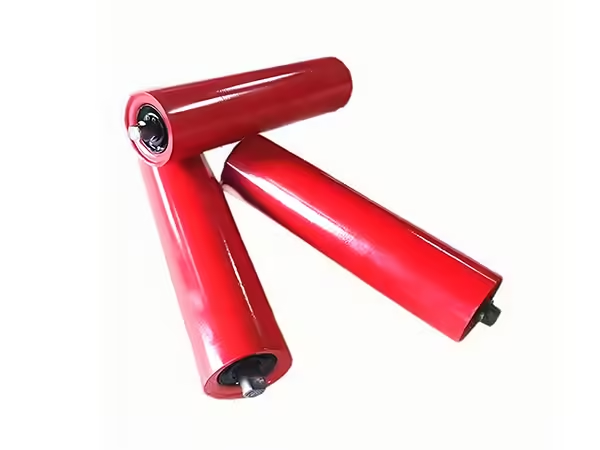
The development of roller sets is closely connected with automation, precision manufacturing, and intelligent equipment.
More Efficient Designs
Manufacturers continue improving roller structures to reduce resistance and increase durability.
Intelligent Equipment Integration
Future industrial systems will increasingly combine roller sets with monitoring technologies for improved maintenance management.
Greater Customization
As industries become more specialized, customized roller solutions will become increasingly important.
These trends will continue improving the reliability and efficiency of industrial movement systems.
Conclusion
Roller sets are essential components in many industrial systems, providing reliable support, controlled movement, and improved operational stability. Although they may appear simple, their design quality directly influences equipment performance, maintenance requirements, and production efficiency.
Choosing the right roller sets requires careful consideration of load capacity, materials, bearing performance, application conditions, and long-term operational goals. High-quality roller solutions help industries reduce downtime, improve workflow efficiency, and maintain stable production processes.
As manufacturing continues moving toward automation and higher precision, advanced roller sets will remain an important part of modern industrial equipment development.
FAQ
What are roller sets used for?
Roller sets are used to support, guide, and move materials or components in industrial equipment, conveyor systems, and automated production applications.
How do roller sets improve equipment performance?
Roller sets reduce friction, distribute loads, improve movement stability, and help extend the service life of mechanical systems.
What factors should be considered when selecting roller sets?
Important factors include load capacity, material type, bearing performance, operating environment, and maintenance requirements.
Where are roller sets commonly used?
Roller sets are widely used in manufacturing, logistics, material handling, processing equipment, and automated industrial systems.
How can roller set lifespan be extended?
Regular inspection, cleaning, proper lubrication, and timely replacement of worn components help maintain reliable roller performance.
 English
  French
  Spanish