

Table of Contents
Introduction
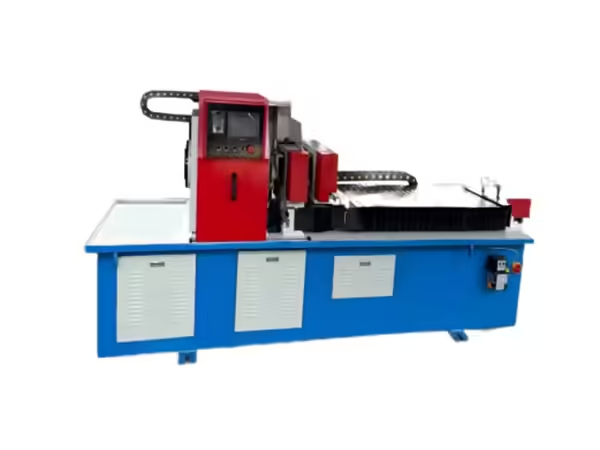
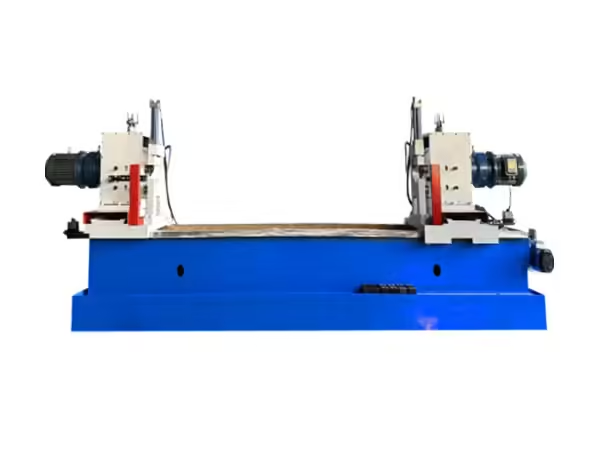
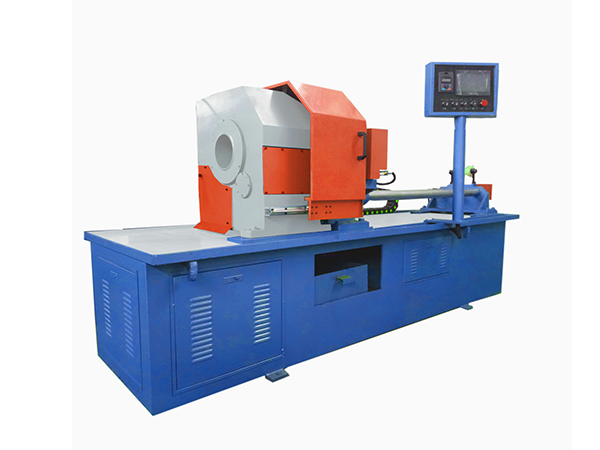
Pipe cutting machines are an important starting point in many metal-processing production lines because the quality of the first cut can influence every operation that follows. When steel pipe is used to manufacture conveyor rollers, frames, structural parts, or other cylindrical components, cutting determines not only the basic workpiece length but also the condition of the pipe end that later machines must locate, clamp, machine, weld, or assemble.
For repeated industrial production, pipe cutting is therefore more than separating material into shorter sections. A reliable process needs to control feeding, positioning, clamping, cutting stability, dimensional consistency, burr formation, and material handling at the same time. If pipe length changes between cycles or the cut end is significantly distorted, downstream machining may require additional adjustment even when the next machine itself is accurate.
Modern pipe cutting machines increasingly use automatic feeding, programmable length control, sensors, and coordinated clamping to reduce the amount of manual measurement required during production. These functions are especially useful when many workpieces of the same or related dimensions need to be processed continuously. Automation, however, only delivers consistent results when the machine structure, cutting method, fixture design, and material conditions are also properly matched.
This article explains how pipe cutting machines work, which factors influence cutting accuracy, why clamping and feeding matter, how automation supports repeatable production, and how pipe cutting fits into a broader conveyor roller manufacturing process.
How Pipe Cutting Machines Fit Into Metal Production
A pipe cutting machine performs a relatively simple task in principle: it separates pipe or tube material at a defined position. In production, however, that operation establishes an important dimensional reference for later processes.
A machine tool controls the relationship between a workpiece and a processing mechanism. Pipe cutting equipment applies the same basic principle by positioning tubular material relative to a cutting tool and maintaining that relationship while the cut is completed.
The finished cut section may later undergo end machining, drilling, turning, welding, assembly, or other processing. This means the output from the cutting machine is not necessarily a finished product. It is often the starting workpiece for the next manufacturing stage.
If a roller shell requires a specific body length, for example, the cutting operation establishes that dimension before bearing-related components or shafts are assembled. Length variation introduced during cutting can therefore appear again during final inspection as variation in overall roller dimensions.
For this reason, pipe cutting machines should be evaluated according to both cutting capability and the quality of the workpiece they deliver to downstream operations.
Cutting Accuracy Begins With Material Feeding
The cutting tool cannot produce a consistent length if the material does not arrive at a consistent position. Feeding is therefore one of the most important parts of automatic pipe cutting.
In manual production, an operator may measure the required distance, position the pipe, and then initiate the cut. This approach can work for occasional work, but repeated measurement increases the opportunity for variation when production quantities grow.
Automatic feeding replaces part of this repeated positioning work with a controlled movement system. The machine advances the pipe according to a programmed length and presents it to the cutting position.
The accuracy of this process depends on more than the numerical value entered into the control system. Material needs to move predictably without slipping, shifting laterally, or changing position during clamping.
Long pipes also require suitable support. If the material sags significantly before reaching the cutting area, its relationship with the feeding mechanism can become less stable. Proper loading and support therefore contribute directly to length repeatability.
When evaluating pipe cutting machines, feeding accuracy should be considered as part of the cutting process rather than as an independent convenience feature.
Clamping Stability Has a Direct Effect on Cut Quality
Once the pipe reaches the required position, it needs to remain stable while cutting forces are applied. This is the purpose of the clamping system.
Poor clamping can allow the material to move during the cutting cycle, which may affect both length and end condition. At the same time, excessive clamping force can deform thin-wall pipe or create local damage around the contact points.
A good clamping arrangement therefore needs to hold the pipe firmly without unnecessarily changing its geometry.
The correct fixture depends on factors such as pipe diameter, wall thickness, material, cutting force, and production range. A machine intended to process several pipe sizes may require adjustable or replaceable clamping elements so that each diameter receives suitable support.
Repeatable clamping is particularly important in automated production. If the machine feeds material accurately but every workpiece sits slightly differently inside the fixture, the cutting system cannot fully use the accuracy provided by automatic positioning.
This relationship between feeding and clamping is why pipe cutting machines need to be considered as complete systems rather than simply as cutting heads mounted on a frame.
Cutting Method Influences the Finished Pipe End
Different pipe cutting machines can use different cutting principles depending on material, diameter, wall thickness, required production rate, and end-quality expectations.
The cutting method influences not only how quickly material is separated but also the condition of the resulting surface.
A production engineer should consider several characteristics at the same time:
| Cutting Factor | Why It Matters |
|---|---|
| Pipe diameter | Influences tool size and machine capacity |
| Wall thickness | Changes cutting resistance |
| Material | Affects cutting behavior and tool selection |
| Required length | Determines feeding and positioning needs |
| End condition | Influences later machining or assembly |
| Burr formation | May require additional processing |
| Heat generation | Can affect local material condition |
| Tool wear | Influences long-term consistency |
| Production frequency | Helps determine automation requirements |
For some production lines, a slightly rougher cut is acceptable because the pipe end will be machined afterward. In other applications, the cut surface itself may need to remain sufficiently clean for assembly or welding.
The correct cutting method should therefore be selected according to the complete manufacturing route rather than judging the cut in isolation.
Why Burr Control Matters in Downstream Processing
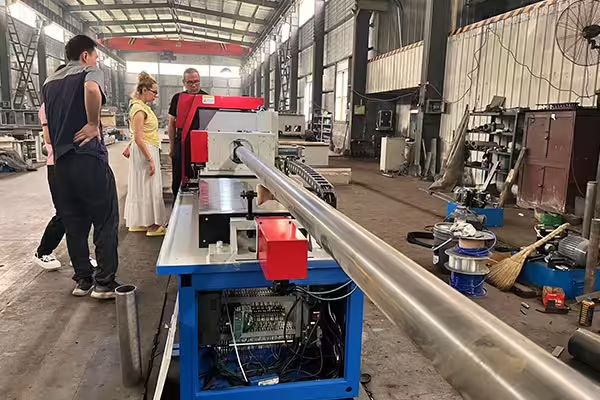
Burrs are small raised or irregular edges that can remain after cutting. Although they may appear minor, they can affect how the workpiece interacts with later machines.
A burr can interfere with locating surfaces, prevent a pipe from seating correctly against a stop, or create difficulty during bearing-related assembly. It may also need to be removed before welding or before operators handle the part safely.
The acceptable level of burr formation depends on what happens after cutting.
If the pipe immediately enters an end-machining operation, part of the rough edge may be removed during that process. If the cut section goes directly to assembly, the end condition becomes more important.
This is why pipe cutting machines should be evaluated by more than nominal cutting length. The finished workpiece should be suitable for the next stage without creating unnecessary corrective work.
Tool condition also influences burr formation. As cutting tools wear, the quality of the cut can gradually change even when machine settings remain the same. Routine tool inspection is therefore part of maintaining consistent pipe-cutting quality.
Automation Improves Repetition When the Process Is Stable
Automatic pipe cutting machines are particularly useful when production requires many workpieces with repeated or frequently changing lengths. Automation can reduce the number of manual actions involved in feeding, positioning, clamping, cutting, and unloading.
This can improve production consistency because routine measurements are performed through the control system rather than recreated manually for every workpiece.
Typical automated functions may include programmable cutting length, automatic pipe feeding, automatic clamping, cutting-cycle control, workpiece detection, quantity counting, and coordinated unloading.
The real value of these functions is not simply that they reduce operator involvement. Their greater value is that they reduce repeated decisions that can introduce variation into production.
However, automation should not be expected to correct an unstable mechanical process. If the pipe slips during clamping, an accurate servo feed cannot guarantee the finished length. If tooling is worn or inappropriate for the material, automatic cycling will continue to produce inconsistent end quality.
The strongest pipe cutting machines therefore combine automation with stable material support, suitable tooling, controlled clamping, and a rigid machine structure.
Pipe Cutting Machines in Conveyor Roller Manufacturing
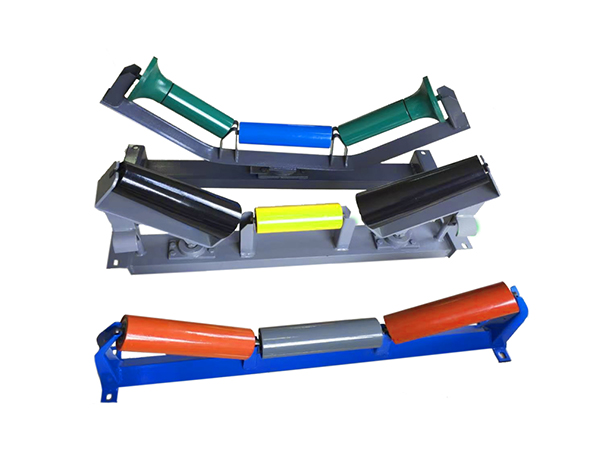
Pipe cutting is particularly important in conveyor roller manufacturing because the roller shell normally begins as a section of tube or pipe that needs to be prepared before additional machining and assembly.
The site’s conveyor roller processing machinery is organized around the broader production sequence involved in manufacturing rollers, including pipe preparation, end processing, shaft-related machining, bearing assembly, and other specialized operations.
Within this sequence, the cutting process establishes the initial roller body length. Once the tube is separated, the workpiece can move to later processes where the ends are machined or prepared for bearing-related structures.
If the cut length varies unnecessarily, later machines may need to compensate. This can make assembly more difficult and increase variation in the final roller.
Stable cutting therefore provides a more predictable input for downstream production.
This relationship can be summarized as follows:
| Roller Production Stage | Influence of Pipe Cutting |
| Tube preparation | Establishes usable workpiece |
| End machining | Receives pipe length and end condition |
| Bearing-seat processing | Depends on consistent shell geometry |
| Roller assembly | Uses the prepared body dimension |
| Welding | Relies on component positioning |
| Final inspection | Confirms resulting overall dimensions |
The cutting stage does not determine finished roller quality on its own, but it creates the dimensional starting point from which later operations work.
Production Speed Should Be Evaluated With the Entire Cycle
Machine speed is often compared when evaluating pipe cutting equipment, but cutting time alone does not describe real production capacity.
A complete cycle can include material feeding, positioning, clamping, cutting, releasing, unloading, and preparing for the next workpiece. Product changeover and tool replacement also affect actual output over a full shift.
Consider an illustrative production cycle:
| Operation | Example Time |
| Feed pipe | 6 sec |
| Position and confirm | 3 sec |
| Clamp | 2 sec |
| Cut | 10 sec |
| Release | 2 sec |
| Unload/transfer | 5 sec |
These figures are only an example for process analysis and are not equipment performance claims.
In this example, the cutting operation itself represents only part of the total cycle. Reducing cutting from ten seconds to eight seconds would improve one stage, but the overall improvement would be smaller if feeding and handling remain unchanged.
This is why pipe cutting machines should be evaluated according to realistic production cycles rather than one maximum cutting-speed figure.
For roller manufacturing lines, line balance is also important. A very fast cutting machine provides limited benefit if downstream end processing or assembly cannot consume the produced tubes at a similar rate.
Changeover Matters When Multiple Pipe Sizes Are Produced
Many production lines process more than one pipe diameter or cutting length. In these situations, machine flexibility becomes important.
The useful question is not simply whether the machine can physically accept several pipe sizes. It is how easily production can move from one specification to another.
A changeover may require adjusting clamps, supports, feeding parameters, cutting positions, or tooling. If these operations require extensive manual measurement every time, a nominally flexible machine may still create long setup periods.
Programmable controls can simplify changes in length because new values can be entered or stored. Diameter changes can be more mechanical because fixtures and supports need to remain suitable for the new tube geometry.
For repeated industrial production, common pipe sizes should be easy to set up and verify. Rare extreme dimensions should not necessarily determine the entire machine design if they add unnecessary complexity to normal production.
A practical machine should therefore provide enough working range for the real product mix while maintaining stable clamping and cutting conditions throughout that range.
Manufacturing Accuracy Should Be Verified Across Repeated Parts
One accurate cut does not demonstrate the full capability of an automatic pipe cutting process. Industrial production requires the machine to repeat the result.
A useful evaluation therefore involves checking several consecutive workpieces rather than inspecting one carefully prepared sample.
Length consistency is an obvious measurement, but other characteristics can also be reviewed, including end condition, burr formation, squareness where relevant, deformation, and surface damage caused by clamping.
Repeated testing helps identify variation that may appear because of feeding slip, fixture movement, tool wear, material differences, or changes during long production cycles.
The site’s broader manufacturing and processing machinery reflects this production-oriented approach, where equipment is designed around recurring tube, shaft, and roller-processing operations rather than one isolated demonstration cut.
For factories producing large batches, repeatability is often more valuable than achieving an unusually accurate single workpiece. Stable production reduces the need for downstream correction and makes later machine settings easier to standardize.
Maintenance Has a Direct Relationship With Cutting Consistency
Pipe cutting machines contain components that experience repeated mechanical movement and tool contact. Over time, normal wear can influence cutting performance even when the machine continues to operate.
Cutting tools are one of the most obvious wear items. As their condition changes, cutting force, burr formation, heat generation, and cycle stability may also change.
Clamping surfaces can wear as well. If a locating surface gradually changes, the pipe may no longer sit in exactly the same position as it did when the machine was first commissioned.
Feeding systems, guides, bearings, sensors, and drive mechanisms should also be inspected as part of routine maintenance because they contribute to positioning accuracy.
Maintenance should therefore be linked with quality observations. If operators notice increasing variation in length or cut quality, the response should not always be to adjust machine parameters immediately. Tooling and mechanical condition should also be reviewed.
A stable maintenance routine helps preserve the relationship between the original machine setup and long-term production performance.
What Should Be Checked Before Selecting Pipe Cutting Machines?
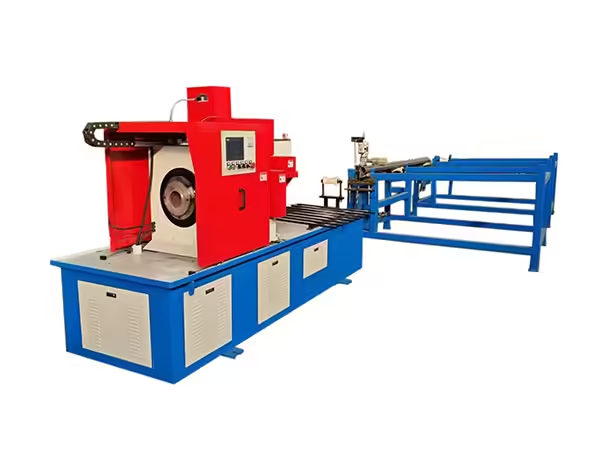
Selecting suitable pipe cutting machines begins with understanding the actual material and production requirement. Equipment should be matched to the range of workpieces normally processed rather than chosen mainly by the largest theoretical capacity.
Important information includes pipe material, diameter range, wall thickness, normal cutting lengths, production frequency, downstream processing, required end condition, and expected level of automation.
The handling of raw material should also be considered. Long pipe may require loading racks or additional support before entering the machine. Finished cut sections may need to transfer directly to another machine or be collected for later processing.
The cutting machine should fit naturally into this material flow.
For production lines with several related operations, compatibility between machines can be more important than maximizing the capability of one station. A pipe cutting machine that produces stable, predictable workpieces can make later end machining, assembly, and inspection easier to control.
Ultimately, equipment selection should answer whether the machine can repeatedly produce the required workpiece under normal production conditions, not merely whether it can complete one cut.
Conclusion
Pipe cutting machines establish one of the earliest dimensional references in many metal-processing production lines, which makes their influence extend beyond the cutting station itself. Accurate feeding, stable clamping, suitable tooling, controlled cutting, and consistent material support all contribute to the quality of the finished workpiece. When these factors are properly coordinated, downstream machining and assembly can begin with more predictable pipe dimensions and end conditions.
Automation can further improve repeatability by reducing repeated manual positioning and measurement, particularly when large quantities of similar workpieces are produced. However, automatic feeding and programmable controls need a stable mechanical foundation. Tool condition, fixture accuracy, pipe support, and material variation still determine whether the programmed cutting position becomes a consistent finished part.
For conveyor roller manufacturing, this relationship is especially important because the cut tube becomes the body of a component that will later undergo end processing, shaft-related assembly, bearing installation, welding, and final inspection. Variation introduced during cutting can therefore influence several later operations rather than remaining isolated at the first stage.
A reliable pipe cutting machine should consequently be evaluated as part of the complete manufacturing process. By matching machine capacity, feeding, clamping, tooling, automation, maintenance, and changeover requirements to the actual pipe specifications and production sequence, manufacturers can create a more stable foundation for repeated metal-processing operations.
FAQ
What are pipe cutting machines used for?
Pipe cutting machines separate tube or pipe material into controlled lengths for later manufacturing or assembly. Industrial systems may combine automatic feeding, positioning, clamping, cutting, and unloading so repeated workpieces can be produced with more consistent dimensions and end conditions.
How do automatic pipe cutting machines improve production?
Automatic pipe cutting machines reduce repeated manual measuring and positioning by using programmed feeding and coordinated cutting cycles. Their main advantage is more consistent repetition, although final accuracy still depends on stable clamping, suitable tooling, material support, and machine condition.
What affects the cutting accuracy of pipe cutting machines?
Cutting accuracy can be influenced by feeding position, pipe support, clamping stability, tool condition, machine rigidity, material dimensions, and workpiece movement during the cut. Reliable production requires these factors to remain controlled across repeated cycles rather than only for one sample.
Why is pipe cutting important in conveyor roller production?
The cut pipe becomes the roller shell and establishes the starting body length for later end processing, bearing-related assembly, welding, and inspection. Consistent cutting gives downstream machines a more predictable workpiece and helps reduce unnecessary dimensional correction during later stages.
What information is needed before selecting pipe cutting machines?
Important information includes pipe material, diameter, wall thickness, normal cutting length, product range, production frequency, required end condition, automation level, material loading method, and downstream process. These details help match machine capacity to the actual manufacturing requirement
 English
 French
 Spanish