

Table of Contents
Introduction
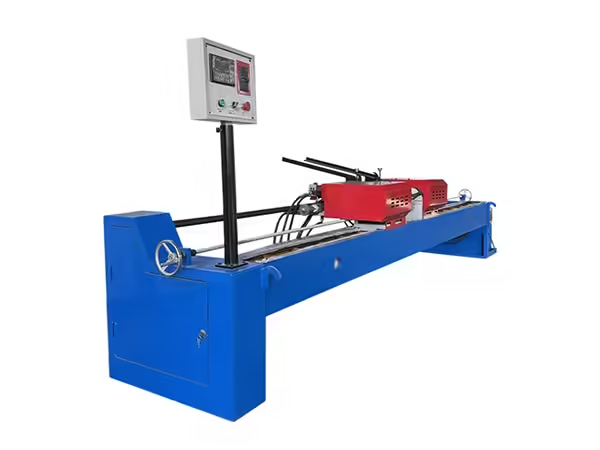
Machine tool manufacturing is changing from the design of isolated processing equipment toward the development of more connected, repeatable, and production-oriented systems. For factories manufacturing conveyor rollers, this shift is especially important because a finished roller normally passes through several related operations rather than one machining step.
Tube preparation, cutting, shaft machining, milling, grooving, bearing installation, assembly, welding, and inspection all influence one another. If one process produces unstable dimensions or inconsistent positioning, the next machine may need additional adjustment to compensate.
This means modern machine tool manufacturing should answer a broader question than “Can this machine perform the operation?”
A more useful question is:
“Can this machine perform the operation repeatedly while delivering a predictable workpiece to the next production stage?”
Key takeaways from this guide include:
- Machine design should begin with the workpiece and production sequence.
- Repeatability is often more valuable than impressive one-time accuracy.
- Fixtures and datums are central to stable automated production.
- Automation should remove meaningful sources of process variation.
- Individual machine speed should be balanced against total line capacity.
- Changeover needs to be considered when multiple roller specifications are produced.
- Tooling, maintenance access, and diagnostics influence long-term productivity.
- Quality control should be built into the process rather than added only at final inspection.
- Connected machines can provide greater production value than independently optimized equipment.
These principles provide a practical framework for understanding where machine tool manufacturing is heading and how those developments apply to conveyor roller production.
From Individual Machines to Process-Oriented Manufacturing
A machine tool creates controlled movement between a workpiece and a tool or processing mechanism. Traditional equipment selection often focuses heavily on the capability of that individual machine: its working range, motor, spindle, control system, or processing speed.
Modern machine tool manufacturing increasingly needs to consider what happens before and after that operation.
A roller production line illustrates this clearly.
A simplified process may look like:
Tube preparation
Cutting
End processing
Shaft machining
Milling or grooving
Bearing-related assembly
Welding
Inspection
Each machine receives a component that has already been influenced by previous operations.
Input condition matters
Before designing or selecting a machine, engineers should define the condition of the incoming workpiece.
For example:
- Is the tube already cut to length?
- Has the shaft received previous machining?
- Which datum is available?
- How much dimensional variation exists?
- Is the workpiece manually or automatically loaded?
Without these answers, machine specifications may be based on assumptions rather than actual production conditions.
Output condition matters just as much
A machine should also create an output suitable for the next station.
If a shaft-milling process produces the required flat but leaves inconsistent component positioning for the following assembly operation, the first machine has technically completed its task but has not fully supported the manufacturing system.
This is one reason process integration has become an important direction in machine tool manufacturing.
Trend 1: Machine Tool Manufacturing Is Becoming More Application-Specific
General-purpose equipment remains useful for many manufacturing operations, but specialized production increasingly benefits from machinery designed around a defined component and process.
Conveyor roller production is a good example.
A factory manufacturing rollers repeatedly processes similar families of tubes, shafts, grooves, bearing positions, and assembly structures. Specialized machinery can therefore be configured around these recurring tasks.
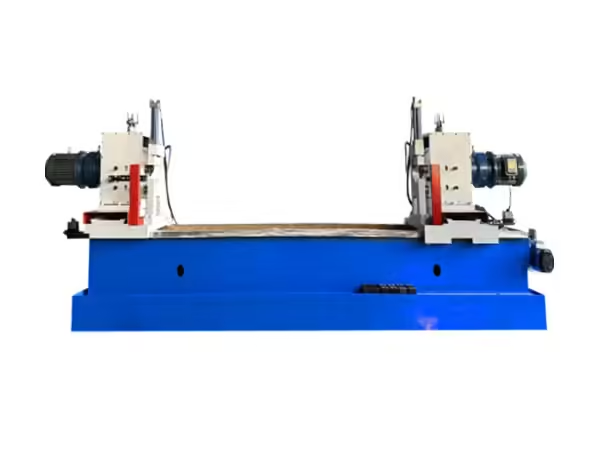
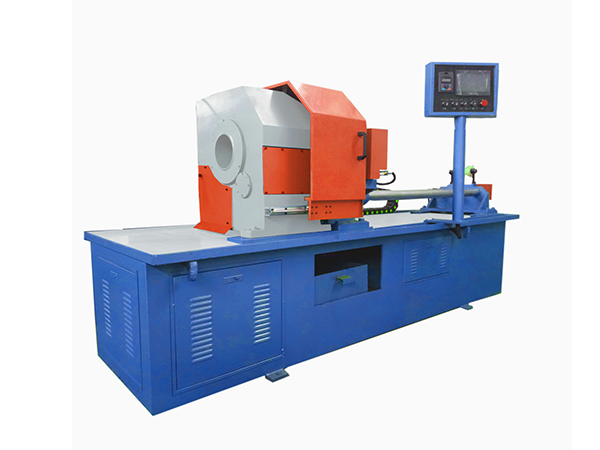
The conveyor roller processing machine approach reflects this application-specific logic by organizing machinery around actual roller production operations rather than treating every machining stage as an unrelated process.
Why specialization can improve production
Application-specific equipment can simplify several areas:
- Workpiece loading
- Fixture design
- Datum location
- Tool movement
- Parameter setting
- Operator interaction
- Cycle sequencing
Rather than giving the operator a highly flexible machine and requiring them to define the complete process each time, specialized machine tool manufacturing can embed more process knowledge into the equipment itself.
Specialization does not mean inflexibility
A specialized roller-processing machine can still handle a range of workpiece dimensions.
The important difference is that flexibility is designed around realistic product variation.
For example, instead of supporting an extremely broad range of unrelated components, a machine can focus on several roller tube diameters or shaft configurations using:
- Adjustable fixtures
- Stored programs
- Replaceable tooling
- Programmable positioning
- Adjustable supports
This creates controlled flexibility instead of unnecessary complexity.
Trend 2: Repeatability Is Becoming a Core Design Priority
Machine accuracy is important, but industrial production depends on more than producing one accurate component.
A machine must reproduce acceptable results over hundreds or thousands of cycles.
This makes repeatability one of the most important practical goals in machine tool manufacturing.
Accuracy and repeatability are different
Accuracy asks whether a produced feature is close to the intended value.
Repeatability asks whether the machine can produce a similar result again.
For a production line, both matter.
A machine that produces an excellent demonstration workpiece but varies significantly during routine operation creates more manufacturing uncertainty than one that maintains stable results across repeated cycles.
Sources of variation
Repeatability can be influenced by:
- Workpiece loading
- Datum location
- Clamping
- Tool wear
- Mechanical movement
- Sensor positioning
- Material variation
- Temperature
- Fixture wear
- Operator adjustment
Machine tool manufacturing therefore needs to address the entire process chain rather than relying only on axis positioning specifications.
Repeatability is a system characteristic
Consider a machine with highly accurate servo positioning.
If the workpiece moves slightly inside the fixture, final dimensions may still vary.
The actual production chain is closer to:
Control system
Drive mechanism
Machine structure
Tool
Fixture
Workpiece
The weakest element can influence the final result.
This is why fixture design has become increasingly important in specialized manufacturing equipment.
Trend 3: Fixtures Are Becoming Part of the Machine Engineering Strategy
Fixtures are sometimes treated as secondary accessories.
In reality, they create the physical reference that connects machine movement to the workpiece.
For roller production, consistent locating can influence:
- Tube length
- Shaft feature position
- Flat milling
- Groove location
- Bearing alignment
- Assembly geometry
- Welding position
A well-designed machine with poor workholding will struggle to achieve stable production.
Datum design
Every operation needs a defined reference point or surface.
Possible datums include:
- Shaft ends
- Tube ends
- Component centerlines
- Outside diameters
- Previously machined surfaces
Machine tool manufacturing should establish these references deliberately.
If successive machines use unrelated datums without considering tolerance transfer, dimensional variation can accumulate throughout the production sequence.
Clamping should support, not distort
Stronger clamping is not automatically better.
Thin tubes can deform under excessive force, while long shafts may bend if they are supported incorrectly.
Good fixture design considers:
- Contact position
- Clamping direction
- Supporting points
- Workpiece geometry
- Processing force
- Loading convenience
The objective is to create a repeatable location without changing the component being located.
Trend 4: Automation Is Moving From “More Functions” to “Less Variation”
Automation has become common in machine tool manufacturing, but the most useful systems are not necessarily those with the greatest number of automated features.
Effective automation solves specific production problems.
Useful automation functions
For roller manufacturing equipment, these can include:
- Automatic material feeding
- Programmable positioning
- Automatic clamping
- Servo-controlled movement
- Automatic processing cycles
- Stored product parameters
- Sensor-based position confirmation
- Automatic unloading
- Alarm diagnostics
Each function should have a clear production purpose.
Ask what variation automation removes
Instead of asking:
“How automated is the machine?”
Ask:
“What production variation does this automation control?”
For example:
| Production Problem | Useful Automation |
|---|---|
| Manual length measurement varies | Automatic feeding and positioning |
| Operators enter parameters differently | Stored processing programs |
| Workpieces are clamped inconsistently | Automatic clamping sequence |
| Product changes require repeated adjustment | Programmable positioning |
| Loading errors reach machining stage | Workpiece presence sensors |
| Process interruption is difficult to diagnose | Alarm and status monitoring |
This approach makes automation easier to justify from an engineering perspective.
Automation cannot repair a poor process
Automating an unstable process can simply repeat instability more quickly.
Mechanical design, fixtures, tooling, and process sequence need to be sound before additional automation is added.
This remains one of the most important principles in modern machine tool manufacturing.
Trend 5: Line Balance Is Becoming More Important Than Maximum Machine Speed
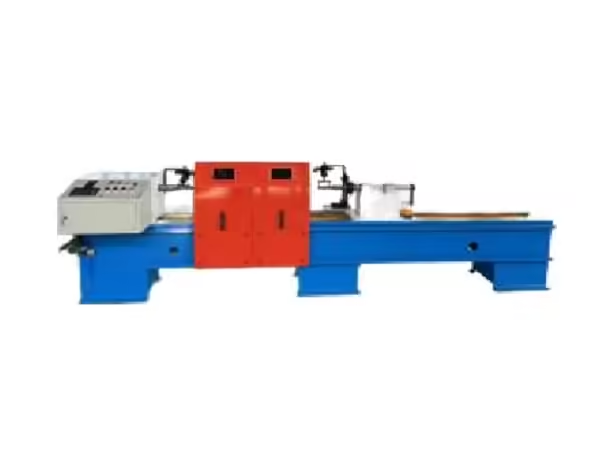
High processing speed is attractive on a specification sheet.
However, the fastest machine in a factory does not necessarily increase total output.
Production capacity is determined by the complete manufacturing sequence.
Consider an illustrative roller line:
| Process | Example Cycle Time | Main Production Variable |
|---|---|---|
| Tube cutting | 21 sec | Feeding consistency |
| Shaft machining | 29 sec | Feature positioning |
| Milling/grooving | 26 sec | Tool and datum control |
| Bearing assembly | 24 sec | Assembly positioning |
| Welding | 33 sec | Fixture and cycle stability |
| Inspection | 27 sec | Handling and measurement |
These figures are examples used to explain line balancing rather than equipment performance claims.
If one operation takes considerably longer than adjacent stages, speeding up another already-fast machine may simply increase work-in-progress between stations.
Machine cycle is not production cycle
The machine’s processing time may exclude:
- Material loading
- Workpiece positioning
- Clamping
- Unloading
- Inspection
- Tool replacement
- Product changeover
- Material transfer
Machine tool manufacturing increasingly needs to consider these activities because they influence real factory output.
Balance equipment around actual production
A better line-planning question is:
“How many finished rollers can the complete process produce consistently?”
This is more useful than comparing the highest possible speed of every individual machine.
Trend 6: Flexible Changeover Is Becoming More Valuable
Many factories do not manufacture one roller specification continuously.
They may need to change:
- Tube diameter
- Tube length
- Shaft diameter
- Shaft-end design
- Groove location
- Milling position
- Bearing arrangement
Machine tool manufacturing therefore needs to balance specialization with practical changeover capability.
Working range alone does not define flexibility
A machine may technically process a wide range of components.
But if every change requires:
- Extensive fixture replacement
- Manual measurement
- Mechanical repositioning
- Multiple tool changes
- Lengthy trial production
then its practical flexibility is limited.
Evaluate the changeover process
For every common product change, ask:
- Which fixtures change?
- Which tools change?
- Which positions are automatic?
- Which parameters are stored?
- What must the operator measure?
- How is the first component verified?
A strong machine design minimizes unnecessary setup steps while keeping the process understandable.
Design around real production frequency
One practical approach is to classify products as:
- Frequent
- Regular
- Occasional
- Possible future products
The machine should be optimized for the specifications produced most often.
Designing every machine around rare extreme conditions can make normal production unnecessarily complicated.
Trend 7: Machine Tool Manufacturing Is Paying More Attention to Tooling
Tooling is where machine motion becomes a manufacturing result.
In roller processing, tooling can include:
- Cutting tools
- Milling cutters
- Grooving tools
- Turning tools
- Welding fixtures
- Positioning blocks
- Assembly tooling
Tooling should be engineered together with the machine rather than selected afterward.
Tool access matters
All tools eventually wear or require adjustment.
Routine replacement should be considered during equipment design.
Technicians should be able to reach normal wear items without unnecessarily disassembling unrelated parts of the machine.
Tool changes should maintain repeatability
After replacement, the machine should return to stable production with a controlled adjustment procedure.
If every tool change requires significant trial-and-error setup, output becomes dependent on individual operator experience.
Chips and debris need a path
Cutting and milling generate waste.
Machine tool manufacturing should consider how chips or debris leave the working area.
Poor debris management can interfere with:
- Fixtures
- Sensors
- Guides
- Workpiece loading
- Machine cleanliness
These practical details often distinguish production-ready equipment from machinery designed mainly around the cutting operation itself.
Trend 8: Quality Control Is Moving Closer to the Process
Traditional manufacturing often emphasizes final inspection.
A more efficient strategy is to prevent errors earlier.
If a feature is created at one machine, that is usually the best place to control the variables that determine it.
Control errors where they originate
Suppose tube length affects several later assembly operations.
It is more efficient to control positioning during tube cutting than to discover length variation after the roller has already passed through multiple processes.
The same principle applies to:
- Shaft feature location
- Groove position
- Milling geometry
- Bearing position
- Welding location
Machine tool manufacturing increasingly incorporates the idea of process-level quality control.
Critical dimensions deserve more attention
Not every dimension has equal manufacturing importance.
A useful classification is:
Process-critical dimensions
These influence the next manufacturing stage.
Function-critical dimensions
These influence how the finished roller operates or installs.
General dimensions
These require reasonable control but may not justify the same inspection frequency.
This allows quality resources to focus on features that have the greatest practical effect.
Trend 9: Connected Roller Production Equipment Is Becoming More Important
Factories increasingly evaluate production machinery as systems rather than individual purchases.
The manufacturing and processing machinery used in roller production can cover tube cutting, shaft processing, milling, grooving, bearing-related assembly, welding, and other specialized operations.
The important engineering question is how those machines work together.
Workpiece transfer
Between machines, consider:
- Who moves the component?
- Does it need reorientation?
- Is manual measurement required?
- Does the next machine use the same datum?
- Is temporary storage needed?
Every unnecessary handling step introduces another opportunity for delay or variation.
Capacity matching
A production line should avoid extreme capacity differences between connected processes unless buffering or parallel operations are deliberately planned.
Failure isolation
Connected equipment also needs a practical response when one machine stops.
A production system should consider:
- Whether upstream machines continue
- Where unfinished components are stored
- How the stopped station is restarted
- Whether partially processed workpieces can continue safely
These issues become increasingly important as automation levels rise.
Trend 10: Maintainability Is Becoming Part of Machine Performance
A machine may perform very well when newly commissioned.
Industrial equipment, however, needs to maintain that capability after prolonged use.
This makes maintainability part of machine tool manufacturing quality.
Normal maintenance should be anticipated
Common service areas can include:
- Cutting tools
- Bearings
- Belts
- Guides
- Fixtures
- Sensors
- Clamping components
- Lubrication points
Engineers should consider access to these areas before completing machine construction.
Diagnostics reduce unnecessary troubleshooting
Modern control systems can help operators distinguish between:
- Missing workpieces
- Positioning errors
- Sensor faults
- Drive alarms
- Sequence interruptions
- Safety conditions
Clear diagnostics can reduce the amount of time spent searching for relatively simple production problems.
Documentation matters
Useful documentation may include:
- Operating procedures
- Machine parameters
- Maintenance schedules
- Lubrication instructions
- Alarm descriptions
- Tooling information
- Electrical diagrams
- Wear-component references
- Safety procedures
Documentation is particularly important when the employees maintaining the equipment were not involved in the original installation.
What Should Be Evaluated Before Selecting Roller Production Machine Tools?
A structured technical comparison provides more useful information than comparing machines according to one specification.
| Evaluation Area | What to Examine | Why It Matters |
|---|---|---|
| Process fit | Actual roller operation required | Ensures equipment solves the correct problem |
| Working range | Common product specifications | Avoids unnecessary machine complexity |
| Fixtures | Datum and clamping design | Supports repeatability |
| Structure | Rigidity and workpiece support | Improves processing stability |
| Tooling | Suitability and replacement method | Influences production consistency |
| Automation | Variation controlled | Reduces operator dependency |
| Changeover | Steps between product types | Improves flexible production |
| Capacity | Complete operating cycle | Supports line balance |
| Quality | Repeat-production verification | Confirms stable output |
| Maintenance | Access and diagnostics | Supports long-term operation |
A machine should score well across the areas that matter to its real application.
A highly automated machine with poor fixture design may be less useful than a simpler system with more stable positioning.
Likewise, a very fast machine can become inefficient when its output overwhelms the next production stage.
Common Machine Tool Manufacturing Mistakes
Several design and selection mistakes repeatedly reduce the value of otherwise capable equipment.
Designing from specifications instead of the workpiece
Machine development should begin with drawings, materials, process sequence, and production requirements.
The machine specification should be the result of this analysis.
Treating maximum range as normal operation
Maximum dimensions describe physical capability, not necessarily the most stable operating region.
Frequently manufactured components should sit comfortably within the practical working range.
Adding automation before stabilizing the mechanical process
Sensors and controls cannot permanently compensate for unstable fixtures or inappropriate tooling.
Ignoring product changeover
A machine can support several sizes theoretically but still be inconvenient in daily mixed production.
Optimizing machines independently
One exceptional machine does not guarantee an exceptional production line.
The interfaces between machines matter.
Accepting one sample as proof of production capability
One successful sample demonstrates possibility.
Repeated production demonstrates stability.
For industrial projects, the latter provides more useful evidence.
How to Evaluate Machine Tool Manufacturing Quality
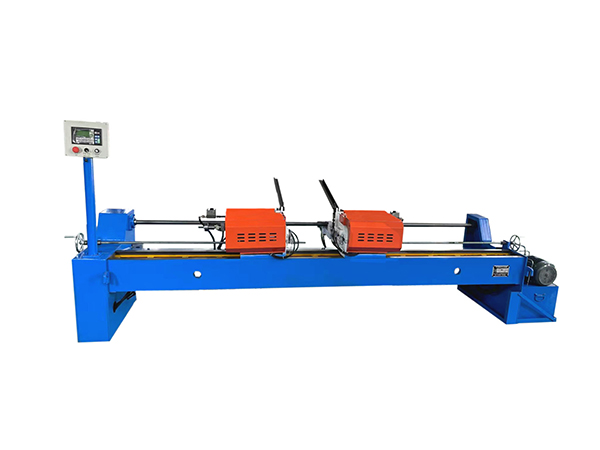
When reviewing equipment, ask questions that reveal engineering depth rather than simply component brands.
Can the manufacturer explain the process?
A technically capable supplier should understand:
- Workpiece geometry
- Materials
- Processing sequence
- Critical dimensions
- Production volume
- Product variation
- Downstream requirements
Can the machine establish repeatable datums?
Ask how the workpiece is:
- Located
- Supported
- Clamped
- Verified
Can common tools and wear components be serviced easily?
Maintenance is part of long-term production performance.
Can repeatability be demonstrated?
Repeated processing of representative workpieces usually provides more useful evidence than one carefully prepared sample.
Can the machine integrate with adjacent operations?
This becomes increasingly important when several pieces of machinery form one production line.
Conclusion
Machine tool manufacturing is moving toward equipment that understands more of the production process.
For conveyor roller production, this means going beyond isolated cutting, milling, grooving, assembly, or welding machines.
The strongest equipment strategy begins with the workpiece.
Define the roller specifications, determine the manufacturing sequence, identify critical dimensions, and understand how one process affects the next.
From there, machine tool manufacturing should focus on repeatable workholding, stable machine structure, suitable tooling, purposeful automation, practical changeover, balanced production capacity, process-level quality control, and maintainability.
The trend toward automation is important, but automation alone is not the destination.
The real objective is predictable manufacturing.
A well-designed machine should receive a known workpiece condition, perform a controlled operation, and create an output that the next process can use without unnecessary correction.
When several machines achieve this together, they become more than individual pieces of equipment. They form a production system capable of supporting stable, repeatable, and scalable roller manufacturing.
FAQ
What is machine tool manufacturing?
Machine tool manufacturing is the engineering and production of equipment used to perform controlled operations such as cutting, turning, milling, grooving, drilling, or specialized assembly. It combines machine structure, tooling, fixtures, motion control, automation, testing, and production-process design.
Why is repeatability important in machine tool manufacturing?
Repeatability shows whether a machine can reproduce acceptable results across many production cycles. Industrial manufacturing depends on consistent locating, clamping, tooling, movement, and workpiece handling, so repeated stable output is often more useful than achieving one exceptionally accurate sample.
How does automation improve machine tool manufacturing?
Automation can control repetitive operations such as feeding, positioning, clamping, parameter selection, machining sequences, and unloading. Its greatest value comes from reducing known sources of process variation while making routine production easier to repeat and monitor.
What machine tools are used in conveyor roller production?
Depending on roller design, production may involve tube cutting, tube-end processing, shaft machining, flat milling, grooving, bearing-related assembly, welding, and inspection equipment. The most suitable configuration depends on dimensions, materials, product variation, and required production sequence.
How should machine tool manufacturing quality be evaluated?
Evaluate process fit, machine rigidity, fixtures, tooling, working range, repeatability, automation, changeover, cycle balance, maintenance access, documentation, and testing methods. The strongest machine should perform its own operation consistently while also supporting adjacent production stages.
 English
 French
 Spanish