
If you are working in conveyor roller production or mining equipment component manufacturing, you already know one thing: end hole machining quality directly determines the performance and lifespan of the entire roller system. A small deviation in concentricity or hole alignment can lead to vibration, uneven belt tracking, or premature bearing failure.
This is where an automatic roller double end holes lathe becomes a game-changing solution for your production line. Instead of relying on manual alignment or semi-automatic turning, you can achieve synchronized double-end machining with higher precision, better consistency, and significantly improved efficiency.
In this article, you will learn how this machine works, where it performs best, how to select the right model, and how real production environments benefit from it in measurable ways.
Table of Contents
Why Automatic Roller Double End Holes Lathe Matters in Roller Production
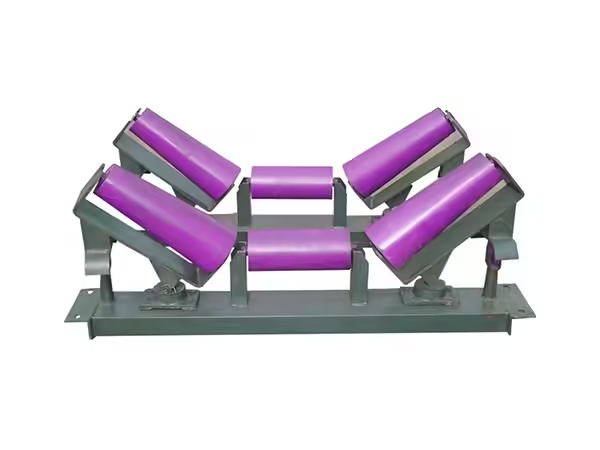
When you produce conveyor rollers, both ends of the steel tube must be perfectly aligned. These holes are not just structural features—they determine:
- Bearing seat accuracy
- Roller rotation smoothness
- Load distribution
- Long-term sealing performance
- Conveyor system stability
Even a small offset between both ends can create imbalance. In high-speed conveyor systems, this imbalance increases vibration, noise, and energy consumption.
Industry practice shows that rollers with poor end-hole alignment often reduce bearing life by more than 20–30% compared to accurately machined components. That is why manufacturers increasingly shift from manual lathes to automatic double-end systems.
With an automatic roller double end holes lathe, both ends are processed simultaneously, ensuring symmetry and reducing cumulative error.
Understanding the Working Principle of an Automatic Roller Double End Holes Lathe
To understand why this machine improves accuracy, you need to look at its structure.
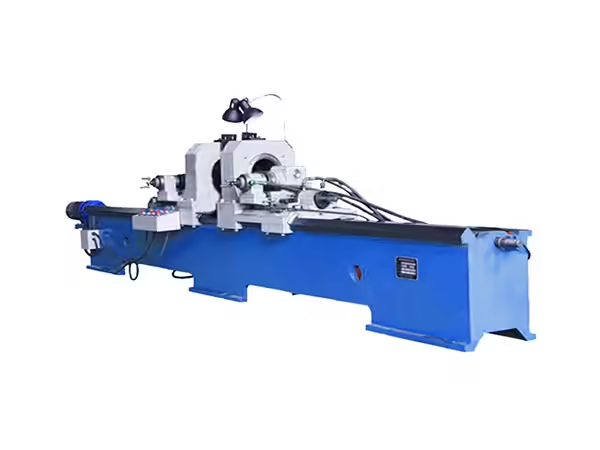
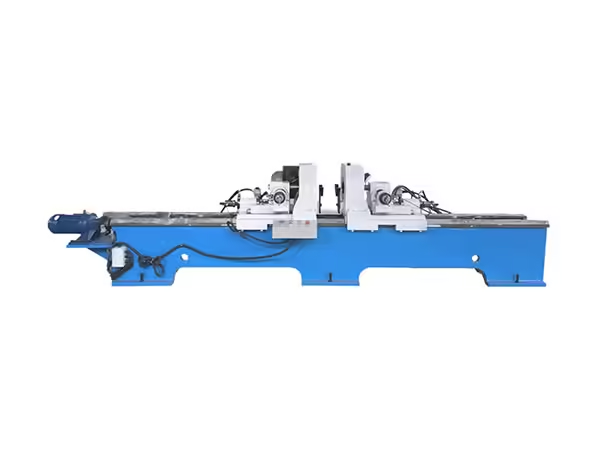
The machine is designed specifically for roller end machining and uses synchronized hydraulic systems and PLC control.
Its working process includes:
- Automatic loading of the roller tube
- Mechanical quick clamping from both ends
- Hydraulic-driven tool feed on both sides
- Simultaneous cutting of both ends
- Automatic tool release to avoid surface damage
- Rapid return of cutting heads for the next cycle
Unlike conventional machining, where each side is processed separately, this system ensures both ends are always aligned in real time.
The key advantage lies in its hydraulic synchronization system, where both left and right cylinders operate in a matched circuit. This eliminates timing differences that usually cause dimensional inconsistency.
Two Main Models You Can Choose From
In practical production environments, machine selection depends heavily on pipe size and output volume. This equipment is commonly available in two configurations:
- TH-160*2200
- TH-220*2200
These two models are designed to cover different roller diameter ranges while maintaining the same machining principle.
Comparison of Machine Models
| Model | Suitable Roller Diameter Range | Clamping Type | Feeding System | Application Focus | Production Efficiency |
|---|---|---|---|---|---|
| TH-160*2200 | Small to medium rollers | Mechanical quick clamping | Hydraulic synchronized feed | Standard conveyor rollers | High |
| TH-220*2200 | Medium to large rollers | Reinforced hydraulic clamping | Heavy-duty hydraulic feed | Mining and heavy conveyor systems | Very high |
The key difference is not only size but also structural rigidity and hydraulic force capacity. If your production involves heavy-duty rollers or mining conveyor systems, the TH-220*2200 model is typically more suitable.
Key Structural Advantages You Can Benefit From
What makes this machine stand out is not just automation—it is the way mechanical, hydraulic, and PLC systems are integrated.
1. Mechanical Quick Clamping System
Instead of manual tightening, the machine uses fast mechanical clamping. You can adjust clamping force easily depending on tube thickness. This improves efficiency while maintaining stability during cutting.
2. Hydraulic Synchronized Feeding
Both sides of the machine use synchronized hydraulic cylinders. This ensures that cutting happens evenly from both ends at the same time, eliminating asymmetry.
3. PLC Intelligent Control System
The PLC system manages:
- Feed timing
- Cutting depth
- Return speed
- Safety monitoring
This reduces operator dependency and improves repeatability across batches.
4. Automatic Tool Release Mechanism
One often overlooked feature is the automatic tool release. When the tool reaches a preset position, it automatically disengages. This prevents surface scratches and improves finishing quality.
Real Production Case: Conveyor Roller Manufacturing Line Upgrade
To understand real value, let’s look at a typical production scenario based on industrial usage patterns.
A mid-size conveyor roller workshop previously used manual single-end lathes. Their production issues included:
- Uneven hole alignment
- High rejection rate (~8–12%)
- Long machining cycle per roller
- Operator fatigue affecting consistency
After switching to an automatic roller double end holes lathe, the improvements were significant:
- Production cycle time reduced by approximately 35%
- Rejection rate dropped below 3%
- Bearing alignment consistency improved noticeably
- Labor requirement reduced by nearly 40% per shift
The most important improvement was not just speed, but consistency. When producing hundreds or thousands of rollers daily, small improvements in repeatability translate into large cost savings.
Where This Machine Performs Best
This type of lathe is not a general-purpose machine. It is specifically optimized for:
- Conveyor roller end machining
- Mining conveyor system components
- Steel pipe end hole processing
- Batch production of cylindrical components
It performs especially well in environments where:
- Production volume is high
- Precision requirements are strict
- Downtime must be minimized
- Operator skill levels vary
If your production involves continuous roller output, automation becomes not optional but necessary.
Material Compatibility and Processing Flexibility
This machine is compatible with various roller materials commonly used in industrial applications:
- Carbon steel tubes
- Welded steel pipes
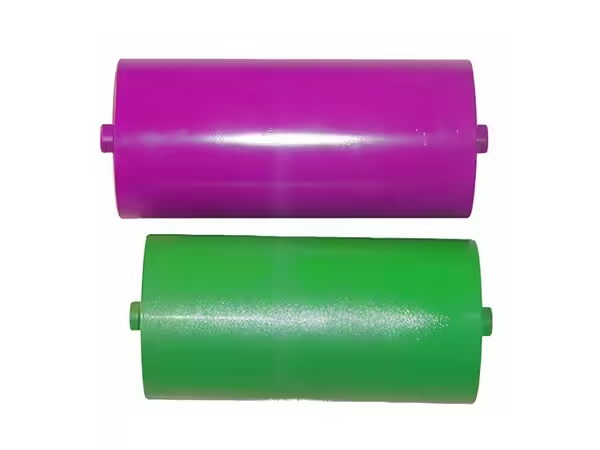
- Heavy-duty industrial rollers
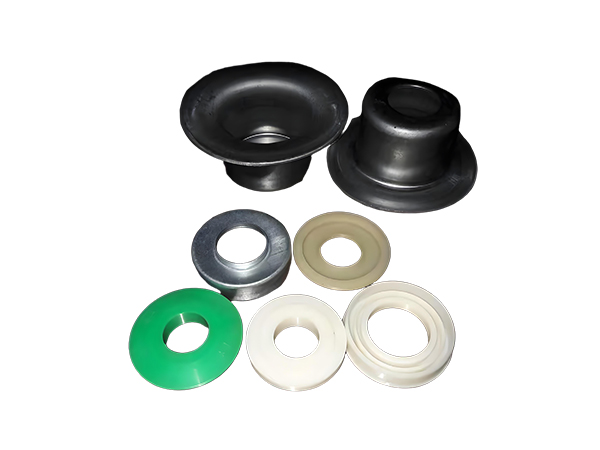
- Cast or stamped bearing seat assemblies
Because radial feed is manually adjustable, you can fine-tune cutting depth based on different wall thicknesses. This flexibility is important when your production includes multiple roller specifications.
Operational Workflow Optimization Tips
To maximize performance, you should consider the following practical improvements:
- Standardize roller length before machining
- Keep hydraulic pressure stable during long production runs
- Regularly inspect tool wear to maintain precision
- Use consistent clamping pressure for all batches
- Train operators on PLC parameter adjustments
These small operational habits often make a bigger difference than machine specifications alone.
Maintenance Considerations You Should Not Ignore
Although the machine is highly automated, long-term performance depends on maintenance discipline:
- Hydraulic oil should be checked regularly for contamination
- Clamping systems should be cleaned to avoid debris buildup
- Tool holders must be inspected for alignment accuracy
- PLC system should be kept free from electrical interference
- Cooling and lubrication systems should be maintained properly
Proper maintenance can significantly extend machine lifespan and maintain machining accuracy over time.
Why This Machine Improves Your Overall Production Efficiency
From a production management perspective, this machine provides three major improvements:
- Reduced manual intervention
- Higher consistency across batches
- Faster cycle time per roller
When combined, these advantages directly impact production cost per unit. In high-volume roller manufacturing, even a small reduction in cycle time can lead to substantial annual savings.
Final Thoughts
If your business focuses on conveyor roller production or mining equipment components, upgrading to an automatic roller double end holes lathe can significantly improve your manufacturing stability. The combination of synchronized hydraulic control, PLC automation, and dual-end machining ensures both efficiency and precision—two factors that directly determine your competitiveness in industrial production.
Instead of relying on manual processes that introduce variability, this machine allows you to standardize output, reduce waste, and scale production with confidence.
FAQ
What is the main advantage of an automatic roller double end holes lathe?
It allows simultaneous machining of both ends, improving alignment accuracy and reducing production time.
Automatic roller double end holes lathe can it handle different roller sizes?
Yes, depending on the model (TH-1602200 or TH-2202200), it supports a range of roller diameters.
Is operator skill important for this automatic roller double end holes lathe?
Basic training is required, but PLC automation reduces dependency on highly skilled operators.
How does hydraulic synchronization improve accuracy?
It ensures both cutting heads move at the same speed and timing, eliminating dimensional imbalance.
Automatic roller double end holes lathe can it be used for mass production?
Yes, it is specifically designed for batch and continuous roller production environments.
What type of maintenance is required?
Regular hydraulic system checks, tool inspection, and cleaning of clamping components are recommended.
 English
  French
  Spanish