

DTII Roller Seals play a crucial role in ensuring reliable performance in industrial machinery, particularly in belt conveyor systems. These seals are designed to prevent contaminants such as dust, moisture, and other debris from entering the bearing cavity, which is essential for maintaining equipment efficiency and reducing maintenance downtime. Understanding the sealing efficiency of DTII Roller Seals can help you make informed decisions about your machinery and ensure long-term operational reliability.
Table of Contents
Introduction
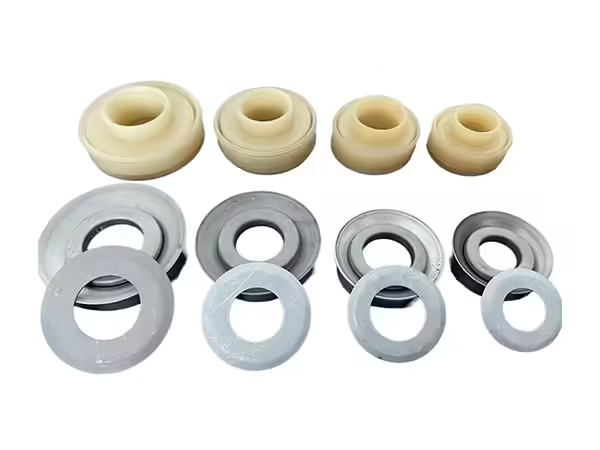
DTII Roller Seals are non-contact, labyrinth-style seals, meaning they do not rely on direct physical contact to maintain a barrier against contaminants. This design reduces wear and tear, which is a common issue with traditional contact seals. The seal consists of interlocking circular grooves between the roller end cap and the shaft, forming a complex “labyrinth” path that contaminants must navigate. As dust or moisture attempts to enter, its kinetic energy dissipates through vortices within the channels, ultimately depositing the particles and preventing them from reaching the bearing cavity.
This innovative approach is particularly valuable in harsh working environments, where conveyor systems are exposed to large amounts of dust, moisture, and other debris. According to industrial studies, labyrinth-style seals like the DTII can extend bearing life by up to 50% compared to conventional contact seals under the same operating conditions, while maintaining consistent sealing performance.
Key Features of DTII Roller Seals
DTII Roller Seals offer a combination of features designed for efficiency and durability:
- Non-contact labyrinth design prevents wear and reduces maintenance needs.
- Interlocking grooves in the seal create multiple twists and turns, enhancing contaminant retention.
- Suitable for harsh environments with dust, moisture, or other airborne particles.
- Widely used in belt conveyor rollers, ensuring consistent performance in industrial applications.
- High reliability over long operational periods, reducing unexpected downtime.
This combination of features ensures that DTII Roller Seals maintain optimal sealing efficiency while protecting bearings from premature failure.
How DTII Roller Seals Work
The DTII Roller Seal operates through a carefully engineered labyrinth path. The end cap and shaft feature staggered, ring-shaped grooves forming a series of twists and turns. As contaminants attempt to enter:
- Particles must navigate multiple turns, losing kinetic energy.
- Energy is dissipated in vortices created in the channels.
- Contaminants settle and are trapped in the labyrinth before reaching the bearing cavity.
Unlike contact seals, the DTII Roller Seal avoids friction and wear on the seal material itself. This is particularly advantageous in high-speed conveyor rollers, where contact-based seals would quickly degrade and require frequent replacement.
Factors Affecting Sealing Efficiency
Several factors can impact the performance of DTII Roller Seals:
- Environmental conditions such as dust levels, moisture, and temperature
- Precision in installation and alignment of the seal with the shaft
- Compatibility of materials and tolerances with the roller design
- Proper maintenance and inspection to ensure the labyrinth channels remain free of blockages
Optimizing these factors ensures that the seal consistently prevents contaminants from entering the bearing cavity and prolongs the service life of the equipment.
Applications of DTII Roller Seals
DTII Roller Seals are commonly applied in heavy-duty belt conveyor systems where contamination is prevalent. Industries benefiting from these seals include:
- Mining and bulk material handling
- Manufacturing lines with high dust exposure
- Logistics and packaging systems
- Any environment requiring reliable, low-maintenance roller seals
Because of the non-contact design, these seals perform exceptionally well in continuous operation without causing damage to either the seal or the roller shaft.
Installation and Maintenance Best Practices
Proper installation and maintenance are critical to the performance of DTII Roller Seals:
- Ensure accurate alignment of the seal and shaft to maintain labyrinth integrity
- Clean the seal channels during installation to remove any debris
- Inspect seals regularly for accumulated particles in the labyrinth
- Replace seals that show deformation or excessive wear to prevent bearing contamination
Following these practices will maximize seal efficiency and extend bearing life, reducing operational downtime.
Comparing DTII Roller Seals with Other Seals
DTII Roller Seals differ from conventional contact seals in several ways:
- Non-contact design eliminates direct wear on seal surfaces
- Labyrinth path provides multiple barriers to contaminants
- Reduced maintenance requirements and longer lifespan
- Enhanced performance in high-speed and dusty environments
Table: Comparison of DTII Roller Seal vs Conventional Seals
| Feature | DTII Roller Seal | Conventional Contact Seal | Notes |
|---|---|---|---|
| Contact Type | Non-contact | Contact | DTII avoids wear |
| Contaminant Resistance | High | Moderate | Labyrinth path traps particles |
| Maintenance Frequency | Low | Medium to High | DTII lasts longer |
| Bearing Life Impact | Minimal | Moderate | DTII extends bearing life |
| Suitable Environment | Harsh, dusty, wet | Moderate | DTII handles tough conditions |
This table highlights why DTII Roller Seals are preferred in demanding industrial applications.
Choosing the Right DTII Roller Seal
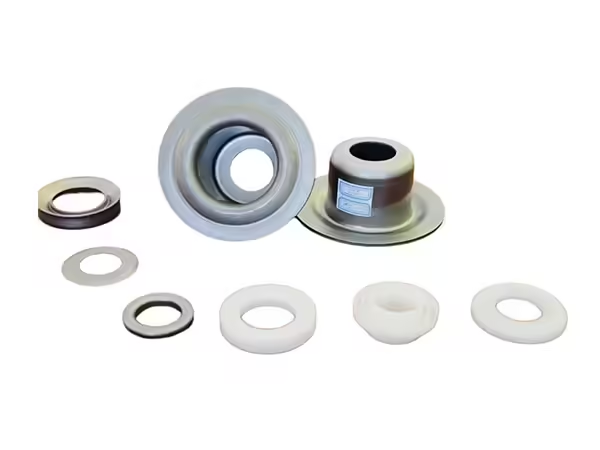
When selecting a DTII Roller Seal, consider:
- Roller diameter and shaft dimensions
- Operating speed and load requirements
- Environmental factors such as dust, moisture, and chemical exposure
- Supplier support, warranty, and available configurations
Selecting the appropriate seal ensures maximum efficiency and minimizes the risk of contamination, ultimately safeguarding your machinery and reducing maintenance costs.
Conclusion
DTII Roller Seals provide superior sealing efficiency in industrial applications by combining a non-contact, labyrinth-style design with durable construction. Their ability to prevent dust, moisture, and debris from entering bearing cavities makes them ideal for belt conveyor systems and other heavy-duty machinery. Proper installation, maintenance, and selection ensure that these seals maximize equipment life, reduce downtime, and maintain operational efficiency. When choosing seals for your machinery, DTII Roller Seals offer a reliable and low-maintenance solution that withstands harsh working environments.
FAQ
Can DTII Roller Seals handle high-speed conveyor rollers?
Yes, the non-contact design allows high-speed operation without accelerated wear.
How often should DTII roller seals be inspected?
Regular inspections every 3–6 months are recommended in harsh environments.
What types of materials is the DTII Roller Seal made from?
High-durability metals and polymers suitable for labyrinth channels and industrial use.
Are DTII Roller Seals compatible with lubricants?
Yes, they work with standard industrial lubricants, as the non-contact design avoids contamination.
How do DTII roller seals prevent moisture ingress?
Moisture is trapped in the labyrinth path, where it dissipates before reaching the bearing cavity.
 English
  French
  Spanish