

If you are still relying on manual measurement and semi-automatic cutting in your PVC pipe production line, you are probably already facing the same challenges many manufacturers encounter today: inconsistent cutting accuracy, rising labor costs, material waste, and slower delivery cycles.
The market for PVC pipe processing has changed rapidly in recent years. Buyers now expect tighter tolerances, cleaner cutting surfaces, and faster production turnaround. Whether you are producing pipes for drainage systems, industrial fluid transport, cable protection, or lightweight structural applications, precision and efficiency are becoming more important than ever.
This is exactly why more factories are upgrading to PVC pipe cutting machine automation.
Unlike traditional cutting methods, modern automatic PVC pipe cutting systems integrate intelligent feeding, PLC controls, servo positioning, and precision cutting technology into a continuous workflow. The result is not just faster production—it is a more stable and scalable manufacturing process.
In this article, you will learn how PVC pipe cutting machines improve production efficiency, why automation is becoming the preferred approach in smart factories, what features matter most when selecting equipment, and how real production environments are benefiting from automated pipe processing systems.
Table of Contents
Why PVC Pipe Processing Is Becoming More Demanding
PVC pipe manufacturing used to focus mainly on output quantity. Today, production priorities are very different.
Modern customers expect:
- Accurate cutting lengths
- Smooth pipe ends
- Consistent dimensions across batches
- Faster order fulfillment
- Lower defect rates
At the same time, manufacturers are under pressure to reduce:
- Labor dependency
- Material waste
- Machine downtime
- Secondary finishing processes
This shift is pushing many factories away from manual saw cutting and toward automated PVC pipe cutting machine systems.
The biggest difference is consistency. In high-volume production, consistency matters more than occasional peak performance.
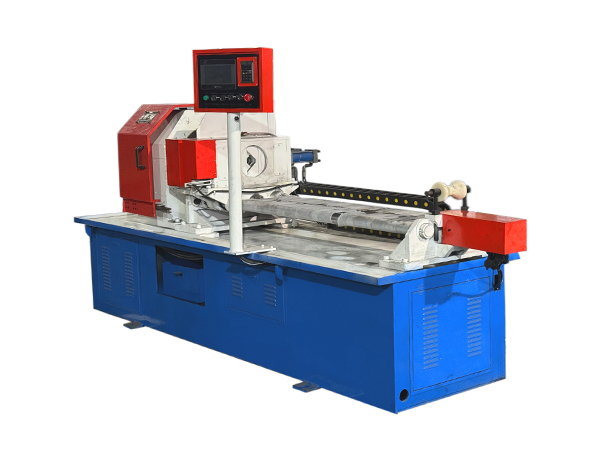
How a PVC Pipe Cutting Machine Works
To understand why automation matters, you first need to understand the machine structure.
A modern PVC pipe cutting machine typically integrates:
- PLC human-machine interface (HMI)
- Servo motor feeding system
- Ball screw positioning mechanism
- Linear guide rail motion structure
- Automatic length detection
- Rotating cutting tool system
The operation process is highly automated:
- Pipe parameters are entered into the PLC interface
- The servo system feeds the material automatically
- Positioning systems determine exact cutting length
- The rotating cutting blade performs the cut
- Finished sections move to the next stage automatically
Unlike older systems that rely heavily on operator judgment, automated machines maintain the same precision repeatedly throughout long production cycles.
Why Smart Factories Are Investing in Automation
The term “smart factory” is no longer limited to robotics or fully unmanned production. In reality, smart manufacturing often starts with smaller upgrades that improve process consistency.
PVC pipe cutting automation is one of the most practical upgrades because it directly improves:
- Production speed
- Dimensional accuracy
- Labor efficiency
- Material utilization
- Workflow standardization
Factories that process large quantities of PVC pipe benefit significantly because automated systems reduce variability between shifts and operators.
This creates a more predictable production environment, which is critical for scaling manufacturing operations.
Real Production Case: From Manual Cutting to Automated Workflow
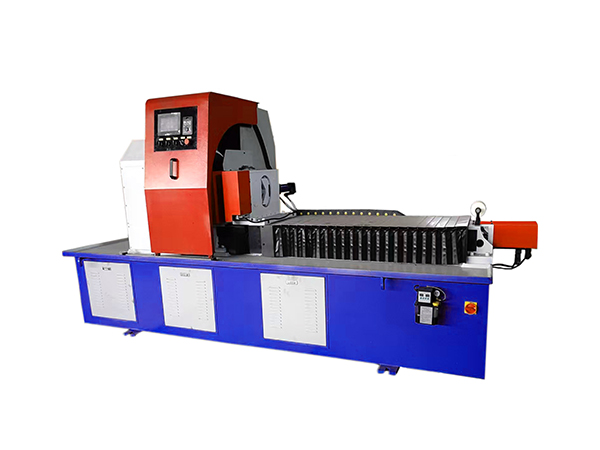
Consider a medium-sized PVC pipe processing workshop that originally relied on manual measuring and semi-automatic saw cutting.
The workshop faced several issues:
- Length inconsistency between batches
- High labor intensity
- Material waste from measurement errors
- Surface burrs requiring secondary finishing
- Slow production during large orders
After introducing an automatic PVC pipe cutting machine with servo feeding and PLC control, several improvements became visible within the first production cycle:
- Pipe length accuracy improved significantly
- Cutting speed increased
- Operator workload decreased
- Rework rates dropped
- Overall workflow became more organized
The biggest operational improvement was standardization. Instead of depending on operator skill, the system relied on programmed precision.
Key Features You Should Focus on When Choosing a PVC Pipe Cutting Machine
Not every machine delivers the same performance. You should evaluate several critical features before making a decision.
1. PLC Human-Machine Interface
An intuitive PLC interface allows you to:
- Input cutting length
- Adjust speed
- Set batch quantities
- Monitor machine status
This simplifies operation and reduces training time.
2. Servo Motor Feeding System
Servo motors ensure stable and accurate pipe positioning. This is essential for maintaining consistent cutting lengths.
3. Ball Screw and Linear Guide Rail System
These components improve motion precision and reduce vibration during feeding.
4. Rotating Tool Cutting Structure
The rotating blade design allows the pipe to remain stationary while the tool performs the cut. This improves surface quality and reduces burr formation.
5. Continuous Feeding Capability
Modern systems support continuous processing for unlimited pipe lengths, making them suitable for large-scale production.
Comparison Between Manual and Automatic PVC Pipe Cutting
To clearly understand the difference, here is a practical comparison:
| Feature | Manual Cutting System | Automatic PVC Pipe Cutting Machine |
|---|---|---|
| Cutting Accuracy | Operator dependent | High and consistent |
| Production Speed | Moderate | High |
| Labor Requirement | High | Low |
| Surface Finish | Requires finishing | Smooth and clean |
| Material Waste | Higher | Lower |
| Batch Consistency | Variable | Stable |
This comparison shows why automated cutting systems are becoming increasingly common in modern manufacturing.
Why Cutting Precision Matters More Than You Think
Many manufacturers underestimate the long-term impact of cutting accuracy.
Inaccurate cutting creates problems in:
- Pipe assembly
- Joint alignment
- Product packaging
- Automated downstream processing
Even small dimensional inconsistencies can slow production later in the workflow.
Accurate cutting improves not only product quality but also overall production efficiency.
How Automation Reduces Labor Pressure
Labor shortages and rising operational costs are major challenges in manufacturing today.
A PVC pipe cutting machine reduces labor dependency by automating:
- Measuring
- Feeding
- Positioning
- Cutting
Operators mainly supervise the process instead of performing repetitive manual work.
This improves workplace efficiency while reducing physical fatigue.
Material Waste Reduction and Cost Control
One hidden cost in pipe production is material waste.
Manual cutting often creates:
- Uneven lengths
- Rejected products
- Incorrect measurements
- Excess trimming
Automated systems minimize these issues through accurate positioning and repeatable cutting cycles.
Over long production runs, reduced waste creates significant cost savings.
Industries That Benefit Most from PVC Pipe Cutting Automation
PVC pipe cutting machines are widely used in:
- Construction material manufacturing
- Cable conduit production
- Water drainage system fabrication
- Industrial piping systems
- Agricultural irrigation pipe processing
Any industry requiring large-volume PVC pipe processing can benefit from automation.
Maintenance Tips for Long-Term Machine Performance
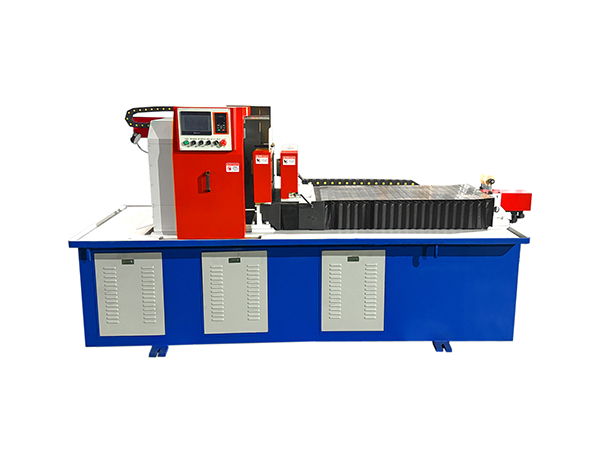
Even advanced equipment requires proper maintenance.
To maintain stable operation:
- Clean guide rails regularly
- Inspect servo systems periodically
- Monitor blade wear
- Check lubrication systems
- Keep PLC systems protected from dust and moisture
Consistent maintenance ensures long-term accuracy and operational stability.
Future Trends in PVC Pipe Processing
The future of PVC pipe manufacturing is moving toward:
- Higher automation
- Intelligent monitoring systems
- Lower labor dependency
- Greater production flexibility
- More energy-efficient machinery
Factories that upgrade early often gain operational advantages through improved efficiency and product consistency.
Final Thoughts
A PVC pipe cutting machine is no longer just a production tool—it is becoming a key part of modern smart manufacturing. By combining automation, precision feeding systems, PLC controls, and efficient cutting structures, you can improve product quality while reducing labor intensity and operational cost.
Instead of relying on manual processes that create variability, automated pipe cutting systems help you build a more scalable, efficient, and future-ready production environment.
FAQ
What is a PVC pipe cutting machine used for?
It is used for automatic and precise cutting of PVC pipes in industrial manufacturing and processing applications.
Can the machine cut different pipe lengths automatically?
Yes, PLC systems allow operators to input custom cutting lengths for automated operation.
Does the pipe rotate during cutting?
No, in many systems the cutting tool rotates while the pipe remains stationary.
How accurate is an automatic PVC pipe cutting machine?
Accuracy depends on machine quality, but servo-controlled systems provide highly consistent cutting precision.
Can automated systems reduce labor costs?
Yes, automation significantly reduces manual measurement and feeding work.
Is secondary finishing required after cutting?
In many cases, the cutting surface is smooth enough to minimize or eliminate secondary processing.
 English
  French
  Spanish