

Table of Contents
Introduction
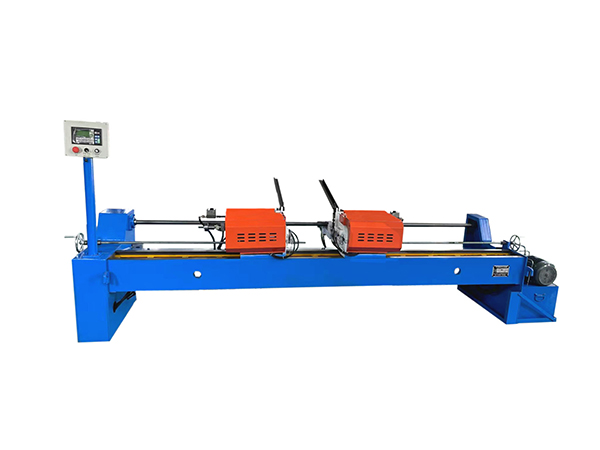
The manufacture of machine tools is not simply the process of assembling motors, frames, cutting systems, and control components into one piece of equipment. For industrial production, a machine tool must convert a manufacturing requirement into a repeatable process.
This difference becomes especially important in conveyor roller production. A roller may appear mechanically simple, but producing it consistently can involve tube cutting, shaft machining, end processing, milling, grooving, bearing assembly, welding, and final inspection. An error created at an early stage can move downstream and affect several later operations.
For this reason, evaluating the manufacture of machine tools requires more than looking at specifications. You need to understand how the machine is designed around the workpiece, how it controls variation, how easily operators can repeat the process, and how well it fits the equipment before and after it.
Key points covered in this guide include:
- How machine design begins with the workpiece and production process
- Why machine rigidity and workholding influence repeatability
- How tooling and fixtures affect roller machining consistency
- Where automation creates real production value
- Why cycle time should be evaluated as part of a complete line
- How maintainability influences long-term machine performance
- What should be tested before a machine enters regular production
- How manufacturers can design several machines as one production system
For roller manufacturers planning a new line or upgrading individual processes, these factors provide a more practical way to evaluate industrial equipment.
1. Manufacture of Machine Tools Starts with Process Engineering
The strongest machine designs usually begin with a manufacturing problem rather than a machine model.
Before designing equipment, engineers need to understand what enters the machine, what operation must be performed, what condition the workpiece should have when it leaves, and what the next manufacturing stage requires.
This process-focused approach is fundamental to the manufacture of machine tools.
The general concept of a machine tool involves controlling a tool and workpiece relationship to perform manufacturing operations. In specialized roller production, however, that principle has to be adapted to particular tube dimensions, shaft structures, cutting requirements, fixtures, production sequences, and automation needs.
Start with the workpiece
Important workpiece information can include:
- Tube outside diameter
- Tube wall thickness
- Tube length
- Shaft diameter
- Shaft-end geometry
- Groove position
- Milling features
- Bearing-seat requirements
- Material characteristics
- Required production sequence
- Expected product variation
A manufacturer that understands these variables can determine the appropriate machine structure much more accurately.
The opposite approach—selecting a standard machine first and trying to force the process into it later—can create unnecessary compromises.
Understand the previous and next process
A tube cutting machine does not operate in isolation.
Its output may enter an end-processing machine. A machined shaft may move to bearing assembly. An assembled roller may proceed to welding.
Therefore, the manufacture of machine tools should consider the condition in which the component moves between operations.
If the first machine produces a feature that the second machine cannot locate reliably, the individual accuracy of both machines becomes less meaningful.
2. Machine Structure Determines Process Stability
Machine frames are often judged visually, but their real purpose is structural stability.
During cutting, milling, turning, pressing, or welding, forces are transferred through the tool, fixture, workpiece, machine structure, and support system. If these elements move unpredictably, the final workpiece can vary even when the control program remains unchanged.
Rigidity should match the operation
A cutting machine and a bearing-setting machine do not experience identical forces.
The manufacture of machine tools therefore requires machine structure to be designed according to the operation rather than using one construction philosophy for every application.
Factors can include:
- Frame geometry
- Support positions
- Guide arrangement
- Spindle support
- Fixture mounting
- Moving mass
- Cutting direction
- Workpiece overhang
Excessive flexibility can affect tool engagement and feature location. Poor workpiece support can also allow long roller tubes or shafts to move during processing.
Stability matters more than appearance
A large machine is not automatically a stable machine.
Good engineering depends on how loads travel through the structure. Support should be positioned where it contributes to the manufacturing operation, and the working area should remain sufficiently rigid throughout the machine’s intended range.
When evaluating industrial equipment, it is useful to ask how the machine structure supports the actual machining process instead of focusing only on overall dimensions.
3. Fixtures Are a Core Part of the Manufacture of Machine Tools
One of the most overlooked parts of machine design is workholding.
A control system may position an axis accurately, but the finished component can still vary if the workpiece does not return to the same position each cycle.
This makes fixtures a central part of the manufacture of machine tools.
A fixture establishes the production reference
A good fixture should answer several questions:
Where is the workpiece located?
How is its position established?
Which surface or feature becomes the datum?
How is movement prevented during machining?
How does the operator know that loading is correct?
In roller manufacturing, these questions are particularly important for long components such as tubes and shafts.
Small differences in positioning can influence:
- Cut length
- Shaft-end feature location
- Groove position
- Milling position
- Bearing alignment
- Welding location
Repeatable clamping is more useful than excessive clamping force
Increasing clamping force is not always the solution.
Thin-wall tubes can deform when held incorrectly. Long shafts may require appropriate support rather than simply stronger clamping.
Good fixture engineering controls the component without introducing another source of variation.
For that reason, manufacturers should consider contact surfaces, clamping direction, component geometry, loading convenience, and release sequence together.
4. Tooling Design Connects the Machine to the Finished Part
Machine structure creates a stable platform, while tooling performs or supports the actual manufacturing operation.
The two need to be developed together.
For example, the manufacture of machine tools for roller production may involve cutting blades, milling tools, grooving tools, turning tools, welding fixtures, positioning blocks, or specialized bearing assembly components.
Tool selection should reflect the material and operation
Tooling should not be chosen purely because it fits the machine.
Engineers should consider:
- Workpiece material
- Wall thickness
- Cutting depth
- Surface requirements
- Feature geometry
- Production frequency
- Tool access
- Tool replacement method
A tool that works for occasional processing may behave differently during repeated production cycles.
Tool replacement should be part of the machine design
Tooling wears.
That is a normal manufacturing condition rather than an exceptional event.
A well-designed machine should allow operators to identify, access, adjust, or replace commonly serviced tools without unnecessarily disturbing unrelated machine components.
This becomes increasingly important when the machine operates as part of a connected production line.
5. Automation Should Reduce Variation, Not Add Complexity
Automation is now common in the manufacture of machine tools, but simply adding more automated functions does not guarantee better production.
Useful automation solves a specific manufacturing problem.
For specialized conveyor roller processing machines, automation can be used across several production stages to control material positioning, machine cycles, machining parameters, and repetitive handling.
Where automation delivers practical value
Automation can be valuable when an operation repeatedly requires the same action.
Typical examples include:
- Automatic feeding
- Programmable positioning
- Automatic clamping
- Automatic cutting cycles
- Controlled tool movement
- Parameter storage
- Automatic return
- Sequence control
- Alarm monitoring
These functions can reduce the number of decisions an operator must make during every cycle.
Automation should address the source of variation
Consider tube cutting.
If operators repeatedly measure every tube manually, automatic feeding and length positioning can improve process consistency.
In shaft processing, stored parameters may reduce setup differences between production batches.
In bearing assembly, controlled positioning can help make the assembly sequence more predictable.
The important question is not how many automated features a machine contains. It is whether those features make the manufacturing process easier to control.
6. Precision Must Be Considered Together with Repeatability
Precision is often emphasized when discussing industrial machinery. Yet in production, repeatability can be equally important.
One accurately processed workpiece proves that a machine can achieve a result.
Repeated workpieces show whether the process can maintain that result.
Accuracy and repeatability solve different questions
Accuracy asks:
Is the finished feature close to the intended value?
Repeatability asks:
Can the machine create a similar result again under the same production conditions?
The manufacture of machine tools should address both.
Sources of variation can include:
- Workpiece positioning
- Fixture movement
- Tool wear
- Feeding variation
- Material differences
- Thermal changes
- Operator loading
- Sensor positioning
- Mechanical wear
A machine intended for industrial production should be engineered so these variables can be managed rather than ignored.
Evaluate the whole positioning chain
Suppose an axis has excellent positioning capability but the workpiece fixture shifts slightly between cycles.
The final component may still vary.
This is why machine evaluation should consider the complete chain:
Control → drive system → machine movement → tooling → fixture → workpiece.
The weakest part of that chain may determine the actual production result.
7. Production Capacity Depends on More Than Machine Speed
Speed is easy to compare, which makes it attractive as a machine specification.
But machine cycle speed and factory output are not the same thing.
A machine operating rapidly can still create a bottleneck if loading is difficult, changeovers are slow, or downstream equipment cannot accept its output.
Consider the complete operating cycle
A realistic production cycle can include:
| Production Activity | Why It Matters |
|---|---|
| Material loading | Determines how quickly production can begin |
| Workpiece positioning | Influences both time and consistency |
| Clamping | Must be secure and repeatable |
| Machine processing | Performs the actual manufacturing operation |
| Unclamping | Affects transition to unloading |
| Workpiece unloading | Influences operator and automation requirements |
| Inspection | Prevents unstable output from moving downstream |
| Tool adjustment | Becomes important during longer production runs |
| Product changeover | Influences mixed-model manufacturing |
When comparing equipment, these supporting activities should be evaluated together with the nominal processing cycle.
The slowest process influences the line
Consider three connected machines:
| Machine | Nominal Cycle |
|---|---|
| Process A | 24 seconds |
| Process B | 37 seconds |
| Process C | 26 seconds |
The line cannot simply be described as a 24-second production system.
Process B is likely to restrict output unless the workflow is redesigned, the operation is performed in parallel, or suitable buffering is introduced.
This is one reason the manufacture of machine tools for complete production lines requires broader engineering than building standalone machines.
8. Machine Tools Should Be Designed as a Production System
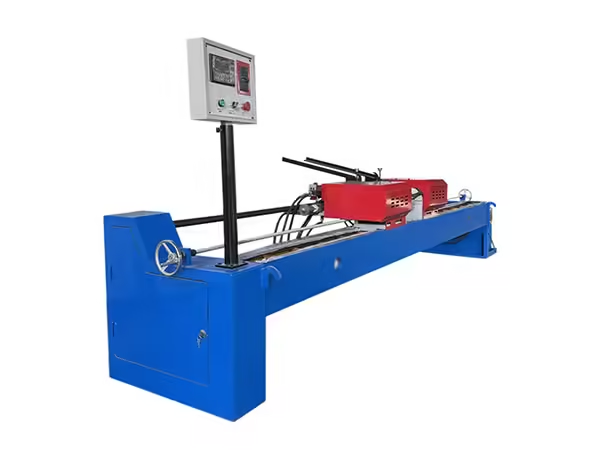
For factories purchasing several machines, compatibility becomes an important part of equipment selection.
A supplier may manufacture excellent individual machines while still failing to create an efficient production line if those machines do not work together naturally.
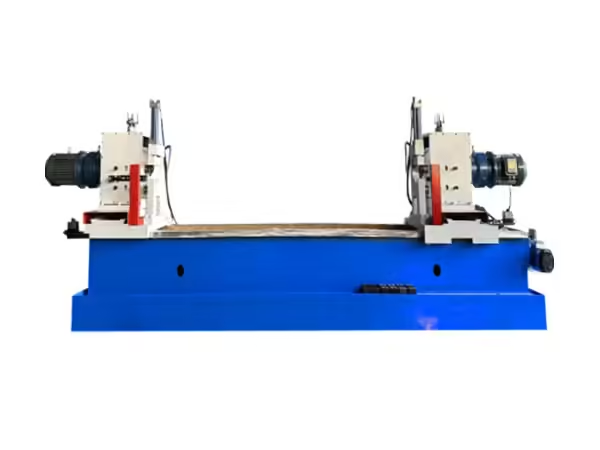
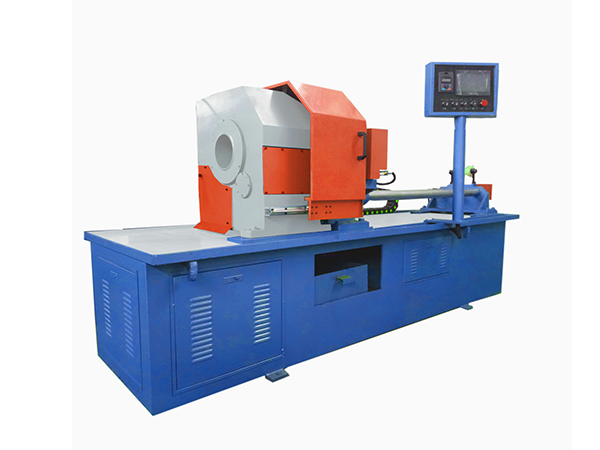
The current manufacturing and processing machinery used for roller production illustrates the variety of operations that may need to be coordinated, including tube cutting, shaft processing, milling, grooving, bearing-related assembly, and welding.
Match the output of one machine to the input of the next
Important interface questions include:
- How is the part transferred?
- Is reorientation necessary?
- Which datum is used by the next machine?
- Does the next operation require manual measurement?
- Are intermediate buffers needed?
- Can production continue if one machine stops?
- How are different product specifications managed across the line?
Answering these questions before equipment installation can prevent unnecessary handling later.
Avoid solving one operation while creating another bottleneck
Imagine a new cutting machine dramatically increases tube preparation capacity.
If shaft processing remains unchanged, additional tube output may simply accumulate between stations.
The improvement should therefore be evaluated at line level.
Manufacture of machine tools for industrial production is most effective when equipment designers understand where each machine sits inside the full material flow.
Quality Control Should Be Designed into the Machine Process
Quality inspection should not exist only at the end of production.
The most useful manufacturing systems control important variables as early as possible.
For example, if tube length affects several later operations, controlling tube positioning at the cutting stage is more efficient than discovering length variation after assembly.
Define critical characteristics
Not every measurable feature deserves equal attention.
Identify the characteristics that directly affect later processing or roller function, such as:
- Component length
- Feature position
- Shaft geometry
- Concentric relationships
- Bearing fit
- Alignment
- Welding position
These characteristics can then influence fixture design, machine control, and inspection planning.
Use repeat-production testing
Acceptance should not rely only on one demonstration component.
A stronger evaluation processes several workpieces under conditions that resemble normal production.
The results can show whether:
- Loading remains repeatable
- Fixtures maintain position
- Tools behave consistently
- Program parameters remain stable
- Components stay within the required working range
This type of evaluation provides more useful evidence of production readiness.
Maintainability Is Part of Good Machine Design
Industrial equipment eventually requires lubrication, inspection, adjustment, tool replacement, sensor replacement, cleaning, and other routine work.
Maintainability therefore belongs inside the manufacture of machine tools rather than being considered only after installation.
Identify routine service points
Operators and maintenance teams should understand:
- Which parts require lubrication
- Which components experience normal wear
- Where adjustments are made
- How sensors are accessed
- How tools are replaced
- How abnormal conditions are diagnosed
Frequently serviced components should be reasonably accessible.
A machine that requires extensive disassembly for a routine adjustment creates an unnecessary maintenance burden.
Documentation supports consistent operation
Machine documentation can include:
- Operating procedures
- Parameter instructions
- Maintenance schedules
- Lubrication requirements
- Electrical information
- Alarm descriptions
- Tooling references
- Wear-component identification
- Safety procedures
Good documentation also helps when new operators or maintenance personnel become responsible for equipment they did not originally commission.
How to Evaluate the Manufacture of Machine Tools Before Selection
A structured evaluation makes it easier to compare equipment without allowing one impressive feature to dominate the decision.
The following framework can be adapted to different roller manufacturing projects.
| Evaluation Area | What to Examine | Why It Matters |
|---|---|---|
| Process understanding | Workpiece and production analysis | Ensures equipment suits the real application |
| Machine structure | Rigidity and support | Influences process stability |
| Fixtures | Location and clamping | Controls repeatability |
| Tooling | Suitability and accessibility | Affects machining performance |
| Automation | Positioning and cycle control | Reduces repetitive variation |
| Working range | Normal product dimensions | Ensures usable production flexibility |
| Capacity | Complete operating cycle | Helps balance the line |
| Maintenance | Service and wear access | Supports long-term operation |
| Documentation | Operating and technical information | Improves consistent machine use |
| Acceptance testing | Repeated workpiece verification | Demonstrates production capability |
Rather than assigning identical importance to every category, you can adjust the emphasis according to your manufacturing requirements.
A factory producing a narrow range of rollers at high volume may prioritize repeatability and cycle coordination.
A factory handling many roller designs may place greater emphasis on changeover, working range, and parameter management.
There is no universal machine configuration because production conditions differ.
Common Mistakes When Evaluating Machine Tool Manufacturing
Several mistakes repeatedly appear in industrial equipment selection.
Comparing only maximum specifications
Maximum tube diameter or maximum shaft length indicates a boundary.
It does not necessarily indicate the machine’s most stable everyday production range.
Ask how your most common products fit inside the machine’s working envelope.
Treating control components as the complete machine
Well-known electrical and control components can be valuable, but they cannot compensate for poor fixtures, weak machine structure, or unsuitable process design.
Mechanical and control engineering must work together.
Ignoring changeover
A machine can process multiple specifications but still be inefficient for mixed production if each change requires lengthy manual adjustment.
Evaluate the actual steps required to move from one product specification to another.
Judging equipment from a single sample
A successful component demonstrates capability.
A sequence of consistent components provides stronger evidence of production stability.
Separating every machine decision
When several processes belong to one roller production line, selecting machines independently can create mismatched capacity or awkward material flow.
The line should be reviewed as one manufacturing system.
What Makes High-Quality Manufacture of Machine Tools Different?
Good manufacture of machine tools is less about adding features and more about controlling manufacturing variables.
A well-engineered machine should make the desired operation predictable.
That usually requires alignment between:
- Machine structure
- Workpiece geometry
- Fixtures
- Tooling
- Movement systems
- Controls
- Automation
- Operator interaction
- Maintenance
- Adjacent production processes
If one area is ignored, another component may be forced to compensate for it.
For example, advanced software cannot permanently solve unstable workholding. Higher cutting speed cannot solve poor line balance. More automation cannot correct an unsuitable process sequence.
The strongest machine designs therefore begin with manufacturing logic.
Conclusion
The manufacture of machine tools should be evaluated as a complete engineering discipline rather than as the assembly of individual mechanical and electrical components.
For roller production, effective equipment begins with understanding the workpiece and the production route. Machine structure must support the required operation. Fixtures must establish reliable datums. Tooling must suit the material and feature being produced. Automation should remove meaningful variation rather than simply increase complexity.
Precision must also be evaluated together with repeatability.
A machine that produces one excellent sample is different from a machine that can maintain consistent production across repeated cycles.
When several machines form one roller production line, the engineering challenge becomes broader. Tube cutting, shaft machining, grooving, assembly, welding, inspection, material transfer, and cycle balance must support one another.
For users comparing industrial equipment, the most useful question is therefore not simply, “What can this machine do?”
A better question is:
“Can this machine perform my process consistently, integrate with the rest of production, and remain practical to operate and maintain?”
That question gets much closer to the real purpose of professional manufacture of machine tools.
FAQ
What does the manufacture of machine tools involve?
The manufacture of machine tools combines process analysis, structural design, workholding, tooling, motion control, automation, electrical systems, assembly, testing, and documentation. The objective is to create equipment that performs a defined manufacturing operation consistently under normal production conditions.
Why are fixtures important in the manufacture of machine tools?
Fixtures determine how a workpiece is located, supported, and clamped. Even an accurate machine axis cannot ensure consistent parts if the workpiece position changes between cycles. Well-designed fixtures help maintain repeatability while preventing movement or unnecessary deformation during processing.
How is repeatability tested in machine tool manufacturing?
Repeatability is normally evaluated by processing multiple representative workpieces under similar operating conditions and comparing critical dimensions or feature positions. This helps reveal variation caused by loading, clamping, tooling, positioning, machine movement, or other process factors.
How does automation improve the manufacture of machine tools?
Automation can control repetitive tasks such as feeding, positioning, clamping, machining cycles, parameter selection, and unloading. Its main value is reducing unnecessary variation and operator dependency while making the production sequence more predictable and easier to manage.
What should I evaluate when selecting machine tools for roller production?
Review process compatibility, machine rigidity, fixtures, tooling, working range, repeatability, automation, complete cycle time, maintenance access, documentation, and integration with adjacent machines. The best equipment should fit the complete roller manufacturing process rather than one isolated operation.
 English
 French
 Spanish