

Table of Contents
Introduction
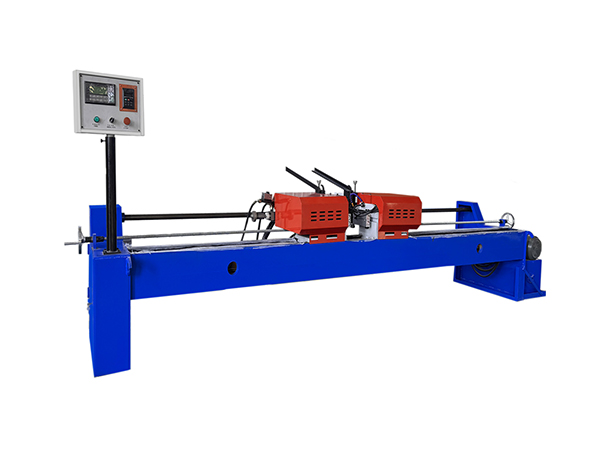
Choosing equipment for a roller production line is not simply a matter of finding a machine with the right diameter range, motor power, or cycle speed. The more important question is whether the equipment can support your entire manufacturing process consistently.
A roller passes through several operations before it becomes a finished component. Tube cutting affects end processing. Shaft accuracy affects assembly. Bearing-seat positioning influences rotation quality. Welding can introduce distortion. If these stages are treated independently, a line that looks capable on paper may still suffer from unnecessary handling, inconsistent output, or recurring adjustments.
That is why evaluating machine tools manufacturers should begin with the production process rather than with a catalogue.
Key points to consider include:
- Map the complete roller production sequence before selecting equipment.
- Evaluate repeatability, not only nominal machining accuracy.
- Match machine capacity across connected production stages.
- Choose automation according to the source of process variation.
- Check tooling, fixtures, maintenance access, and changeover requirements.
- Use real workpiece samples when evaluating machine capability.
- Compare manufacturers with the same technical criteria rather than relying on general claims.
The objective is not to find the machine with the longest feature list. It is to build a production system in which every operation supports the next one.
Why Machine Tools Manufacturers Matter to Roller Production
A machine tool controls the relationship between a workpiece and the tool or mechanism acting on it. In roller manufacturing, that principle extends across cutting, turning, milling, grooving, positioning, assembly, and related processing operations.
This makes the manufacturer important for more than equipment supply.
A capable manufacturer needs to understand how the workpiece behaves before, during, and after machining. A technically impressive machine can still be unsuitable when its fixture does not locate the roller correctly, its working range leaves little adjustment margin, or its output does not match adjacent equipment.
For this reason, the best machine tools manufacturers for a roller project are usually those capable of discussing the complete processing sequence.
Process fit comes before specifications
Suppose one machine produces a highly accurate component, but the part must then be manually repositioned several times before the following operation. Some of the accuracy advantage may be lost through handling and repeated locating.
Conversely, a moderately sophisticated machine with well-designed fixtures and predictable process control may produce more stable results over an entire production shift.
The practical lesson is simple: specifications describe a machine; process fit describes what that machine can do for your factory.
Map Your Roller Production Process Before Selecting a Manufacturer
Before comparing machine tools manufacturers, write down the route your material follows from raw tube and shaft stock to a completed roller.
A simplified sequence may include:
| Production Stage | Main Control Point | What Can Go Wrong | What to Verify |
|---|---|---|---|
| Tube cutting | Length and end quality | Burrs, inconsistent length | Feeding and cutting stability |
| Tube/end processing | Concentricity and geometry | Misalignment | Workholding and positioning |
| Shaft machining | Dimensions and feature position | Assembly mismatch | Repeatability and fixture accuracy |
| Grooving/milling | Feature location | Incorrect bearing or retaining position | Datum control |
| Bearing-seat assembly | Alignment and press fit | Excessive resistance or looseness | Force and positioning control |
| Welding | Position and heat input | Distortion or inconsistent joints | Fixture stability and cycle control |
| Final inspection | Rotation and dimensions | Defects reaching assembly | Inspection method and traceability |
This map creates a much better basis for supplier discussions.
Define the input and output of every station
For each operation, record four things:
- What condition does the component have when it enters the machine?
- What feature must the machine create?
- What tolerance or functional requirement matters?
- What does the next station expect to receive?
These questions reveal dependencies that are easy to miss when machines are evaluated separately.
For example, improving tube-cutting consistency may reduce adjustment work at a later end-processing station. Better shaft positioning may simplify bearing assembly. A stable welding fixture can reduce the need to correct distortion afterward.
Find the bottleneck before adding capacity
A production line cannot be evaluated by looking only at the fastest machine.
If cutting takes less time than shaft processing, increasing cutting speed may simply produce a larger queue of work-in-progress. If a high-speed welding station frequently waits for components from the previous operation, its theoretical capacity has little value.
When talking with machine tools manufacturers, ask how their proposed equipment fits the capacity of the whole line rather than requesting maximum cycle speed in isolation.
Evaluate the Manufacturer’s Process-Specific Machine Portfolio
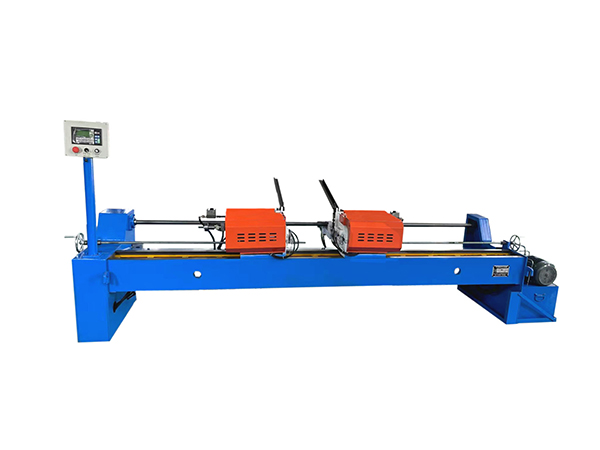
One useful indication of technical relevance is whether a supplier works with equipment designed around the actual production stages you need.
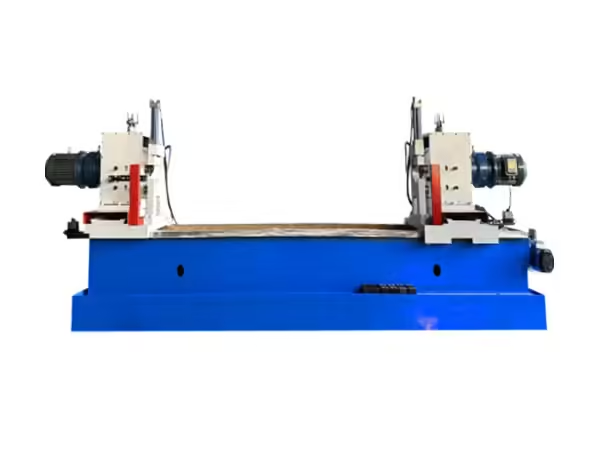
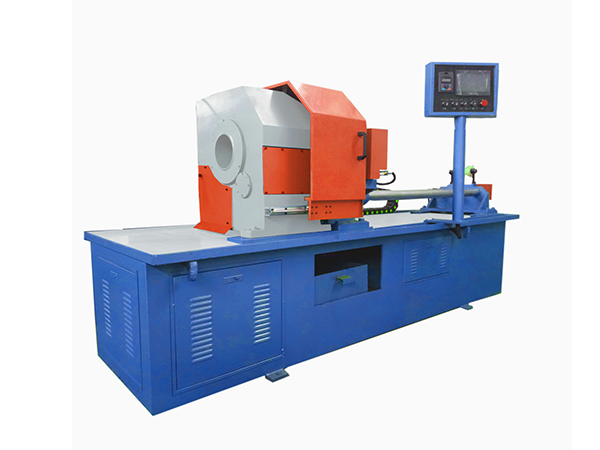
For roller manufacturing, this may mean tube cutting, end processing, shaft preparation, bearing assembly, welding, or other dedicated operations. A conveyor roller processing machine solution illustrates how these operations can be considered as parts of a connected manufacturing process rather than unrelated machines.
Standalone machines have their place
Not every factory needs a completely integrated production line.
Standalone equipment may be appropriate when:
- an existing line has one clear bottleneck;
- only one operation requires automation;
- upstream and downstream machines are already suitable;
- production involves frequent process changes;
- the factory wants to replace equipment in stages.
In this situation, interface compatibility becomes important. The new machine should accept the dimensions, workpiece condition, and handling method produced by the existing operation.
Integrated systems solve a different problem
An integrated approach is useful when several connected operations need to be established or reorganized.
Here the manufacturer should be able to explain:
- the sequence of operations;
- expected workpiece flow;
- where intermediate storage is necessary;
- which stations determine line capacity;
- how different roller specifications are changed over;
- what happens when one station stops.
This is where machine tools manufacturers begin to demonstrate engineering capability rather than simply equipment availability.
Check Precision, Repeatability, and Process Stability
Precision is one of the most frequently discussed machine specifications, but it is also one of the easiest to misunderstand.
A single accurately machined sample does not demonstrate stable production.
Accuracy describes a result
Accuracy asks how close an output is to its intended value.
For example, a shaft feature may need to appear at a specified position, or a tube may need to be cut to a defined length.
Repeatability describes consistency
Repeatability asks whether the machine can produce a similar result cycle after cycle.
For production equipment, this distinction matters. You are usually manufacturing hundreds or thousands of components over time, not one demonstration piece.
When comparing machine tools manufacturers, ask how repeatability is achieved through:
- rigid locating points;
- suitable clamping methods;
- stable feeding systems;
- controlled tool movement;
- consistent program parameters;
- appropriate wear compensation;
- repeatable loading procedures.
Fixtures deserve more attention
Fixtures are sometimes treated as secondary accessories. In practice, they can determine whether the machine reproduces the same datum position every cycle.
A sophisticated control system cannot fully compensate for unstable workholding.
For roller and shaft processing, ask how the workpiece is centered, supported, clamped, and referenced. If several dimensions are processed from different datums, find out how positional relationships are maintained.
This discussion often reveals more about engineering quality than a list of electronic components.
Examine Automation and Control Systems
Automation has clear advantages when it removes repetitive manual tasks or reduces variation. However, more automation is not automatically better.
The correct level depends on your production mix.
Automation should solve a specific production problem
Useful automation may include:
- automatic material feeding;
- programmable length positioning;
- controlled cutting cycles;
- automatic clamping;
- stored processing parameters;
- coordinated movement;
- automatic return and unloading sequences.
The key question is not, “How automated is this machine?”
A better question is, “Which sources of variation does the automation remove?”
If operators repeatedly measure tube length manually, automatic positioning may improve consistency. If setup errors occur because several settings must be entered independently, stored programs may help. If loading itself is already stable, adding a complex loading system may deliver less benefit.
Controls should remain understandable
A good control interface should make routine operation easier.
Operators should be able to identify:
- active machine status;
- current processing parameters;
- alarm conditions;
- adjustment points;
- maintenance warnings;
- safe restart procedures.
Machine tools manufacturers should also explain what happens when sensors fail, tools wear, materials vary, or production stops halfway through a cycle.
Those situations are part of manufacturing reality.
Make Sure the Machines Can Handle Your Roller Specifications
A machine may be suitable for one roller model and still be unsuitable for your overall product range.
Before selecting equipment, prepare a specification matrix for the rollers you expect to produce.
Include:
- tube diameter range;
- tube length range;
- wall thickness;
- shaft diameter;
- shaft length;
- shaft-end geometry;
- groove or flat requirements;
- bearing-seat configuration;
- material type;
- expected production volume;
- changeover frequency.
Then classify these specifications into normal, occasional, and possible future production.
Avoid selecting at the extreme limit
If your most common roller dimension sits very close to a machine’s maximum or minimum working range, ask how that affects clamping, rigidity, tooling, or cycle stability.
A machine being technically capable of accepting a dimension does not necessarily mean that dimension is ideal for continuous production.
Operating margin matters.
Discuss changeovers as a production process
Factories producing several roller types should ask:
- Which fixtures must be changed?
- Which parameters are stored electronically?
- Which settings require manual measurement?
- How many tools are changed?
- How is the first component after changeover verified?
A flexible machine is not merely one with a wide nominal working range. It is one that can move between required products without introducing unnecessary setup risk.
Evaluate Machine Construction and Maintainability
Machine selection often focuses heavily on performance before installation and too little on what happens after months of use.
Maintainability should be evaluated at the same time as productivity.
The site’s current manufacturing and processing machinery portfolio includes equipment covering several roller-related processing stages, which makes process-by-process evaluation particularly relevant when planning a line.
Look at structural rigidity
Machine frames, guide structures, supports, and fixtures need enough rigidity for the operation they perform.
Rigidity affects:
- dimensional consistency;
- vibration;
- cutting stability;
- tool life;
- surface condition;
- long-term repeatability.
This does not mean heavier is always better. Construction needs to suit the forces generated by the specific operation.
Ask what wears
Every production machine contains components that eventually need inspection, adjustment, or replacement.
Ask the manufacturer to identify routine wear points such as:
- cutting tools;
- guides;
- bearings;
- clamping elements;
- seals;
- belts;
- contact surfaces;
- sensors.
Then ask how easily those parts can be accessed.
A machine that performs well but requires excessive disassembly for routine service can create avoidable downtime.
Compare Production Capacity and Line Balance
Production capacity should be discussed as a system.
Machine tools manufacturers may quote a cycle time for a particular operation, but cycle time alone does not define actual production output.
Separate machine cycle from production cycle
A machine cycle may begin after a workpiece is loaded and end when machining finishes.
The production cycle may also include:
- loading;
- unloading;
- dimensional verification;
- tool cleaning;
- material movement;
- program change;
- fixture adjustment;
- normal operator response time.
When comparing machines, make sure the same definition of cycle time is being used.
Otherwise, two apparently comparable figures may represent different operating conditions.
Balance connected stations
Imagine three processes with nominal cycle times of 20, 35, and 22 seconds.
The theoretical 20-second capability of the first machine does not make the line a 20-second line. The 35-second station becomes the constraint unless parallel processing, buffering, or another process change is introduced.
This simple line-balance check prevents one of the most common equipment-selection mistakes: buying speed where the production system cannot use it.
Review Quality Assurance and Machine Acceptance Methods
A technically serious equipment discussion should eventually move from claims to verification.
Before finalizing a machine specification, define how successful performance will be demonstrated.
Test actual or representative workpieces
A useful acceptance test should represent the intended production environment as closely as practical.
Rather than evaluating only one carefully prepared sample, consider:
- repeated processing cycles;
- several positions within the working range;
- different relevant workpiece sizes;
- normal loading procedures;
- actual tooling;
- critical dimensions after repeated cycles.
This gives you a clearer picture of process stability.
Measure what affects function
Not every measurable dimension has the same importance.
For roller production, functional characteristics can include dimensional relationships, alignment, fit, concentricity, feature position, and other factors that influence assembly or rotation.
Define these before testing.
This keeps acceptance focused on whether the machine can make usable components, rather than on impressive but less relevant numbers.
Assess Engineering Support and Technical Documentation
Good manufacturing equipment is partly mechanical and partly informational.
Operators and maintenance teams need enough documentation to understand how the machine should be used, adjusted, and maintained.
When evaluating machine tools manufacturers, review the quality of their technical communication before the equipment is delivered.
Pre-production engineering
A manufacturer should ask detailed questions about:
- workpiece drawings;
- materials;
- dimensional ranges;
- critical features;
- upstream operations;
- downstream requirements;
- output expectations;
- available utilities;
- factory layout constraints.
If the conversation remains limited to model numbers, there is a risk that important process details are being missed.
Documentation
Useful technical documentation may include:
- machine specifications;
- operating instructions;
- electrical information;
- maintenance schedules;
- lubrication requirements;
- alarm explanations;
- tooling information;
- wear-part identification;
- safety procedures.
Documentation becomes especially important when the machine is operated by several shifts or maintained by people who were not involved in the original installation.
Use a Structured Method to Compare Machine Tools Manufacturers
A scoring framework prevents a supplier decision from being dominated by one attractive specification.
The following model is an example of an internal evaluation method. The weighting is not an industry standard; you can adjust it according to your project.
| Evaluation Area | Suggested Weight | Questions to Ask |
|---|---|---|
| Process fit | 25% | Does the equipment match our real workpiece and process sequence? |
| Precision and repeatability | 20% | Can required results be repeated under normal production conditions? |
| Capacity and line balance | 15% | Does output match adjacent operations? |
| Automation and controls | 15% | Does automation remove meaningful sources of variation? |
| Maintainability | 10% | Are wear parts, tools, and service points accessible? |
| Engineering support | 10% | Can the manufacturer analyze the full application? |
| Documentation | 5% | Are operating and maintenance materials sufficiently clear? |
Score every candidate using the same evidence.
For instance, a high score for process fit should require actual application compatibility, not simply a manufacturer’s statement that a machine is “customizable.”
A high repeatability score should be supported by testing or a clear explanation of how locating, clamping, feeding, and tool movement are controlled.
This method makes the final decision easier to defend internally and exposes gaps that might otherwise remain hidden.
Warning Signs When Evaluating Manufacturers
Some warning signs appear before any machine is built.
Specifications without application context
If a supplier immediately recommends a machine without asking about workpiece dimensions, material, production sequence, and output requirements, the proposal may be based on assumptions.
Maximum values presented as normal capability
Maximum diameter, maximum length, maximum speed, and maximum capacity do not necessarily describe the machine’s ideal continuous working range.
Ask where your common products sit inside that range.
Little discussion of fixtures
Fixtures are central to repeatable machining. A proposal that discusses controls extensively but gives little attention to locating and clamping deserves closer examination.
One successful sample treated as proof
A successful test piece demonstrates possibility.
Repeated samples demonstrate consistency.
For a production line, consistency is usually more valuable.
Unclear interfaces between machines
When several pieces of equipment are supplied for one line, clarify who is responsible for ensuring the output of one process is suitable for the next.
This matters particularly when material transfer, datum positions, or production timing must be coordinated.
A Better Way to Make the Final Decision
Instead of asking, “Which manufacturer has the best machine?”, use four more practical questions.
Can the manufacturer explain my process?
A strong technical discussion should reflect your actual production route, not generic machine features.
Can the equipment repeat the required result?
Production equipment has to perform reliably after the demonstration is over.
Can the machines work together?
Individual performance matters less when connected equipment creates bottlenecks, excessive handling, or incompatible workpiece conditions.
Can my team keep the equipment productive?
Controls, tooling, maintenance access, documentation, and technical support all influence what happens after installation.
These questions shift the comparison from marketing language to manufacturing capability.
Conclusion
Choosing machine tools manufacturers for a roller production line is fundamentally an engineering decision.
Start with the roller, not the machine.
Map how the tube, shaft, bearing components, and other parts move through production. Identify the dimensions and functional characteristics that matter at each stage. Locate the likely bottleneck. Then evaluate equipment according to how well it controls that process.
Precision should be judged together with repeatability. Automation should remove meaningful variation rather than add complexity. Capacity should be evaluated across the entire production line. Machine construction should be considered together with tooling, fixtures, service access, and long-term maintenance.
Most importantly, compare machine tools manufacturers using the same technical evidence.
A manufacturer that understands your workpiece, production sequence, quality requirements, and line relationships is in a much stronger position to propose equipment that remains useful after installation.
The goal is not simply to purchase several machines. It is to create a roller manufacturing process that is predictable, maintainable, and capable of producing consistent components from one operation to the next.
FAQ
What should I look for in machine tools manufacturers?
Look for process knowledge, repeatable machining capability, suitable automation, clear working ranges, robust fixtures, maintainable construction, technical documentation, and engineering support. The manufacturer should understand how each machine fits into your complete roller production process.
What machines are needed for a roller production line?
The configuration depends on the roller design, but common processes include tube cutting, tube-end processing, shaft machining, milling or grooving, bearing-seat assembly, welding, and inspection. The machines should be selected according to the actual production sequence and required specifications.
Is automation always better for roller production?
No. Automation is valuable when it reduces repetitive work, positioning errors, handling variation, or setup inconsistency. The best automation level depends on production volume, product variety, changeover frequency, and the stability of upstream and downstream processes.
How can I compare different machine tools manufacturers?
Create one evaluation matrix and apply it to every candidate. Compare process fit, repeatability, capacity, automation, maintainability, application engineering, documentation, and acceptance testing. Using the same criteria prevents one attractive specification from dominating the decision.
Why is repeatability important when selecting machine tools?
A production machine must reproduce acceptable results over repeated cycles. One accurate sample only proves that a result is possible. Repeatability indicates whether locating, clamping, feeding, tooling, and machine movement remain sufficiently consistent for routine manufacturing.
 English
 French
 Spanish