
Table of Contents
Introduction
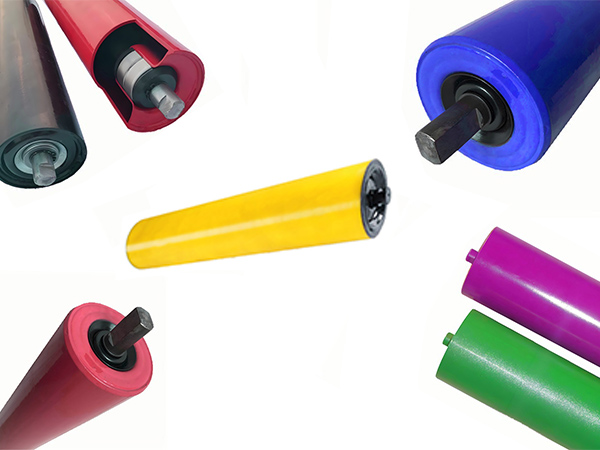
Conveyor rollers may appear to be relatively simple rotating components, but their dimensions, shaft structure, bearing arrangement, sealing system, material, surface treatment, and manufacturing consistency can all influence how reliably they operate inside a conveyor system. For mining, quarrying, cement, steel, power, and other industrial applications, choosing suitable rollers requires more than matching an outside diameter.
For this reason, evaluating conveyor roller manufacturers should begin with their ability to understand the complete roller structure and the operating conditions in which the component will be installed. A manufacturer should be able to connect roller diameter, length, shaft design, bearings, seals, material selection, and application requirements rather than treating each specification independently.
Terok’s current conveyor roller range includes multiple diameters, materials, bearing configurations, sealing structures, and idler arrangements. This article explains the technical factors that should be considered when evaluating conveyor roller manufacturers and how those factors affect roller selection, manufacturing consistency, and long-term conveyor operation.
Why Conveyor Roller Manufacturing Quality Matters
A conveyor roller supports either a moving belt or the material-handling structure associated with the conveyor. During operation, the roller repeatedly rotates around its shaft while carrying loads and operating under environmental conditions that may include dust, moisture, vibration, impact, or continuous duty.
Because these conditions act repeatedly over time, small manufacturing variations can become more important than they initially appear. Shaft misalignment, inconsistent bearing-seat position, unsuitable sealing, or poor tube geometry can all influence how the roller rotates after installation.
Reliable conveyor roller manufacturers therefore need to control the complete manufacturing sequence. Tube preparation, shaft machining, bearing-seat positioning, assembly, welding, surface treatment, and inspection should work together to create a roller whose geometry remains consistent across production batches.
The finished component should not be evaluated only by appearance. The manufacturing process behind it is equally important.
Start With the Conveyor Application
Before comparing roller specifications, the conveyor operating environment should be clearly defined. A roller used in a relatively clean indoor installation faces different conditions from one operating in a quarry or material-loading zone.
A conveyor belt system can be used to move bulk materials or individual items through different industrial environments, and the rollers supporting that system need to correspond to the actual mechanical and environmental conditions.
Important application information includes belt width, roller position, conveyed material, expected load, operating environment, duty cycle, exposure to contamination, and required roller arrangement. These factors help determine whether the application needs carrying rollers, return rollers, impact-related configurations, self-aligning arrangements, or other idler structures.
Good conveyor roller manufacturers should therefore begin with the application rather than recommend one universal roller configuration.
Roller Diameter Is Only One Part of the Specification
Roller diameter is one of the most visible dimensions, but it should not be considered independently.
The current conveyor roller range includes diameters such as 60, 76, 89, 102, 108, 114, 127, 133, 139, 152, 159, 178, 194, and 219 mm. Different diameters can be combined with different roller lengths, shaft structures, bearing sizes, and sealing arrangements according to the conveyor requirements.
A larger diameter does not automatically make a roller suitable for every application. The correct choice depends on load, roller length, shaft dimensions, belt width, bearing arrangement, installation position, and operating conditions.
Conveyor roller manufacturers should therefore evaluate diameter as one part of a complete component specification rather than use it as the only selection criterion.
Roller Length Must Match the Conveyor Structure
Roller length affects how the conveyor belt or transported material is supported across the working width.
The existing product range covers roller lengths from approximately 160 mm to 2800 mm, allowing different configurations to be matched to various belt widths and installation arrangements.
Length should correspond with the conveyor frame, belt width, idler configuration, and intended mounting position. A roller that is dimensionally incompatible with the supporting structure cannot perform correctly even if its other specifications are suitable.
For belt conveyor applications, the relationship between roller length and belt width becomes particularly important because the idlers need to support the belt while maintaining the required conveyor geometry.
Manufacturers should therefore review complete dimensional drawings before establishing the roller configuration.
Shaft Design Influences Roller Installation
The shaft provides the fixed central support around which the roller shell rotates. Its diameter, length, material, and end geometry affect both the internal assembly and the way the roller connects with the conveyor structure.
Depending on the roller design, shaft ends may require flats, through-flat features, grooves, chamfers, or other machined geometry. These features need to remain consistent because they interact directly with brackets and mounting points.
Variation between the two shaft ends can create installation difficulties even when the roller shell itself has been manufactured correctly.
A strong manufacturing process therefore includes controlled shaft machining rather than treating the shaft as a simple piece of round bar. This is particularly important when identical rollers are produced in large batches and need to fit the same conveyor frame geometry repeatedly.
Bearing Selection Should Match the Roller Application
Bearings allow the roller shell to rotate while the shaft remains supported within the conveyor structure. Their size and configuration need to correspond with load, shaft dimensions, operating conditions, and the internal roller design.
The current product specification includes bearing sizes from several 6200, 6300, and related series configurations, showing that one bearing arrangement is not suitable for every roller.
Conveyor roller manufacturers should consider bearing selection together with shaft size, roller diameter, operating load, and sealing requirements.
A bearing with a larger designation is not automatically a better choice. The bearing needs to fit the complete assembly and operate under the mechanical conditions created by the conveyor application.
Correct installation is also important because even a suitable bearing can perform poorly if it is pressed or positioned incorrectly during roller assembly.
Sealing Systems Protect the Bearing Environment
Many conveyors operate where dust, water, fine particles, or other contaminants can reach rotating components. The sealing system helps reduce the amount of contamination entering the bearing area.
The existing roller range supports several seal structures, including TK, TKII, DTII, TD75, and other configurations. These different sealing arrangements illustrate why the operating environment needs to be considered during roller specification.
Mining, quarrying, cement, and similar applications may expose rollers to significantly more contamination than cleaner material-handling environments.
Conveyor roller manufacturers should therefore evaluate sealing together with bearing structure and shaft geometry. A strong outer tube alone cannot compensate for a poorly matched internal sealing system.
Material Selection Depends on the Environment
Different conveyor applications may require different roller materials.
The current product range includes carbon steel, stainless steel, rubber, nylon, PVC, HDPE, and UHMWPE options for roller-related construction. These materials have different mechanical, corrosion, wear, mass, and environmental characteristics.
Steel is commonly associated with industrial strength and structural durability, while polymer-based materials may be considered where their specific physical properties match the operating environment.
Material selection should therefore follow the application instead of being treated as an isolated product preference.
Conveyor roller manufacturers need to understand the relationship between load, environment, contamination, surface interaction, operating temperature, and component material before establishing the final configuration.
Different Roller Positions Require Different Structures
A conveyor does not necessarily use the same roller configuration at every position.
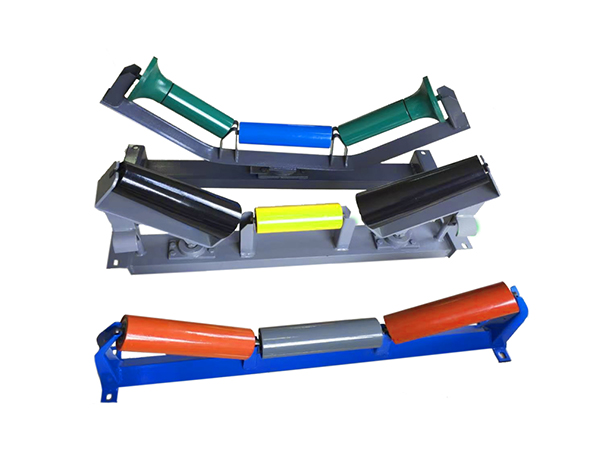
The conveyor idler roller range includes different structures for carrying, return, training, self-aligning, and other conveyor positions. These arrangements perform different mechanical functions even when individual rollers appear visually similar.
A carrying roller supports the loaded belt, while a return roller supports the unloaded return section. Self-aligning or training arrangements are used where belt guidance is required, while impact-related rollers may be considered around loading areas.
This means conveyor roller manufacturers should understand where each roller will be installed before defining the component.
Selecting only by diameter and length can overlook the actual mechanical role of the roller within the conveyor system.
Tube Manufacturing Accuracy Affects Finished Roller Geometry
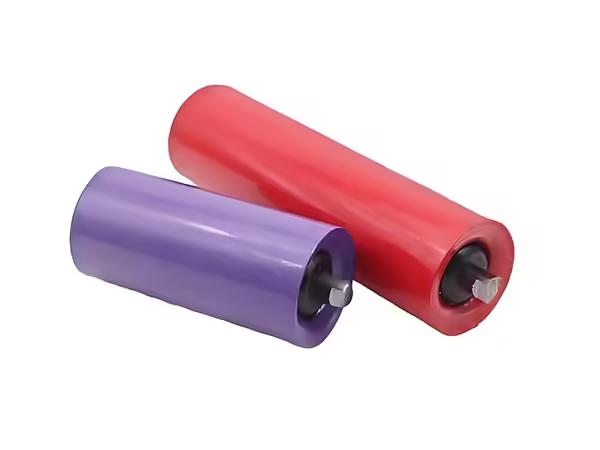
The roller shell begins with a cylindrical tube, and its dimensional condition influences many later production stages.
Tube length, straightness, wall thickness, end-face quality, and concentricity affect how the component enters end machining and assembly. If the starting tube varies significantly, later manufacturing operations may need to compensate for those differences.
Accurate tube cutting therefore establishes an important early reference.
Once the tube has been prepared, additional end machining may be required according to the bearing housing structure. These operations should maintain a controlled relationship with the roller centerline so the bearing assembly can later be positioned correctly.
Good conveyor roller manufacturers control these early processes because finished roller quality begins long before final assembly.
Shaft Machining Should Remain Symmetrical
Many conveyor roller shafts require corresponding features at both ends.
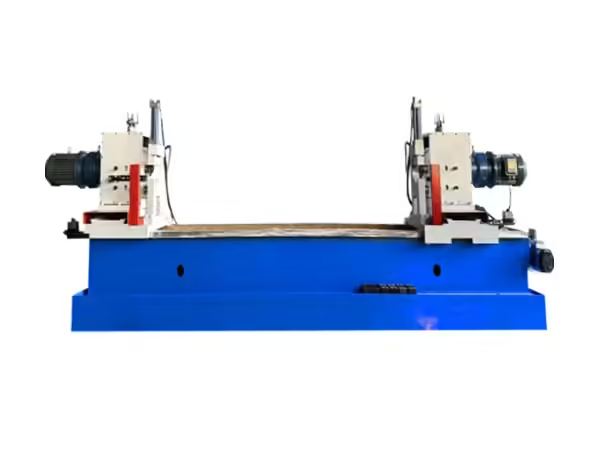
Processing those features independently can introduce additional positioning variation, particularly when the workpiece is long. Dedicated double-end machining can reduce repeated reversal and help maintain a more consistent relationship between opposite shaft features.
Flat milling, through-flat machining, grooving, chamfering, and related operations all need to correspond with the finished shaft drawing.
The objective is not only dimensional accuracy at one end. The two ends must also work together as part of the same roller assembly.
This is an important manufacturing capability to consider when evaluating conveyor roller manufacturers for repeated industrial production.
Bearing Housing Positioning Is Critical
The bearing housing forms an interface between the roller shell, bearing, shaft, and sealing components.
Its position affects the internal geometry of the complete roller. If housings are installed inconsistently, the shaft and bearing arrangement may not maintain the intended relationship across a production batch.
For this reason, bearing housing manufacture and assembly should be treated as precision processes rather than simple joining operations.
The pressing, welding, or fitting process needs to maintain the component at the correct position relative to the tube.
Manufacturers should also verify that the housing structure matches the bearing, sealing system, roller diameter, and intended operating conditions.
Welding Needs Repeatable Workpiece Positioning
Some conveyor roller constructions require welding around cylindrical components.
The welding process should maintain stable centering, workpiece rotation, joint position, and welding parameters. If the roller is not correctly positioned before welding, the joint may move relative to the welding head as the workpiece rotates.
Automated double-end welding can reduce repeated workpiece repositioning and create a more controlled production cycle for symmetrical roller structures.
This matters when evaluating manufacturing capability because welding quality is influenced by more than the welding power source. Workpiece geometry, centering, clamping, rotation, upstream machining, and inspection all contribute to the final result.
Manufacturing Equipment Influences Repeatability
Conveyor roller manufacturers that produce repeated batches need machinery capable of reproducing the same basic manufacturing conditions.
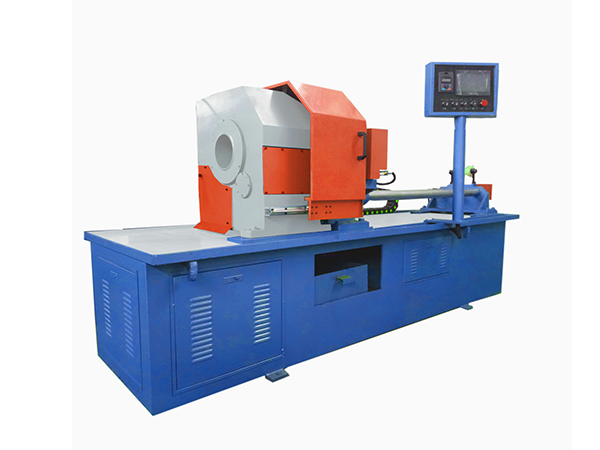
Automatic tube cutting can stabilize blank dimensions. Double-end shaft machining can reduce repeated repositioning. Controlled bearing pressing can improve assembly consistency, while automatic welding can standardize cylindrical welding operations.
The value of manufacturing equipment lies in process control rather than automation alone.
A highly automated machine cannot correct unsuitable raw materials, worn tooling, or incorrectly prepared components. Reliable production comes from combining equipment capability with defined inspection procedures and routine maintenance.
This is especially important when the same roller specification needs to be reproduced across multiple production batches.
Dimensional Inspection Should Follow Each Major Process
Quality inspection is most effective when it occurs throughout manufacturing rather than only after the finished roller has been completed.
Tube dimensions can be checked after cutting. Shaft features can be verified after milling or grooving. Bearing housing position can be inspected during assembly, while final roller dimensions and rotational condition can be checked after the complete structure has been produced.
This staged approach makes process problems easier to identify because variation can be traced back to the operation where it first appeared.
If all inspection is delayed until the end, it becomes more difficult to determine whether an issue originated during cutting, machining, assembly, or welding.
Good conveyor roller manufacturers therefore use inspection as production feedback rather than only as final acceptance.
Roller Concentricity and Rotation
The finished roller should rotate around the intended shaft axis without unnecessary geometric variation.
Concentricity is influenced by several production stages, including tube geometry, bearing-seat position, shaft machining, bearing assembly, and welding.
Even if each individual component appears acceptable, errors can accumulate when the parts are assembled.
Manufacturers should therefore consider finished roller rotation as a result of the complete production process.
Inspection may include dimensional checks, rotational observation, runout measurements, bearing condition, and other requirements defined by the product specification.
A repeatable manufacturing system provides a stronger foundation for consistent roller rotation than relying on final adjustment alone.
Surface Treatment Should Match the Application
Surface treatment can influence corrosion resistance, appearance, and suitability for particular industrial environments.
The existing conveyor roller range includes options such as powder coating, normal painting, and hot-galvanized treatment.
The appropriate surface should be selected according to operating conditions rather than visual preference alone.
Outdoor exposure, moisture, industrial contamination, and material-handling conditions can all influence the required protection.
Conveyor roller manufacturers should therefore discuss the installation environment when defining the complete roller specification.
Surface treatment should be considered together with roller material because both influence how the component responds to its surroundings.
Application Experience Matters
A technically correct roller specification needs to reflect the real operating environment.
The current roller range is positioned for applications including coal handling, mining, quarrying, cement, steel, power, and crusher-related industries. These environments can involve continuous operation, abrasive material, dust, vibration, moisture, and significant loads.
Understanding these conditions helps manufacturers choose suitable bearings, seals, materials, shaft configurations, and roller structures.
A manufacturer experienced only in light material handling may approach a heavy industrial conveyor differently from one familiar with mining or bulk-material applications.
This is why application knowledge should be considered alongside manufacturing equipment.
Standards and Engineering References
Roller specifications may reference different engineering standards depending on the project and market.
The current product information includes CEMA, ISO, GB, JIS, and DIN references for idler rollers. Different projects may use different dimensional or engineering frameworks.
Manufacturers should therefore confirm the standard required before finalizing a roller configuration.
Standards are useful because they create a common technical reference, but the operating conditions of the actual conveyor still need to be considered.
A standard designation alone does not define every aspect of load, contamination, installation, maintenance, or application environment.
How Conveyor Roller Manufacturers Should Handle Multiple Specifications
Industrial projects frequently require more than one roller dimension or configuration.
A manufacturer may need to supply different carrying, return, or other roller arrangements within the same conveyor system. Diameter, length, shaft geometry, bearings, seals, and surface treatment can vary between positions.
Production therefore needs a controlled method for switching between specifications without losing dimensional consistency.
Documented machine settings, drawings, inspection requirements, tooling arrangements, and process instructions can support this transition.
This becomes especially important when the same specifications need to be reproduced after a significant period of time.
Why Manufacturing Consistency Matters More Than One Sample
A single roller can appear correct even when the production process is unstable.
For industrial conveyor systems, manufacturers often need to reproduce similar components across an entire batch. The real manufacturing challenge is therefore maintaining comparable geometry and assembly conditions across many rollers.
This requires control of raw material, machining, tooling, fixtures, assembly, welding, inspection, and machine condition.
When evaluating conveyor roller manufacturers, buyers should therefore focus on the repeatability of the manufacturing process rather than judge capability from one isolated component.
Batch consistency provides a much stronger indication of whether the manufacturer can support an industrial conveyor application.
Technical Information to Prepare Before Roller Selection
A useful technical discussion begins with complete application information.
The conveyor type, belt width, roller position, required diameter, roller length, shaft configuration, bearing requirements, seal structure, material, operating environment, conveyed material, load conditions, and applicable engineering standard should all be defined where possible.
Providing these details helps the manufacturer narrow the configuration more accurately.
Incomplete information can result in a roller that fits one dimension but does not fully match the operating conditions.
The strongest selection process therefore begins with the conveyor system and works toward the roller specification rather than selecting a roller first and trying to adapt the application around it.
Common Mistakes When Comparing Conveyor Roller Manufacturers
One common mistake is comparing rollers only by outside diameter. Two rollers with the same diameter can contain different shaft designs, bearings, seals, materials, shell thicknesses, and manufacturing tolerances.
Another mistake is ignoring the installation position. A carrying roller and a return roller may need different structures even when they operate on the same conveyor.
Focusing only on visible components can also overlook internal bearing and sealing arrangements.
Finally, evaluating the finished roller without understanding the production process provides limited information about batch consistency.
A more useful comparison considers the full relationship between application, component design, manufacturing process, inspection, and long-term operating conditions.
Building a Reliable Roller Specification
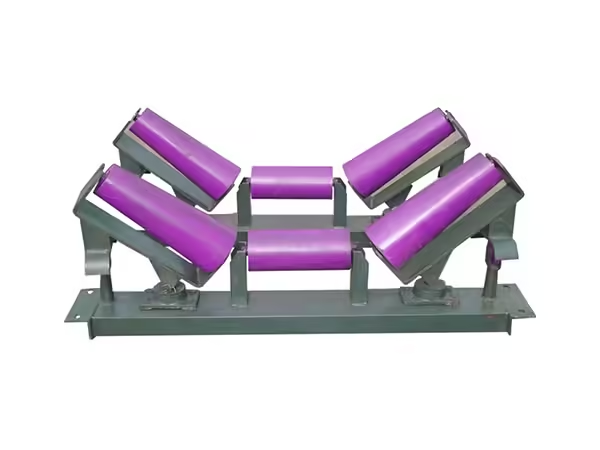
A reliable roller specification combines mechanical dimensions with application information.
Diameter and length define the basic geometry, but the complete component also requires a suitable shaft, bearing arrangement, sealing system, material, surface treatment, and installation structure.
The conveyor environment then determines how these features should be combined.
For example, a dusty mining application may place greater emphasis on sealing and robust construction, while another environment may prioritize corrosion resistance or a particular material configuration.
There is therefore no universal conveyor roller suitable for every system.
Experienced conveyor roller manufacturers should be able to translate the operating conditions into a complete technical configuration rather than provide only a standard dimensional list.
Conclusion
Evaluating conveyor roller manufacturers requires more than comparing roller diameter or external appearance. The finished component is the result of tube preparation, shaft machining, bearing and seal selection, housing positioning, assembly, welding, surface treatment, and dimensional inspection.
The application should remain the starting point. Belt width, roller position, load, operating environment, contamination, duty cycle, and installation requirements all influence the correct roller configuration.
Manufacturing capability is equally important because industrial applications often require consistent batches rather than one isolated component. Controlled machining, assembly, inspection, and process documentation provide a stronger foundation for repeatable roller production.
By evaluating both the finished roller and the processes used to manufacture it, conveyor operators can define specifications that match the real mechanical and environmental demands of their systems.
FAQ
What should be considered when evaluating conveyor roller manufacturers?
The evaluation should include roller diameter and length ranges, shaft machining, bearing and seal options, available materials, surface treatment, manufacturing processes, inspection capability, and experience with the intended conveyor environment. These factors together determine whether the roller can match the real application.
What information is needed before selecting a conveyor roller?
Useful information includes conveyor type, belt width, roller position, required dimensions, conveyed material, operating load, environment, shaft arrangement, bearing requirements, sealing structure, material preference, and applicable standard. A complete specification helps reduce unsuitable component selection.
Why are bearings and seals important in conveyor rollers?
Bearings support relative rotation between the roller shell and shaft, while seals help protect the bearing area from dust, moisture, and other contaminants. Their suitability depends on load, speed, shaft geometry, operating environment, installation accuracy, and the complete internal roller structure.
How do conveyor roller manufacturers maintain batch consistency?
Consistency depends on controlling tube cutting, shaft machining, bearing housing preparation, assembly, welding, tooling condition, fixtures, and inspection. Manufacturers also need repeatable machine settings and documented production requirements so the same roller geometry can be reproduced across multiple batches.
What roller sizes are available for different conveyor applications?
The current conveyor roller range includes diameters from approximately 60 to 219 mm and lengths from about 160 to 2800 mm. The appropriate combination depends on belt width, roller position, conveyor structure, load, shaft design, bearing arrangement, and the intended industrial operating environment.
 English
 French
 Spanish