
Table of Contents
Introduction
Conveyor components determine how efficiently a conveying system supports, guides, drives, and controls material throughout its operating route. Although the conveyor belt or main frame is often the most visible part of the system, actual operating stability depends on the interaction between rollers, idlers, pulleys, bearings, shafts, brackets, sealing structures, and other supporting components. A weakness in one area can gradually affect belt tracking, rotational resistance, load distribution, vibration, and overall system reliability.
For industrial conveyor systems, component selection should therefore be based on operating function rather than appearance or basic dimensions alone. A carrying roller and a return roller may look similar, but they operate under different loading conditions. A drive pulley and a tail pulley perform different mechanical tasks even when their external construction appears comparable. Bearings, shafts, and sealing structures also need to match the load, speed, contamination level, and installation geometry of the specific conveyor position.
The most reliable approach is to view conveyor components as parts of one mechanical system. Each component receives forces from neighboring parts and transfers those forces further through the conveyor structure. Understanding these relationships makes it easier to specify suitable components, identify the causes of repeated failures, and maintain more consistent material handling over long-term operation.
Why Conveyor Components Should Be Evaluated as a System
A conveyor is not simply a collection of independent parts installed on the same frame. Every rotating, supporting, and guiding component affects the way material moves through the system. In a typical conveyor system, the belt or transported load continuously transfers force between rollers, pulleys, bearings, shafts, and supporting structures. The performance of one component can therefore influence several others.
For example, a roller with excessive rotational resistance can increase local drag and change how the belt moves across adjacent idlers. A pulley installed outside the intended alignment can influence belt tracking far beyond the pulley itself. Similarly, damaged bearings may initially appear to be an isolated maintenance problem, while the actual cause may be misalignment, contamination, or an incorrect shaft relationship within the surrounding structure.
This system-level view is especially important when replacing conveyor components. Installing a stronger component does not automatically correct a problem caused by the conveyor geometry. If the frame is distorted or material loading is consistently off-center, the replacement may experience the same abnormal condition as the original part.
For this reason, effective conveyor maintenance and component selection should consider both the individual component and the mechanical environment in which it operates.
Conveyor Rollers Provide Continuous Belt and Load Support
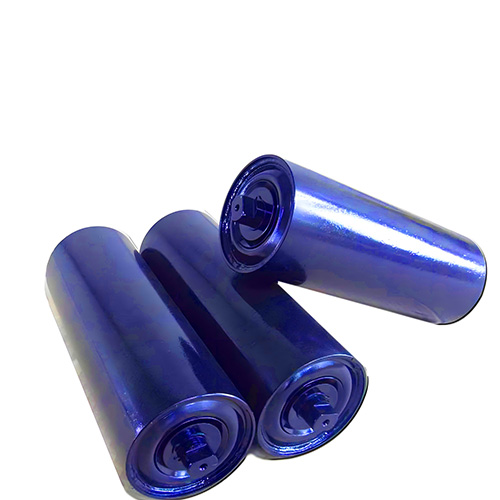
Rollers are among the most frequently repeated conveyor components because they provide support along large sections of the conveying route. Their role varies depending on whether they support a belt, directly support transported products, or form part of a specialized idler arrangement.
In belt conveyor systems, rollers help maintain the required belt geometry while transferring material load into the supporting structure. Their diameter, shell thickness, shaft design, bearing arrangement, sealing system, and spacing all influence operating behavior. If these characteristics are not properly matched to the conveyor, problems may appear as increased resistance, uneven belt support, vibration, or premature component wear.
The construction of conveyor rollers should therefore reflect the actual operating position. Carrying rollers work beneath the loaded side of the belt and are subjected to the combined effects of belt tension and material load. Return rollers support the belt after material has been discharged and may encounter different contamination conditions. Rollers near loading areas can also experience additional impact and dynamic forces.
Manufacturing consistency is particularly important because a conveyor can contain a large number of rollers. Small dimensional or rotational differences may appear insignificant when one component is inspected alone, but repeated variation across many roller positions can affect the behavior of the complete system.
Idler Sets Control Belt Shape and Load Distribution
Individual rollers often work together as an idler set rather than as isolated components. The arrangement of these rollers determines how the belt is supported and, in many applications, how the material load is contained across the belt width.
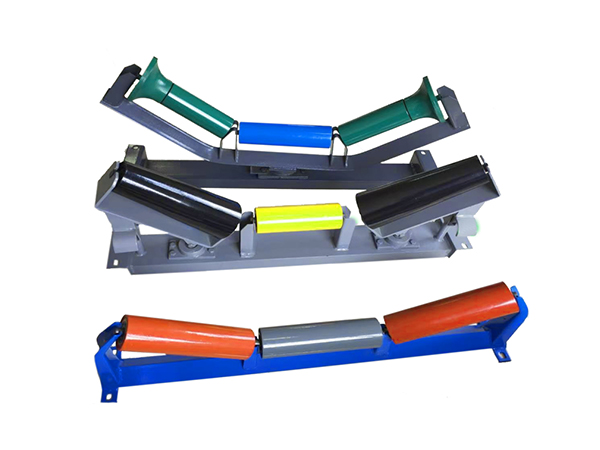
A troughing idler arrangement typically positions several rollers at defined angles so that the belt forms a trough rather than remaining completely flat. This geometry helps support bulk material and distribute the load across the belt and supporting structure. The effectiveness of the arrangement depends not only on roller quality but also on the relationship between roller angles, bracket geometry, spacing, and belt characteristics.
A conveyor roller set therefore needs to maintain consistent geometry after installation. If one roller sits at a different angle or position from the others, the belt may experience uneven contact. Across repeated idler sets, small installation differences can gradually influence tracking or localized wear.
Return idler arrangements serve a different purpose because the belt is no longer carrying the main transported load. Their geometry, spacing, and contamination exposure may therefore differ from carrying-side requirements. Impact idler sets near loading areas may also need additional construction features to manage dynamic forces.
Selecting an idler set should begin with belt width, loading condition, intended trough geometry, conveyor speed, spacing, and operating environment rather than treating every idler position as interchangeable.
Pulleys Guide, Drive, and Tension the Conveyor Belt
Pulleys perform several of the most mechanically important functions in a belt conveyor. Depending on their position, they can drive the belt, redirect its path, increase belt wrap, or work with the tensioning system.
A drive pulley transfers rotational force into the belt. This means its shaft, hub, bearing arrangement, surface condition, and alignment need to work together under both belt tension and torque. A tail pulley operates at another end of the conveyor and primarily redirects the belt, while bend and snub pulleys change belt geometry at intermediate positions.
Although these conveyor components may share similar cylindrical construction, their mechanical conditions can be very different. A pulley selected only according to diameter and face width may therefore overlook important requirements related to torque, belt wrap, shaft loading, or surface traction.
Pulley alignment also deserves careful attention. Because the belt changes direction around the pulley surface, an installation error can influence tracking as the belt enters or leaves the pulley. Replacing the pulley without correcting a frame or bearing-position problem may allow the same tracking issue to continue.
A reliable pulley specification should therefore include function, belt width, belt tension, diameter, face width, shaft geometry, bearing locations, drive arrangement, surface condition, and expected operating environment.
Bearings and Shafts Form the Mechanical Core of Rotating Components
Bearings and shafts are less visible than roller shells and pulleys, but they are central to the performance of many conveyor components. They transfer mechanical load between rotating parts and the stationary conveyor structure while allowing controlled movement.
The shaft provides the structural path through which forces reach the frame. Its diameter, material, bearing positions, unsupported length, and mounting geometry influence how it behaves under load. Shaft-end features such as flats, slots, grooves, or threads also determine how the component fits into the surrounding structure.
Bearings control the relationship between the rotating shell or pulley and the shaft. Their performance depends not only on nominal load capacity but also on alignment, contamination, rotational speed, installation method, and internal assembly accuracy.
If bearing positions are inconsistent or the shaft bends excessively under load, the rotating component may no longer follow its intended axis. This can increase resistance, vibration, or uneven bearing loading.
These relationships show why conveyor components should not be specified as separate pieces without understanding how they interact. A well-designed shell with poorly matched bearings or shaft geometry may still produce unstable performance.
Sealing Systems Protect Conveyor Components From Contamination
Many conveyor systems operate in environments where dust, fine particles, moisture, or material residue are difficult to avoid. These contaminants can enter bearing areas and gradually affect rotational performance if the internal assembly is not adequately protected.
Sealing systems create a barrier between external conditions and the bearing arrangement. The required level of protection depends on the application. A relatively clean indoor conveyor may need a different sealing structure from a system exposed to continuous dust or material carryback.
Effective sealing should also maintain an appropriate balance between protection and rotational resistance. A seal that creates excessive friction can change how freely a roller rotates, while insufficient sealing may allow contaminants to reach the bearing too easily.
For this reason, seal design needs to be considered together with shaft dimensions, bearing construction, roller speed, operating environment, and maintenance expectations.
Environmental information should therefore be included when specifying conveyor components. Dust level, moisture exposure, material characteristics, cleaning procedures, and operating temperature can all influence which sealing and surface arrangements are suitable.
Frames and Brackets Determine How Components Are Positioned
Even accurately manufactured conveyor components can operate poorly when the supporting structure does not hold them in the correct position. Frames and mounting brackets establish the geometry that connects rollers, idlers, pulleys, and other components into one conveying system.
For rollers, the frame determines spacing, working height, and shaft position. For idler sets, brackets establish trough angles and roller relationships. Pulley supports determine shaft alignment and the direction from which the belt enters and leaves the pulley.
Structural accuracy therefore has a direct relationship with component performance.
If mounting points are not aligned, bearings may experience additional loading. If one idler bracket sits higher than neighboring units, the belt may experience uneven support. If a pulley axis is not correctly positioned relative to the conveyor centerline, belt tracking can become difficult to stabilize.
These problems are sometimes incorrectly diagnosed as component failures because the symptoms appear at the roller, bearing, or pulley. Repeated failures at the same conveyor position should therefore trigger inspection of the surrounding frame and installation geometry before another replacement component is installed.
How Different Conveyor Components Work Together
The relationship between conveyor components becomes clearer when their functions are considered together rather than separately.
| Conveyor Component | Main Function | Important Performance Factors |
|---|---|---|
| Carrying roller | Supports loaded belt | Load, spacing, bearings, runout |
| Return roller | Supports returning belt | Rotation, contamination, alignment |
| Idler set | Controls belt support geometry | Roller angles, spacing, bracket accuracy |
| Drive pulley | Transfers drive force to belt | Torque, traction, shaft, alignment |
| Tail pulley | Redirects belt | Diameter, alignment, contamination |
| Shaft | Transfers load to frame | Diameter, stiffness, mounting geometry |
| Bearing | Allows controlled rotation | Load, speed, alignment, sealing |
| Seal | Protects internal assembly | Contamination resistance, friction |
| Frame/bracket | Positions components | Geometry, rigidity, installation accuracy |
The table highlights an important principle: no major conveyor component performs its function completely independently. A bearing needs correct shaft alignment. A roller needs correctly positioned bearings. An idler set needs accurate brackets. A pulley needs suitable bearing supports. The belt depends on all of them maintaining the intended geometry.
This is why system reliability usually comes from compatibility between components rather than simply selecting the strongest individual parts.
Manufacturing Accuracy Influences Finished Conveyor Components
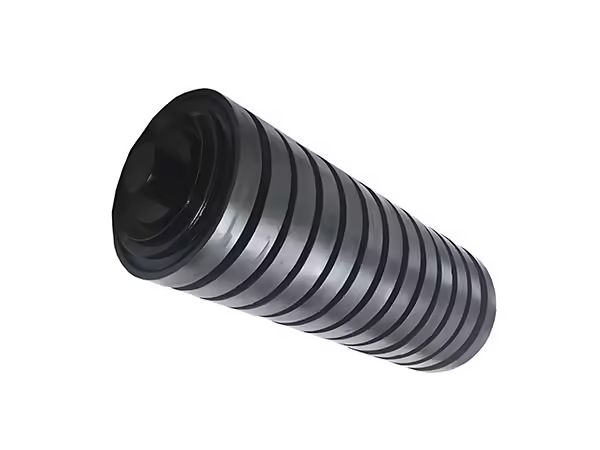
The performance of conveyor components begins during manufacturing. Dimensions, concentricity, bearing positions, shaft features, welding, and assembly methods can all influence how the finished component behaves after installation.
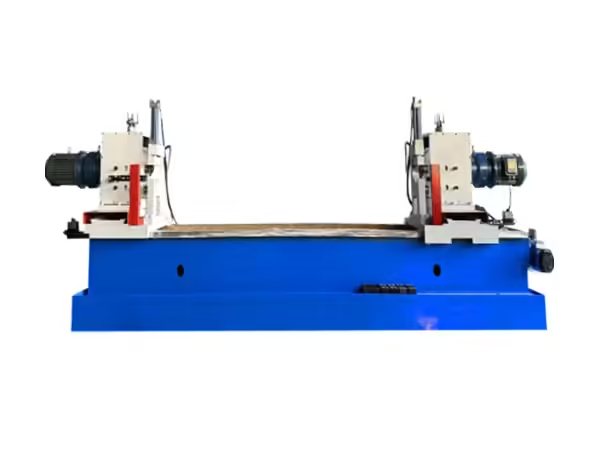
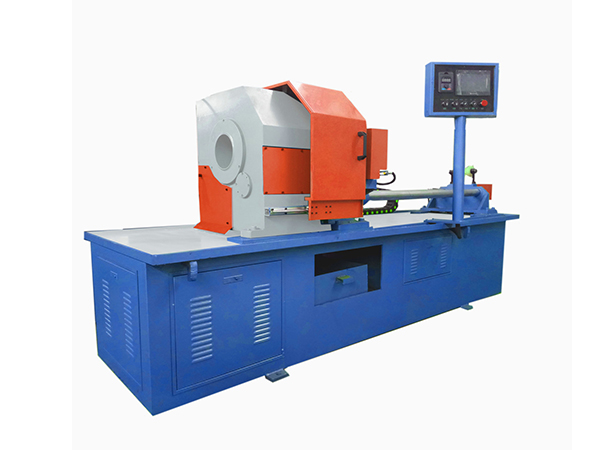
For conveyor rollers, tube cutting establishes the initial body length. Shaft machining creates mounting features and determines how the roller fits the frame. Bearing-seat preparation and assembly influence internal alignment. Welding, where used, needs to join components while controlling distortion.
Pulleys create similar manufacturing challenges because shell geometry, end-disc positioning, shaft relationships, and welding can influence final runout and alignment.
The quality of a finished component therefore cannot be created entirely during final inspection. Inspection can identify dimensional variation, but the manufacturing process itself needs to prevent unnecessary variation from being introduced.
For repeated production, consistency between components is especially important. Replacement rollers, idlers, or pulleys should maintain the dimensions required for installation without repeated modification at the conveyor.
This makes repeatability one of the most useful indicators of manufacturing quality. One acceptable component shows that the design can be produced; stable results across repeated production demonstrate that the process can be controlled.
Surface Condition Matters in Different Conveyor Positions
Conveyor components interact continuously with belts, products, material residue, and the surrounding environment. Their surface condition can therefore influence wear, traction, corrosion behavior, and material contact.
Roller surfaces should remain suitable for the belt or transported load. Pulley surfaces may require additional traction characteristics, particularly at drive positions. Components exposed to moisture or corrosive environments may need suitable material selection or surface protection.
The correct surface treatment should always solve a defined operating requirement. Adding a coating or covering without understanding the application does not automatically improve component performance.
Surface damage also provides useful maintenance information. Uneven wear on a roller or pulley may indicate alignment problems, concentrated loading, contamination, or abnormal contact with the belt. Treating these patterns as diagnostic evidence can help identify problems before they develop into repeated failures.
Component Selection Should Begin With Operating Conditions
A complete conveyor component specification should describe how the system actually operates. Basic dimensions are necessary, but they are not enough to determine whether a component is suitable.
Important information includes conveyor type, belt width, transported material, normal load, conveyor speed, component position, spacing, shaft geometry, mounting arrangement, contamination exposure, and duty cycle.
For rotating components, bearing and sealing requirements should also be defined. Where a replacement part needs to fit existing equipment, technical drawings can provide important information about shaft ends, mounting dimensions, and installation relationships.
The goal is to describe the mechanical problem clearly enough that the component design can respond to it.
Over-specification should also be avoided. Selecting every component for an extreme condition that rarely occurs can add unnecessary complexity without improving normal operation. The main operating conditions should be established first, followed by appropriate allowances for realistic variation.
Repeated Component Failure Usually Requires More Than Replacement
When the same conveyor components fail repeatedly, the component itself may not be the only problem. The location and pattern of failure often reveal useful information about the surrounding system.
A roller that repeatedly develops bearing problems may be operating in a contaminated area or installed in a misaligned bracket. A pulley showing abnormal surface wear may be affected by belt tracking or material buildup. An idler set with uneven wear may be supporting a belt that is already entering the section off-center.
These situations should be investigated before replacing the component again.
Maintenance teams can compare failures across the conveyor. If the same component type performs reliably in most positions but repeatedly fails in one location, the operating environment at that position deserves closer inspection.
Frame alignment, neighboring rollers, material loading, contamination, belt condition, and installation accuracy can all contribute to repeated problems.
Replacing the visible failed component restores operation, but identifying the underlying mechanical condition is what prevents the same failure from returning.
Inspection Should Focus on Functional Relationships
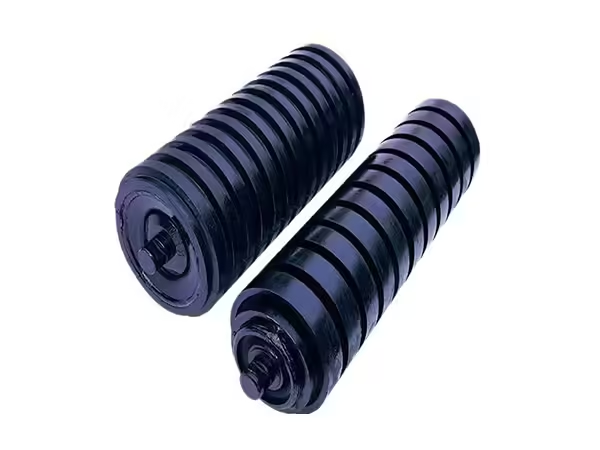
Conveyor component inspection is most useful when it focuses on features that influence installation and operation.
For rollers and idlers, this may include shell dimensions, shaft geometry, bearing position, runout, rotational behavior, and surface condition. Pulley inspection can include diameter, face width, shaft dimensions, runout, weld condition, surface treatment, and overall alignment.
Functional testing is also important because a component can meet several dimensional requirements while still showing abnormal rotational resistance or assembly behavior.
For production batches, inspection should include enough components to evaluate repeatability rather than relying on one representative unit. Differences between samples can reveal fixture wear, machining variation, assembly inconsistency, or other production changes that may not be visible from a single component.
This approach connects quality control directly with the way conveyor components will actually function after installation.
Conclusion
Conveyor components form the mechanical foundation of a reliable conveying system. Rollers support the belt or transported load, idler sets establish belt geometry, pulleys guide and drive the belt, while shafts, bearings, seals, frames, and brackets ensure that these rotating components remain correctly positioned and protected during operation. Their functions are different, but their performance is closely connected.
For this reason, component selection should begin with the conveyor application rather than with isolated dimensions. Load, speed, belt width, material characteristics, component position, spacing, shaft mounting, environmental exposure, and operating duty all influence which construction is appropriate. A component that is suitable in one conveyor position may perform very differently when installed elsewhere under different mechanical conditions.
Manufacturing accuracy and installation quality are equally important. Consistent tube preparation, shaft machining, bearing positioning, welding, assembly, and final inspection help conveyor components maintain predictable geometry and rotational behavior. Once installed, frame alignment and neighboring components continue to influence how those parts perform.
The most reliable conveyor systems are therefore built around compatibility rather than isolated strength. When rollers, idlers, pulleys, bearings, shafts, seals, and structural supports are engineered to work together, the conveyor can distribute load more consistently, maintain better alignment, and reduce the likelihood of repeated component problems over long-term operation.
FAQ
What are conveyor components?
Conveyor components are the mechanical parts that support, guide, drive, position, and protect a conveying system. They can include rollers, idlers, pulleys, bearings, shafts, seals, brackets, and supporting structures. Their specifications should match conveyor load, speed, geometry, environment, and operating duty.
Which conveyor components have the greatest effect on belt tracking?
Pulleys, idler sets, rollers, and supporting frames can all influence belt tracking because they determine the geometry of the belt path. Misalignment, uneven roller positions, incorrect pulley installation, material buildup, or off-center loading can gradually move the belt away from its intended position.
How should conveyor components be selected?
Selection should begin with conveyor type, component position, belt or product width, operating load, speed, spacing, mounting geometry, environment, and duty cycle. From there, dimensions, materials, bearings, sealing, shaft design, and surface requirements can be matched to the actual mechanical conditions.
Why do conveyor components fail repeatedly in the same position?
Repeated failure can indicate an underlying system problem such as frame misalignment, contamination, abnormal loading, material buildup, incorrect installation, or problems with neighboring components. If the same component performs well elsewhere, the operating conditions at the repeated failure position should be investigated.
How does manufacturing accuracy affect conveyor components?
Manufacturing accuracy influences dimensions, runout, shaft alignment, bearing position, welding geometry, and assembly consistency. These characteristics affect installation compatibility and rotational behavior. Stable production across multiple components is therefore more meaningful than one acceptable sample.
 English
  French
  Spanish