
Table des matières
Introduction
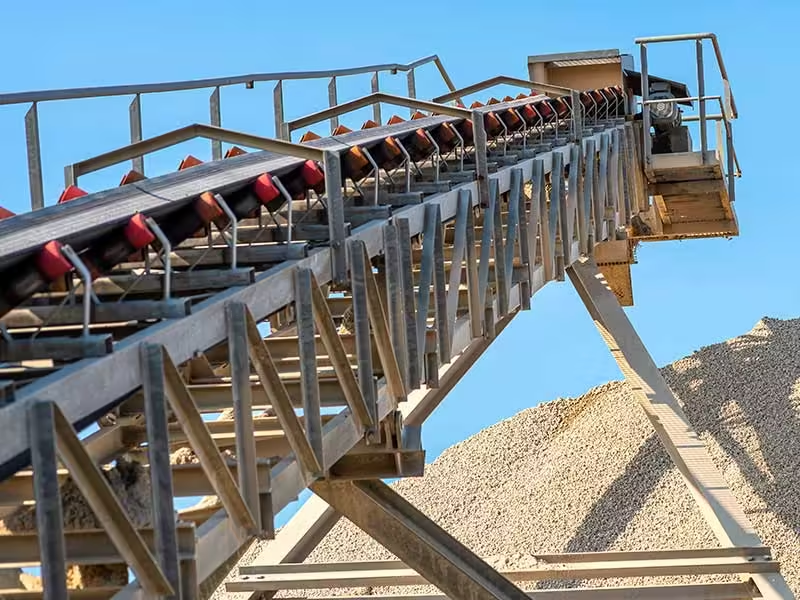
Le transport efficace des matériaux est un facteur clé dans les opérations industrielles modernes Les installations de fabrication, les entrepôts et les environnements de traitement nécessitent des systèmes fiables capables de déplacer les produits en douceur tout en réduisant la manutention manuelle et en améliorant l'efficacité d'un convoyeur à rouleaux est l'une des solutions les plus largement utilisées pour obtenir un mouvement stable et organisé des matériaux.
Contrairement à un équipement de transport simple, une machine de convoyeur à rouleaux est conçue comme un système mécanique complet qui combine des rouleaux, des cadres, des mécanismes d'entraînement et des composants de contrôle pour soutenir le mouvement continu du produit. Ses performances influencent directement l’efficacité de la production, la stabilité opérationnelle et la productivité globale de la manutention.
Avec la demande croissante d'automatisation et de systèmes de production flexibles, les entreprises accordent plus d'attention à la conception, à la durabilité et à l'adaptabilité des équipements de convoyeurs. Le choix d’une machine de convoyage à rouleaux appropriée nécessite une compréhension des exigences de charge, des caractéristiques du produit, des conditions de travail et des attentes en matière de maintenance.
Une machine à convoyeur à rouleaux bien conçue peut aider les entreprises à optimiser les processus de transport interne, à réduire les besoins de main-d'œuvre inutiles et à créer des environnements de production plus efficaces.
Comprendre le principe de fonctionnement d'une machine de transport à rouleaux
Une machine à convoyeur à rouleaux utilise une série de rouleaux disposés le long d'un châssis de convoyeur pour déplacer les matériaux d'un endroit à un autre. Selon l'application, les rouleaux peuvent fonctionner par gravité, poussée manuelle ou systèmes d'entraînement motorisés.
Le processus de travail de base comprend notamment
- Les matériaux sont placés sur les rouleaux du convoyeur.
- Les rouleaux tournent ou permettent un mouvement par gravité.
- Les produits se déplacent le long du chemin de convoyage.
- Les matériaux sont transférés à l'étape suivante de production ou de manutention.
Les principaux composants d'une machine à convoyeur à rouleaux comprennent notamment
| Composant | Fonction |
|---|---|
| Rouleaux de transport | Support et déplacer les matériaux |
| Structure du cadre | Fournit la stabilité du système |
| Mécanisme d'entraînement | Contrôle le mouvement motorisé |
| Roulements | Réduire les frottements lors de la rotation |
| Système de contrôle | Gère l'exploitation et l'automatisation |
La qualité de chaque composant affecte les performances globales du système de convoyage Fournisseurs professionnels fournissant solutions d'équipement de convoyage concentrez-vous sur la mise en correspondance de la conception de l'équipement avec les exigences spécifiques de l'application au lieu d'utiliser une solution standard pour chaque situation.
Une machine à convoyeur à rouleaux fiable doit fournir un fonctionnement fluide, un mouvement précis et une capacité de charge suffisante pour répondre aux besoins industriels à long terme.
Différents types de systèmes de machines de convoyeurs à rouleaux et leurs applications
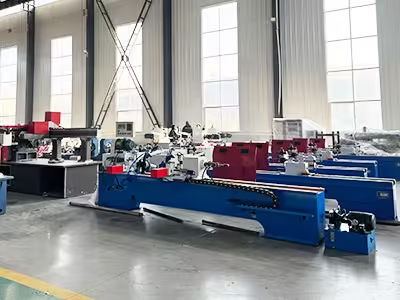
Différents environnements de production nécessitent différentes configurations de convoyeur La sélection du type correct de machine de convoyeur à rouleaux dépend des caractéristiques du matériau, de la distance de transport, du poids du produit et des exigences d'automatisation.
Machine de transport à rouleaux gravitaires
Une machine à convoyeur à rouleaux gravitaires utilise la force naturelle de gravité ou de poussée manuelle pour déplacer les produits le long des rouleaux.
Il est couramment utilisé pour
- Opérations d'emballage
- Transport à courte distance
- Manutention d'entrepôt
- Zones de tri des produits
Ce type offre une structure simple et convient aux applications où un mouvement alimenté continu n'est pas nécessaire.
Machine de convoyeur à rouleaux motorisés
Une machine à convoyeur à rouleaux motorisé utilise des moteurs et des systèmes d'entraînement pour déplacer automatiquement les produits.
Les avantages comprennent :
- Fonctionnement continu
- Vitesse de transport contrôlée
- Amélioration de l'efficacité de la production
- Manutention manuelle réduite
Les systèmes motorisés sont souvent utilisés dans les lignes de production automatisées où un mouvement constant des matériaux est requis.
Machine de transport à rouleaux flexible
Les conceptions flexibles permettent d'ajuster les systèmes de convoyeurs en fonction des différents espaces de travail et dispositions de production.
Ces systèmes sont utiles lorsque les entreprises ont besoin de solutions de transport adaptables pour modifier les exigences de production.
Comment un convoyeur à rouleaux améliore la productivité industrielle
Une machine à convoyeur à rouleaux correctement conçue peut améliorer considérablement l'efficacité opérationnelle en créant un flux de matériaux plus fluide et plus organisé.
Réduire la manipulation manuelle
L’un des principaux avantages des systèmes de convoyeurs à rouleaux est de réduire le besoin de transport manuel répété.
En automatisant le mouvement des matériaux, les entreprises peuvent :
- Améliorer la cohérence du flux de travail
- Réduire le temps de manutention
- Optimiser l'allocation de main-d'œuvre
- Minimiser les mouvements inutiles
Améliorer la précision des transports
Une machine à convoyeur à rouleaux stable permet de maintenir un mouvement prévisible du produit Ceci est particulièrement important pour les environnements de production où la précision du timing et du positionnement affecte les processus en aval.
Prise en charge de la production automatisée
La fabrication moderne dépend de plus en plus de systèmes automatisés Les convoyeurs à rouleaux peuvent être intégrés à des capteurs, des systèmes de contrôle et d'autres équipements pour créer des flux de production plus intelligents.
Pour les entreprises explorant différentes catégories d’équipements industriels, machines de fabrication et de transformation fournit un soutien essentiel pour améliorer l’efficacité de la production et construire des systèmes de fabrication plus avancés.
Facteurs clés à prendre en compte lors de la sélection d’une machine de transport à rouleaux
Le choix de la bonne machine de convoyage à rouleaux nécessite une analyse minutieuse des exigences opérationnelles.
Capacité de charge
La capacité de charge détermine si le convoyeur peut transporter des produits en toute sécurité sans contrainte excessive.
Parmi les considérations importantes, citons
- Poids du produit
- Longueur du convoyeur
- Fréquence de transport
- Conditions opératoires
- Force de rouleau
La sélection d'équipements dotés d'une capacité de charge appropriée permet d'améliorer la fiabilité et de réduire les problèmes de maintenance.
Exigences de vitesse du convoyeur
Différents processus de production nécessitent des vitesses de transport différentes.
Une machine à convoyeur à rouleaux appropriée doit prévoir
- Vitesse de déplacement stable
- Fonctionnement réglable en cas de besoin
- Compatibilité avec les exigences de production
Une sélection incorrecte de la vitesse peut affecter l'efficacité de la production et créer des problèmes de flux de travail.
Conception de matériaux et de rouleaux
Le matériau et la structure du rouleau influencent la durabilité et les performances.
Les considérations communes sont notamment
- Construction de rouleaux en acier
- Traitement de surface
- Qualité de roulement
- Résistance environnementale
La conception correcte permet d'assurer un fonctionnement fluide dans différentes conditions de travail.
L'importance de la qualité des rouleaux dans les performances des machines transporteuses
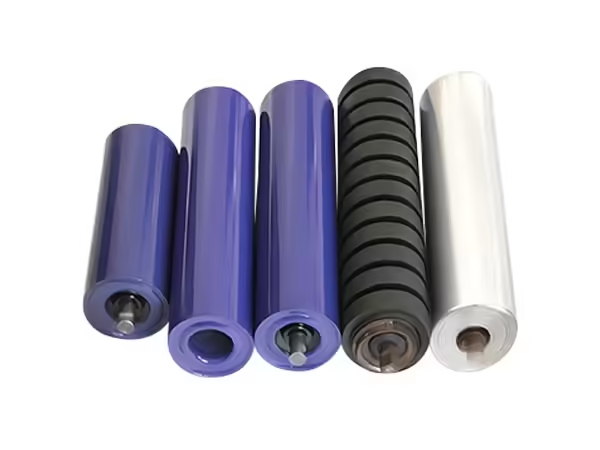
Les rouleaux sont les composants de fonctionnement de base d'une machine de convoyeur à rouleaux Leur qualité affecte directement l'efficacité du système et la durée de vie.
Performance de rotation douce
Les rouleaux de haute qualité réduisent la résistance et permettent aux produits de se déplacer en douceur sur la surface du convoyeur.
Une rotation douce aide:
- Réduire la perte d'énergie
- Minimiser les vibrations
- Améliorer la stabilité de l'équipement
Meilleure répartition des charges
Des rouleaux fiables répartissent le poids du produit uniformément sur la structure du convoyeur.
Cela réduit le stress sur :
- Cadres
- Roulements
- Composants d'entraînement
- Structures porteuses
Durée de vie plus longue du service d’équipement
Les rouleaux durables réduisent l'usure et améliorent la durée de vie globale du système de convoyage.
Un entretien régulier combiné à des composants de qualité permet à une machine à convoyeur à rouleaux de maintenir des performances stables sur des périodes de fonctionnement prolongées.
Pratiques de maintenance pour prolonger la durée de vie des convoyeurs à rouleaux
Un entretien régulier est essentiel pour maintenir les performances du convoyeur et éviter les temps d'arrêt inattendus.
Inspection des composants du convoyeur
Les opérateurs doivent vérifier régulièrement:
- Rotation des rouleaux
- Conditions de roulement
- Alignement du cadre
- Performances du système d'entraînement
- Bruit ou vibration inhabituels
La détection précoce des problèmes permet de prévenir les pannes d'équipement plus importantes.
Nettoyage et Lubrification
La poussière, les débris et les résidus de matériaux peuvent affecter le mouvement du rouleau. Un nettoyage et une lubrification appropriés aident à maintenir un fonctionnement fluide.
Remplacement des composants usés
Les rouleaux endommagés ou les composants usés doivent être remplacés rapidement pour éviter une contrainte supplémentaire sur le système de convoyeur.
Une stratégie de maintenance préventive améliore la fiabilité et prend en charge la production continue.
Tendances de l'automatisation affectant le développement des machines à rouleaux
Le développement de l’automatisation industrielle modifie la manière dont les systèmes de convoyeurs sont conçus et exploités.
Systèmes de surveillance intelligents
Les solutions modernes de machines à convoyeur à rouleaux intègrent de plus en plus de technologies de surveillance qui suivent les conditions de fonctionnement et identifient les problèmes potentiels.
Ces systèmes peuvent surveiller:
- Performances d'équipement
- Vitesse d'opération
- exigences de maintenance
- Conditions anormales
Intégration avec les lignes de production automatisées
Les convoyeurs à rouleaux deviennent des éléments importants des systèmes de fabrication automatisés L'intégration avec les capteurs et les plates-formes de contrôle permet une gestion plus efficace des matériaux.
Conceptions écoénergétiques
Les futurs systèmes de convoyeurs se concentreront sur l'amélioration de l'efficacité énergétique grâce à des structures mécaniques optimisées et des méthodes de contrôle intelligentes.
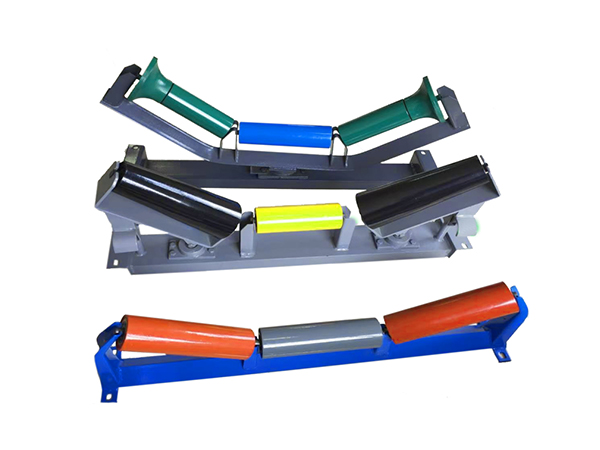
Le développement de la bande transporteuse le système a influencé les méthodes modernes de transport des matériaux, et les améliorations continues de la technologie des convoyeurs soutiendront des opérations industrielles plus efficaces.
Erreurs courantes lors du choix d’une machine de transport à rouleaux
La sélection d'équipements inadaptés peut réduire l'efficacité et augmenter les défis opérationnels.
Ignorer les exigences d’application
Un convoyeur conçu pour les produits légers peut ne pas fonctionner correctement sous de lourdes charges. Comprendre les conditions de fonctionnement réelles est essentiel.
Choisir uniquement en fonction de la taille de l'
La taille est importante, mais les entreprises devraient également considérer
- Caractéristiques matérielles
- Vitesse de transport
- Besoins d'automatisation
- exigences de maintenance
Surveiller les besoins futurs de production
Une machine à convoyeur à rouleaux appropriée doit prendre en charge à la fois les opérations en cours et les changements de production futurs possibles.
Une évaluation minutieuse aide les entreprises à sélectionner des équipements offrant une meilleure valeur à long terme.
Conclusion
Une machine à convoyeur à rouleaux est une solution importante pour améliorer l'efficacité de la manutention des matériaux dans les environnements industriels modernes En prenant en charge un transport stable, en réduisant la manutention manuelle et en s'intégrant aux systèmes automatisés, la technologie des convoyeurs à rouleaux aide les entreprises à créer des flux de production plus efficaces.
La sélection de la bonne machine de convoyeur à rouleaux nécessite de prendre en compte la capacité de charge, la qualité des rouleaux, la conception du convoyeur, les exigences de maintenance et les objectifs opérationnels futurs. Un équipement de haute qualité peut améliorer la fiabilité, réduire les temps d’arrêt et prendre en charge une production continue.
Alors que les industries continuent de s'orienter vers l'automatisation et la fabrication intelligente, les machines à convoyeur à rouleaux resteront un élément important des systèmes efficaces de manutention des matériaux Les entreprises qui comprennent les exigences en matière d'équipement et choisissent des solutions adaptées peuvent atteindre une meilleure productivité et des performances opérationnelles plus solides.
FAQ
À quoi sert une machine à convoyeur à rouleaux ?
Une machine de convoyage à rouleaux est utilisée pour transporter des produits et des matériaux par des processus industriels Elle contribue à améliorer l'efficacité du flux de travail en fournissant un mouvement de matériau stable et organisé.
Comment fonctionne une machine à convoyeur à rouleaux ?
Une machine à convoyeur à rouleaux déplace les produits à travers des rouleaux rotatifs alimentés par des moteurs ou par gravité Les rouleaux supportent les matériaux et les guident le long du chemin de convoyage.
Quelles industries utilisent les machines à convoyeur à rouleaux ?
Les machines à convoyeur à rouleaux sont largement utilisées dans les applications de fabrication, d’emballage, de logistique, d’entreposage et de traitement des matériaux.
Comment choisir la bonne machine de convoyeur à rouleaux ?
La sélection dépend du poids du produit, de la vitesse du convoyeur, de l'environnement de travail, des exigences d'automatisation et de la capacité de production.
Pourquoi la maintenance est-elle importante pour les machines à convoyeur à rouleaux
L'entretien régulier permet de prévenir les pannes, d'améliorer la fiabilité des équipements, de réduire les temps d'arrêt et de prolonger la durée de vie des systèmes de convoy.
 French
  English
  Spanish