
Table of Contents
In modern manufacturing, the efficiency and precision of pipe cutting can make or break your production workflow. If you work with metal, plastic, or composite pipes, understanding the capabilities of a cutting pipe machine is critical to achieving high-quality results while saving time and reducing costs. In this guide, you’ll learn about the different types of cutting pipe machines, their practical applications, and how to choose the right machine for your operations.
How Cutting Pipe Machines Work
A cutting pipe machine is designed to automate or streamline the process of cutting pipes to the desired lengths and angles. The fundamental principle involves a rotating or stationary cutting tool coming into contact with the pipe while controlling feed speed and rotational alignment. Depending on the machine, the pipe may be held stationary, rotated, or fed continuously into the cutting blade.
Modern machines come in manual, semi-automatic, and fully automatic configurations, each with distinct advantages. Manual machines allow flexibility but require more labor and operator skill. Semi-automatic machines reduce operator input while maintaining some control over feed and cutting speed. Fully automatic machines, such as Automatic Tube Cutting Machines, use servo-driven feeds and programmable logic controllers (PLCs) for consistent, high-speed production.
Industries relying on precise pipe cutting include construction, plumbing, furniture manufacturing, and industrial equipment production. For example, a fabrication plant producing metal frames for modular construction improved throughput by 35% after upgrading to an automated pipe cutting machine, according to internal production reports.
Types of Cutting Pipe Machines You Can Choose
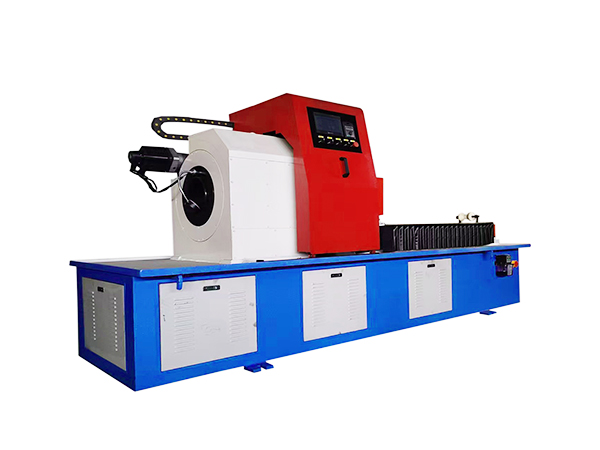
Automatic Tube Cutting Machine (Servo Tool Feeding)
The Automatic Tube Cutting Machine (Servo Tool Feeding) is designed for high-volume and high-precision applications. Servo motors control the feed rate of the pipe, ensuring each cut is consistent. This type of machine is ideal for operations where precision is critical, such as aerospace tubing, hydraulic lines, or medical tubing production.
A real-world application involved a factory producing aluminum tubing. By using a servo-fed machine, they reduced scrap rates by 20% and achieved uniform cuts across batches of varying diameters. This illustrates how automation can directly influence cost efficiency and product quality.
Automatic Pipe Cutting Machine
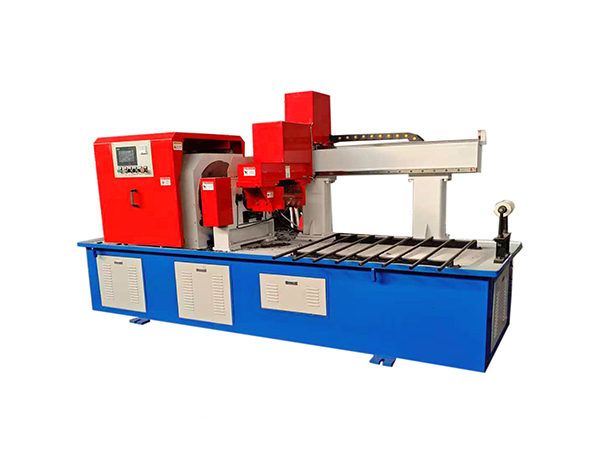
The automatic pipe cutting machine automates the feed and cutting process using motor-driven systems, reducing labor while maintaining high throughput. It works effectively with medium to large-scale operations where speed and reliability are prioritized over ultra-high precision.
In a facility producing PVC and HDPE piping, the automatic pipe cutting machine allowed operators to manage multiple production lines simultaneously, doubling the overall output without increasing labor hours. This demonstrates the machine’s suitability for material versatility and moderate precision needs.
Standard Pipe Cutting Machine
A standard pipe cutting machine is often mechanical or semi-automatic. It is reliable, durable, and ideal for small workshops or applications requiring flexibility rather than volume. While it doesn’t match the speed of fully automated systems, it remains practical for custom orders and small-batch production.
A workshop producing custom steel pipe racks relied on standard cutting machines to accommodate varying pipe diameters and lengths without significant setup time, illustrating the versatility of these machines.
Materials Suitable for Cutting Pipe Machines
Different cutting pipe machines are compatible with various materials. Common options include:
- Metals: Steel, aluminum, copper, stainless steel
- Plastics: PVC, HDPE, CPVC
- Composites: Fiberglass or reinforced polymers
Machine type determines which materials can be cut efficiently. For instance, servo-fed automatic tube cutters handle thin-walled aluminum and copper with high precision, while standard machines are better suited for thicker steel or PVC pipes.
Factors to Consider When Choosing a Cutting Pipe Machine
When evaluating your options, consider:
- Production volume: High-volume facilities benefit from automatic machines, while small shops may rely on standard machines.
- Pipe diameter and wall thickness: Ensure your machine supports the size range you handle.
- Accuracy and repeatability: Servo-fed machines provide superior consistency.
- Maintenance and cost: Factor in blade replacement, lubrication, and operational costs.
Evaluating these factors ensures the selected machine aligns with your workflow requirements and production goals.
Operational Best Practices for Cutting Pipe Machines
To maximize efficiency and prolong machine life:
- Ensure proper setup, alignment, and calibration before operation.
- Adjust feed rates and cutting speeds according to pipe material and diameter.
- Use recommended safety equipment, including guards, goggles, and gloves.
- Regularly inspect blades for wear and replace them promptly.
By following these practices, you maintain quality while minimizing downtime.
Maintenance and Longevity Tips
Preventive maintenance is critical for sustaining performance:
- Lubricate moving parts and feed mechanisms as specified in the machine manual.
- Monitor cutting tool wear and replace blades or inserts before they compromise precision.
- Regularly clean the machine to prevent dust and debris buildup, which can affect feed accuracy.
- Document maintenance schedules to track service intervals and performance.
Proactive maintenance can extend the lifespan of your machine by 30–50%, based on industry maintenance data.
Comparison Table of Cutting Pipe Machine Types
| Machine Type | Feed Mechanism | Precision | Suitable Pipe Material | Production Volume | Operator Requirement | Ideal Use Case |
|---|---|---|---|---|---|---|
| Automatic Tube Cutting Machine (Servo Tool Feeding) | Servo-controlled | High | Steel, Aluminum, Copper | High | Minimal | Mass production requiring precision |
| Automatic Pipe Cutting Machine | Motor-driven | Medium-High | Steel, PVC, HDPE | Medium-High | Low | Automated shop operations |
| Standard Pipe Cutting Machine | Manual/Mechanical | Medium | Steel, PVC | Low-Medium | High | Small workshops, flexible operations |
Case Studies: Real-Life Applications of Cutting Pipe Machines
- Aluminum Tubing Production: A manufacturer integrated a servo-fed tube cutting machine to improve batch consistency and reduce scrap.
- PVC Pipe Factory: Implementing automatic pipe cutters allowed simultaneous operation of multiple lines, doubling production efficiency.
- Custom Steel Workshops: Standard machines enabled rapid setup for variable pipe sizes, supporting custom fabrication orders efficiently.
Cost and ROI Considerations
Automation impacts both operational costs and return on investment:
- Labor savings: Automated machines reduce manual cutting tasks.
- Throughput improvement: Faster cutting cycles increase output.
- Reduced scrap: Consistent cutting minimizes material waste.
Calculating ROI requires balancing upfront equipment costs with long-term gains in efficiency and quality. Most automated systems can pay for themselves within 12–24 months in high-volume operations.
Advanced Features and Innovations
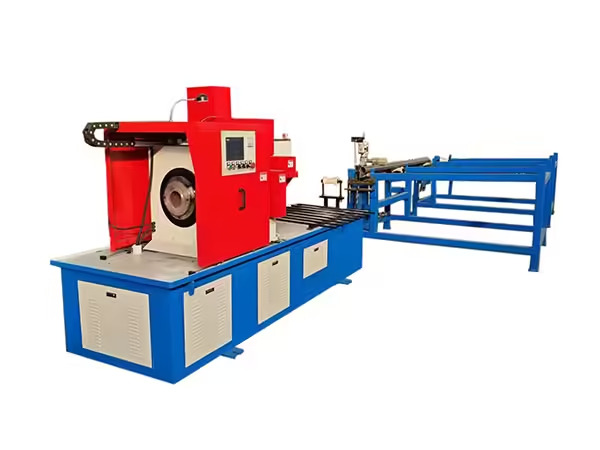
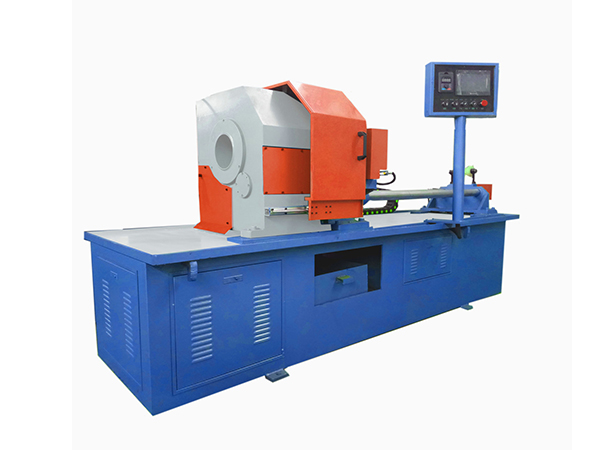
Modern cutting pipe machines incorporate:
- CNC programming for repeatable and complex cuts.
- Multi-head systems for simultaneous cuts on multiple pipes.
- Adaptive feed systems with sensors to optimize speed and reduce wear.
- Integration with production management software for real-time monitoring.
These features enhance efficiency and help maintain competitive advantage in high-volume operations.
Conclusion
Choosing the right cutting pipe machine is crucial for optimizing your production workflow. By understanding the types of machines available—from standard mechanical cutters to fully automated servo-fed systems—you can select the one that matches your material types, precision needs, and production volume. Implementing proper maintenance, best operational practices, and leveraging advanced features ensures long-term efficiency, reduced waste, and improved safety.
Investing in the right cutting pipe machine not only improves your output but also reduces operational costs, positioning your business for reliable and scalable manufacturing success.
FAQ
What is the difference between automatic and manual pipe cutting machines?
Automatic machines use motorized or servo-driven feeds to reduce labor, while manual machines require more operator involvement.
Can I cut both metal and plastic pipes on the same machine?
Yes, but you must ensure the machine’s feed speed and blade type match the material properties.
How often should blades or cutting tools be replaced?
Replacement depends on usage, material hardness, and volume, typically after 100–500 cutting hours for high-volume metal applications.
What safety measures are recommended when operating these machines?
Wear protective gloves, goggles, and ensure guards are in place. Follow recommended feed speeds and avoid loose clothing.
How do I choose the right machine for my production scale?
Consider production volume, pipe material, required precision, and available labor. High-volume operations benefit from servo-fed machines, whereas small workshops may prefer standard machines.
Need Help Choosing the Right Cutting Pipe Machine?
If you’re unsure which cutting pipe machine is best for your production needs, our experts are here to help. Contact us today for a personalized consultation, and ensure your manufacturing process is efficient, precise, and reliable. Don’t wait to optimize your workflow—get in touch now to enhance productivity and reduce material waste!
 English
  French
  Spanish