
Table of Contents
Introduction
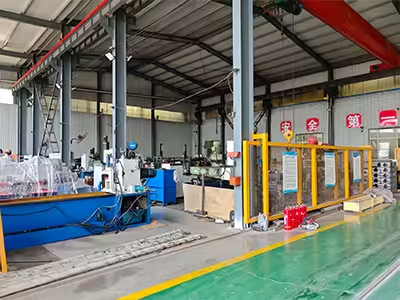
If your factory processes metal tubes, roller shafts, pipe ends, or machined parts, edge finishing is not a small detail. A poorly finished edge can affect assembly fit, welding preparation, bearing installation, operator safety, and the final appearance of the product.
A chamfer machine tool helps you create controlled beveled edges on workpieces with better consistency than manual grinding or hand deburring. For conveyor roller production, tube processing, metal fabrication, and machinery manufacturing, the right chamfering equipment can reduce rework, improve part quality, and make batch production easier to control.
However, choosing a chamfer machine tool is not only about whether it can remove sharp edges. You need to consider workpiece size, material type, chamfer angle, processing depth, clamping stability, centering accuracy, automation level, operator safety, and how the machine connects with your production line.
This guide explains how to select a chamfer machine tool for industrial metal processing, especially when you need stable edge quality and repeatable performance.
Why Chamfering Quality Matters in Metal Processing
In many workshops, chamfering is treated as a finishing step after cutting, turning, or drilling. But in real production, chamfering has a direct influence on the next process.
A clean chamfer can help parts fit more smoothly during assembly. It can reduce sharp edges that may injure operators. It can also prepare tube or shaft ends for welding, pressing, bearing installation, or further machining.
When chamfering is done manually, results often depend on operator skill. One worker may remove too much material, while another may leave burrs or uneven edges. In small batches, this may be acceptable. In high-volume production, inconsistent chamfering can create quality problems across the whole line.
A chamfer machine tool improves this process by making edge finishing more controlled and repeatable. Instead of relying only on hand tools, the machine uses stable positioning, clamping, and cutting movement to produce more uniform chamfers.
For factories producing conveyor rollers, pipe components, hydraulic parts, or metal assemblies, this consistency can make a clear difference in daily production quality.
What Is a Chamfer Machine Tool?
A chamfer machine tool is industrial equipment used to create beveled edges on the ends or corners of metal workpieces. It is commonly used after cutting, turning, drilling, or shaft processing to remove sharp edges and prepare the part for the next operation.
In practical factory use, a chamfer machine tool may be manual, semi-automatic, automatic, or CNC-controlled. The right type depends on production volume, required precision, material size, and whether one or both ends need to be processed.
Basic Definition
A chamfer is an angled surface cut between two faces of a workpiece. Instead of leaving a sharp 90-degree corner, the machine removes a controlled amount of material to create a sloped edge.
This may sound simple, but the quality of the chamfer affects how the part performs in assembly. If the chamfer is uneven, too deep, too shallow, or off-center, the workpiece may not fit correctly in the next process.
Chamfering, Deburring, and Edge Preparation
Chamfering and deburring are related, but they are not exactly the same.
Deburring mainly removes small unwanted rough edges left after cutting or machining. Chamfering creates a defined angled edge with a specific shape, depth, and purpose.
For example, after a tube is cut, it may have burrs. Removing those burrs improves handling safety. But if the tube end needs to be inserted into another part, welded, or assembled with a bearing structure, a controlled chamfer may be required for better fit and process stability.
A chamfer machine tool is especially useful when you need the same edge profile across many parts.
How a Chamfer Machine Tool Works
Although different machines use different structures, most chamfer machine tools follow the same basic workflow: position the workpiece, clamp it securely, perform chamfering, and release the finished part.
Workpiece Positioning
The first step is positioning. The shaft, tube, pipe, or component must be placed accurately before cutting begins.
If the workpiece is not aligned correctly, the chamfer may become uneven. This is especially important for round parts such as roller shafts and tube ends, where concentricity affects the final result.
In automated production, the positioning system may be supported by loading and unloading mechanisms. This reduces manual handling and helps improve production rhythm.
Clamping and Centering
Clamping keeps the workpiece stable during machining. Centering ensures that the chamfer is created around the correct axis.
A weak clamping structure can cause vibration, movement, or uneven cutting. Poor centering may result in one side being over-cut while another side remains unfinished.
For double-end processing, centering becomes even more important because both ends must be processed in a balanced and repeatable way.
Cutting, Chamfering, and Discharge
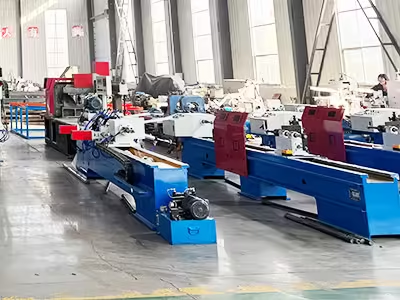
After positioning and clamping, the cutting tool removes material from the edge of the workpiece. Depending on the machine design, it may complete chamfering, flat heading, center hole processing, or other end-finishing operations.
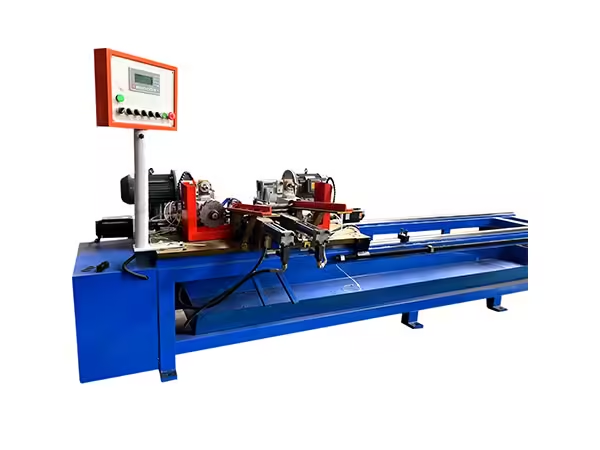
In conveyor roller production, a flat head chamfer playing center hole machine tool can be used where both ends need accurate processing in the same workflow, helping improve consistency before later assembly steps.
Once processing is complete, the finished part is released or transferred to the next station.
Key Benefits of Using a Chamfer Machine Tool
A chamfer machine tool improves more than the appearance of a part. It helps create a more stable and efficient production process.
More Consistent Edge Quality
Manual grinding and hand deburring can produce acceptable results, but they are difficult to keep consistent across large batches.
A chamfer machine tool helps control edge angle, processing depth, and surface quality. This improves part-to-part consistency and reduces the need for repeated inspection or rework.
Better Assembly and Welding Preparation
Chamfered edges can make assembly smoother. They help parts enter fixtures, housings, or matching components more easily.
For welding preparation, a controlled edge can help improve joint preparation and reduce problems caused by rough or uneven tube ends. The exact requirement depends on the welding method, material, and product design, but stable edge preparation is usually better than uncontrolled manual finishing.
Higher Production Efficiency
When chamfering is done manually, operators may spend significant time handling each piece. In batch production, this becomes a bottleneck.
An automatic or semi-automatic chamfer machine tool can reduce repeated manual work, improve processing speed, and help operators maintain more stable output throughout the shift.
Reduced Rework and Scrap
Uneven chamfers, excessive material removal, or missed burrs can lead to rework. In some cases, parts may need to be scrapped if too much material is removed.
A properly selected chamfer machine tool helps reduce these risks by making the process more predictable.
Safer Handling
Sharp tube ends, rough shaft edges, and cutting burrs can cause injuries during handling. Chamfering helps remove these hazards and makes parts safer for operators in later processes.
Safety is not only about machine guarding. It also includes producing parts that are safer to handle during the whole manufacturing workflow.
Chamfer Machine Tool vs Manual Deburring vs General Lathe Processing
Different edge-finishing methods suit different production needs. The table below compares common options.
| Method | Best For | Main Advantages | Common Limitations |
|---|---|---|---|
| Manual deburring | Small batches, repair work, simple edge cleanup | Flexible, low setup requirement, easy for occasional use | Operator-dependent, slower for batch production, less consistent |
| Hand grinding | Irregular parts and rough burr removal | Useful for flexible finishing tasks | Difficult to control angle and depth, may create uneven surfaces |
| General lathe processing | Precision machining on selected parts | Good for controlled turning operations | Lower efficiency for repeated end processing if not dedicated |
| Chamfer machine tool | Batch chamfering, tube ends, shafts, roller parts | More consistent chamfer quality, faster workflow, better repeatability | Requires correct setup, suitable tooling, and regular maintenance |
| Double-end chamfer machine tool | High-volume shaft or roller production | Can process both ends efficiently and improve alignment consistency | Must match workpiece size, tolerance, and production rhythm |
If your factory only needs occasional edge cleanup, manual deburring may be enough. If you process many similar shafts, tubes, or roller parts, a chamfer machine tool is usually more efficient and more stable.
Main Applications of Chamfer Machine Tools
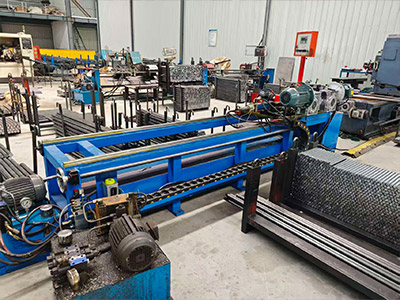
Chamfer machine tools are widely used in industries where edge quality affects assembly, welding, or product reliability.
Conveyor Roller Shaft Processing
In conveyor roller production, shafts often require accurate end preparation. Chamfering can help improve assembly with bearings, housings, and roller structures.
If the shaft end is rough, uneven, or poorly centered, later assembly may become less stable. A chamfer machine tool helps maintain repeatable edge quality for batch production.
Tube and Pipe End Finishing
After cutting, tube and pipe ends may have burrs, sharp edges, or uneven surfaces. Chamfering prepares these ends for welding, fitting, insertion, or safe handling.
For related production knowledge, a factory that already uses tube cutting equipment may also consider how chamfering supports the complete metal tube cutting workflow.
Machinery Parts Preparation
Machinery parts often require clean edges before assembly. Chamfering reduces sharp corners and improves fit between components.
This is useful for machine frames, brackets, shafts, sleeves, hydraulic components, and other metal parts that must be handled or assembled repeatedly.
Hydraulic and Pneumatic Components
Hydraulic cylinders, pneumatic components, and round mechanical parts often require precise end preparation. Chamfering can help reduce assembly resistance and protect seals or mating surfaces when parts are installed.
Automotive and Industrial Fabrication
In industrial fabrication, chamfering supports cleaner edges, better part handling, and more reliable downstream processing. It is commonly used where repeatable finishing quality is required.
Important Specifications to Check Before Buying
Before selecting a chamfer machine tool, you should define your actual production requirements. A machine that works well for one factory may not fit another workshop’s material range or processing rhythm.
Workpiece Diameter and Length
Start by confirming the minimum and maximum diameter of your workpieces. For shafts and tubes, also check length range and whether both ends need processing.
If your parts vary widely in size, ask whether the machine can be adjusted quickly and whether different fixtures or tooling are required.
Chamfer Angle and Depth
Chamfer angle and depth should match your product design and downstream process. A shallow chamfer may be enough for burr removal, while deeper edge preparation may be needed for welding or assembly.
Before purchase, prepare drawings or samples so the supplier can understand your required chamfer profile.
Single-End vs Double-End Processing
If your production only requires one end to be chamfered, a single-end machine may work. But if both ends need consistent processing, a double-end chamfer machine tool can improve efficiency and reduce repeated handling.
For roller shafts or tube sections, double-end processing can be especially valuable because it helps maintain production rhythm and reduces operator workload.
Loading and Unloading Method
Manual loading may be acceptable for small batches. For high-volume production, automatic loading and unloading can reduce labor intensity and improve cycle stability.
You should consider the weight, length, and quantity of workpieces when evaluating automation level.
Tooling and Blade Adjustment
Tooling affects chamfer quality, tool life, and maintenance time. A machine with standardized blades and simple adjustment can reduce downtime.
Before buying, ask how tools are changed, how chamfer size is adjusted, and whether operators can perform routine adjustments easily.
Machine Rigidity
A rigid structure helps reduce vibration during cutting. Vibration can lead to uneven chamfers, poor surface quality, faster tool wear, and noise.
For hard materials or thick parts, rigidity becomes even more important.
How to Evaluate Chamfering Accuracy and Surface Quality
Chamfering quality should be evaluated from several angles, not only by checking whether the sharp edge is removed.
You should look at:
Chamfer angle consistency
Chamfer depth consistency
Surface smoothness
Burr condition after processing
Concentricity on round parts
End-face flatness if flat heading is included
Tool marks
Repeatability across batches
For production parts, you should also test whether the chamfer supports the next process. A chamfer may look acceptable visually but still cause problems in assembly if the angle or depth is wrong.
The best approach is to test real samples under your actual production conditions. This gives you a clearer understanding of machine performance than only reading a specification sheet.
Safety and Operator Protection
A chamfer machine tool includes rotating tools, clamping force, moving parts, and metal chips. Safety should be considered during machine selection, installation, and operation.
A good machine design should include appropriate guarding, emergency stop functions, stable clamping, clear operation controls, and safe access for tool adjustment.
Operators should also be trained to understand:
How to load and position workpieces safely
How to check clamping before machining
How to stop the machine in an emergency
How to inspect tools
How to clean chips without reaching into dangerous areas
How to follow lockout procedures during maintenance
Good safety practice protects both workers and production stability. Accidents can cause downtime, machine damage, and delivery delays, so safety should be part of your purchasing decision.
Maintenance Tips for Stable Long-Term Operation
A chamfer machine tool needs regular maintenance to keep stable accuracy and surface quality. Maintenance should be simple, planned, and recorded.
Daily Cleaning
Metal chips and dust should be removed from the working area after production. Chips around guideways, fixtures, and cutting tools can affect movement and accuracy.
Tool Inspection
Cutting tools should be checked regularly. A worn tool can cause rough surfaces, excessive burrs, vibration, heat, and inconsistent chamfers.
Tool replacement should be based on actual cutting performance, not only on time.
Lubrication
Moving parts need proper lubrication according to the supplier’s instructions. Poor lubrication can increase wear and reduce movement stability.
Clamping System Check
Clamping components should be inspected for wear, looseness, or pressure problems. If clamping is unstable, chamfering quality will also become unstable.
Alignment Check
For machines that process both ends or require accurate centering, alignment should be checked periodically. Small alignment errors can create visible quality problems over time.
Maintenance Records
Keeping maintenance records helps you identify recurring issues. It also supports better training when new operators join the production team.
How to Choose a Reliable Chamfer Machine Tool Supplier
A reliable supplier should do more than provide a machine name and basic specifications. They should understand your process and recommend a suitable configuration.
Before choosing a supplier, consider whether they can answer these questions clearly:
What workpiece sizes can the machine process?
Can the machine handle your material type?
Is it suitable for single-end or double-end processing?
How is the workpiece centered and clamped?
How is chamfer angle or depth adjusted?
What tooling is required?
How easy is maintenance?
Can they provide training and technical support?
Can the machine be customized for your production line?
A professional supplier should ask about your material, drawing, tolerance requirement, production volume, and next process. If the supplier does not ask these questions, the recommended machine may not match your real needs.
Common Mistakes to Avoid Before Purchase
Choosing a chamfer machine tool without enough technical preparation can lead to poor performance or unnecessary rework. Avoid these common mistakes.
Only Looking at Machine Appearance
A machine may look strong from the outside, but internal structure, clamping design, tool adjustment, and rigidity matter more. Always focus on how the machine works, not only how it looks.
Ignoring Workpiece Variation
If your factory processes many sizes, the machine must be easy to adjust. Otherwise, changeover time can reduce real production efficiency.
Treating Chamfering as Simple Deburring
Deburring removes unwanted rough edges. Chamfering creates a controlled edge profile. If your parts require assembly, welding, or precise fitting, you need to define chamfer angle and depth clearly.
Not Testing Real Samples
Sample testing helps confirm whether the machine can meet your surface quality and accuracy needs. Without testing, it is harder to know whether the machine fits your production process.
Forgetting Operator Training
Even automatic machines require trained operators. Incorrect setup, poor clamping, or delayed tool replacement can still cause quality issues.
Sending an Incomplete Inquiry
Before requesting a machine recommendation, prepare the following information:
Workpiece material
Diameter range
Length range
Chamfer angle
Chamfer depth
Single-end or double-end processing requirement
Production volume
Tolerance requirement
Surface quality expectation
Loading and unloading preference
Available workshop space
Downstream process after chamfering
The more complete your information is, the easier it is to select the right chamfer machine tool.
Conclusion
A chamfer machine tool is more than an edge-finishing machine. It is a practical way to improve consistency, assembly quality, operator safety, and production efficiency.
For factories that process metal tubes, roller shafts, conveyor parts, hydraulic components, or machined metal parts, stable chamfering can reduce rework and support smoother downstream operations.
When selecting a machine, pay attention to workpiece size, chamfer angle, clamping stability, centering accuracy, tooling adjustment, automation level, maintenance access, and supplier support.
The right chamfer machine tool should match your actual production process, not just your current part size. When chosen correctly, it can help your factory build a more reliable and scalable metal finishing workflow.
FAQ
What is a chamfer machine tool used for?
A chamfer machine tool is used to create controlled beveled edges on tubes, shafts, pipes, and metal parts. Since a chamfer removes a sharp corner and forms an angled edge, the machine helps improve assembly fit, welding preparation, handling safety, and batch consistency.
How is chamfering different from deburring?
Deburring mainly removes rough edges or small burrs left after cutting or machining, while chamfering creates a defined angled edge. If your part only needs safer handling, deburring may be enough. If it needs better fitting, welding preparation, or repeatable geometry, chamfering is usually more suitable.
Can a chamfer machine tool process both ends at the same time?
Yes, some chamfer machine tools are designed for double-end processing. This is useful for roller shafts, tube sections, and similar parts that require consistent finishing on both ends. Double-end processing can reduce handling time, improve alignment, and support higher production efficiency.
What materials can a chamfer machine tool process?
A chamfer machine tool can be configured for carbon steel, stainless steel, aluminum, and other industrial metal materials. The suitable material range depends on machine rigidity, tool type, workpiece size, cutting speed, clamping structure, and the required chamfer depth or surface quality.
What should I provide when requesting a chamfer machine tool solution?
You should provide workpiece material, diameter, length, chamfer angle, chamfer depth, tolerance requirement, production volume, and whether one or both ends need processing. If possible, share drawings or samples so the supplier can recommend a machine that fits your real production needs.
 English
  French
  Spanish