
Table of Contents
Burrs on pipe ends are a common issue in metal fabrication, affecting welding quality, assembly efficiency, and overall product performance. For manufacturers and workshop operators, finding a reliable solution to quickly remove burrs is critical. A pipe chamfering machine is designed precisely for this purpose, combining speed, precision, and repeatability to deliver clean pipe ends while reducing manual labor. In this article, we will explore how these machines work, their applications, features, and practical guidance to help you eliminate burrs efficiently.
Understanding Why Burrs Occur on Pipe Ends
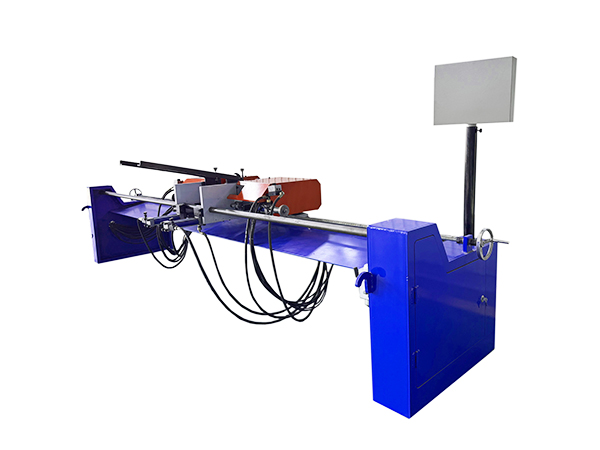
Burrs form when material is displaced or torn during cutting, drilling, or machining processes. The most common causes include:
- Material hardness and ductility, which affect how easily the edges tear
- Cutting speed and feed rate, which influence surface finish
- Tool sharpness and wear, which can produce irregular burrs
- Pipe wall thickness, especially in thin-walled tubing
According to industry reports on metal fabrication, improperly deburred pipes can increase welding defects by up to 15%, underscoring the importance of effective burr removal.
What a Pipe Chamfering Machine Does and Why It Works
A pipe chamfering machine precisely removes burrs and creates angled edges suitable for welding or assembly. Unlike manual methods like grinding or filing, chamfering machines ensure consistent results with minimal effort. Key advantages include:
- Smooth, burr-free edges that improve weld penetration and quality
- Adjustable chamfer angles to meet various application requirements
- Fast operation that reduces production time and operator fatigue
Chamfering machines differ from beveling machines mainly in precision and automation, making them more suitable for high-volume or high-accuracy tasks.
Types of Pipe Chamfering Machines and Their Burr-Removal Efficiency
Different types of chamfering machines serve various industrial needs:
- Manual Chamfering Machines: Suitable for small workshops or occasional use. Requires operator skill and time.
- Semi-Automatic Chamfering Machines: Partially automated feeding and cutting improve speed and consistency.
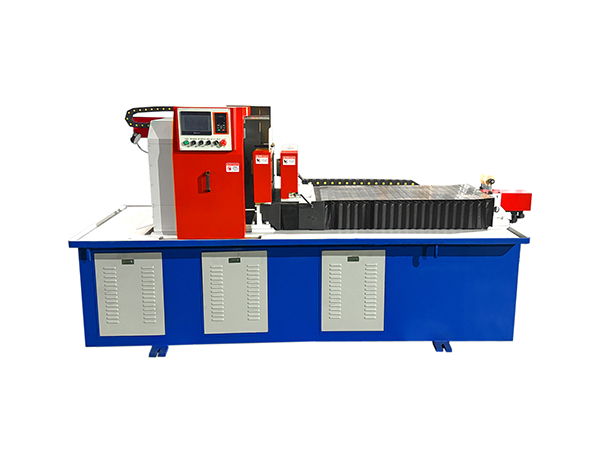
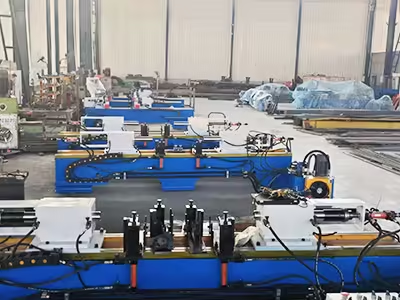
- Fully Automatic Pipe Chamfering Machines: Designed for high-volume production, featuring PLC control, servo feeding, and repeatable precision.
- CNC Chamfering Machines: Offer programmable angles, automated tool changes, and precise control for complex fabrication requirements.
Automatic and CNC machines are particularly effective for eliminating burrs quickly while maintaining surface integrity.
Key Features That Ensure Burr-Free Pipe Ends
When choosing a pipe chamfering machine, certain features are critical:
- Servo Feeding Systems: Deliver stable, consistent material movement to prevent uneven edges.
- Rotating Cutter Mechanism: Eliminates the need to rotate the pipe manually, ensuring smooth surfaces.
- Tool Material and Geometry: High-quality inserts reduce wear and produce clean chamfers.
- PLC or CNC Control: Provides repeatability and precise angle adjustments for uniform results.
The Top Pain Points in Pipe Cutting—and How Chamfering Machines Solve Them
Burrs can lead to several operational challenges:
- Inconsistent angles and rough surfaces—solved by precision cutters and automatic feed.
- Slow manual deburring—eliminated by fully automated systems.
- Pipe edge cracking—prevented by proper tool geometry and feed speed.
- Quality defects in welding—addressed with burr-free chamfered ends.
A well-chosen chamfering machine directly tackles these pain points, improving efficiency and reducing rework.
How to Choose the Right Pipe Chamfering Machine for Burr-Free Finishing
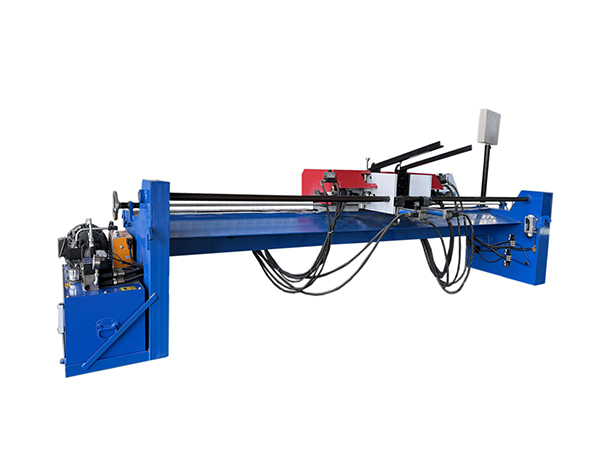
Selecting the right machine depends on:
- Production Volume: High-volume workshops benefit from fully automatic or CNC machines.
- Pipe Size and Wall Thickness: Machines should accommodate the range of diameters and thicknesses you process.
- Automation Level: Manual machines are less efficient; servo-driven automatic systems save time and labor.
- Surface Finish Requirements: Machines with adjustable cutting parameters ensure smooth and repeatable results.
Real-World Applications: Where Burr-Free Chamfering Matters Most
Pipe chamfering machines are essential in industries such as:
- Precision welding and fabrication—ensuring strong joints and minimal defects.
- Hydraulic and pneumatic tubing—where smooth edges prevent leakage and wear.
- Automotive and machinery manufacturing—enhancing assembly quality.
- Mass-production pipe processing lines—supporting fast and consistent output.
Maintenance Tips to Keep Your Chamfering Machine Performing at Its Best
Regular maintenance ensures consistent burr-free results:
- Keep cutting tools sharp and replace them when worn.
- Perform daily inspections of feed systems and guide rails.
- Clean debris and metal shavings to prevent surface scratches.
- Monitor for vibration or noise and recalibrate feed systems as needed.
Comparison Table: Manual vs Automatic Pipe Chamfering Machines
| Feature | Manual Chamfering | Semi-Automatic | Fully Automatic | CNC Chamfering |
|---|---|---|---|---|
| Burr Removal Speed | Low | Medium | High | High |
| Precision & Repeatability | Low | Medium | High | Very High |
| Operator Effort | High | Medium | Low | Low |
| Suitable Production Volume | Low | Medium | High | High |
| Chamfer Angle Adjustment | Manual | Semi | Automated | Programmable |
| Surface Finish | Variable | Good | Excellent | Excellent |
This table highlights the trade-offs between machine types, helping you choose the most suitable solution for your workshop or production line.
How to Achieve Fast, Clean, and Repeatable Chamfering Results
To eliminate burrs effectively, combine a high-quality pipe chamfering machine with proper tooling, optimized feed rates, and regular maintenance. Automated or CNC systems offer the most consistent and efficient solution, saving labor and reducing rework. By investing in the right equipment and process, you ensure cleaner pipe ends, improved weld quality, and faster production cycles.
FAQ
How does a pipe chamfering machine remove burrs efficiently?
A pipe chamfering machine removes burrs by using a rotating cutting tool or blade to precisely trim the pipe edge. Unlike manual methods, it maintains a consistent angle and depth, producing smooth, burr-free surfaces. Machines with automatic feed and CNC control ensure repeatable results, reducing human error and improving production speed. According to industry reports on metal fabrication, automated chamfering can reduce edge defects by over 80% compared to manual deburring.
Can one chamfering machine handle multiple pipe diameters?
Yes, many modern pipe chamfering machines are designed with adjustable jaws or universal fixtures, allowing them to process a range of pipe diameters without the need for multiple machines. Some CNC models can store preset programs for different diameters, enabling quick switching between production batches while maintaining accuracy and burr-free edges.
What maintenance is required to keep a pipe chamfering machine running smoothly?
Routine maintenance includes keeping the cutting tools sharp, cleaning the machine’s guide rails and feed systems, inspecting bearings, and checking alignment. Lubricating moving parts according to the manufacturer’s guidelines ensures smooth operation and consistent chamfer quality. Proper maintenance reduces downtime and extends the machine’s lifespan while minimizing burr formation.
How do I choose the right chamfer angle for my pipes?
The chamfer angle depends on the application. For welding, a typical angle ranges from 15° to 45° to ensure proper penetration. For assembly or cosmetic purposes, smaller angles may be sufficient. Pipe chamfering machines with programmable CNC or adjustable blades allow you to select precise angles, ensuring consistent results for every pipe in your production line.
Need Help Choosing the Right Pipe Chamfering Machine?
If you’re unsure which pipe chamfering machine fits your production needs, Cangzhou Terok International Trade Co., Ltd. is ready to assist. Contact us today for a personalized consultation to enhance productivity, improve product quality, and ensure consistent burr-free pipe ends. Don’t wait—reach out now to take your fabrication process to the next level!
 English
  French
  Spanish