
Table des matières
Introduction
Conveyor rollers may look like relatively simple components, but producing them consistently requires much more than cutting a steel tube and installing a shaft. Tube length, end machining, shaft geometry, bearing installation, welding position, concentricity, and surface condition can all influence how a finished roller performs in a conveyor system. For manufacturers producing rollers in batches, controlling these variables manually can become increasingly difficult as production volume and product variety grow.
A conveyor roller manufacturing machine is therefore best understood not as one isolated machine, but as part of a coordinated manufacturing process. Depending on the roller design, a production line may include tube cutting equipment, double-end machining machines, shaft milling and grooving equipment, bearing assembly machines, welding machines, and other specialized processing equipment.
Understanding how these machines work together helps manufacturers evaluate production capacity, machining consistency, automation requirements, and future expansion more effectively. This guide explains the major stages of conveyor roller production and the role specialized machinery plays at each step.
What Is a Conveyor Roller Manufacturing Machine?
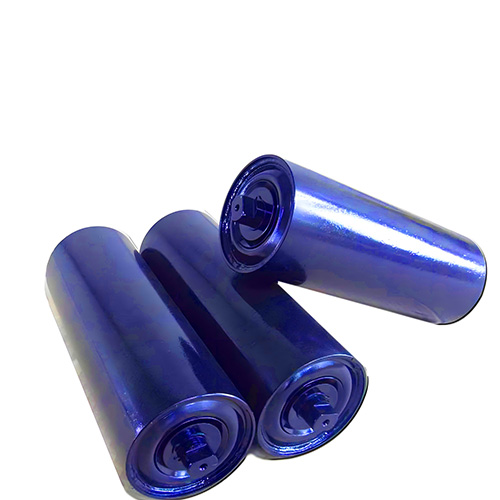
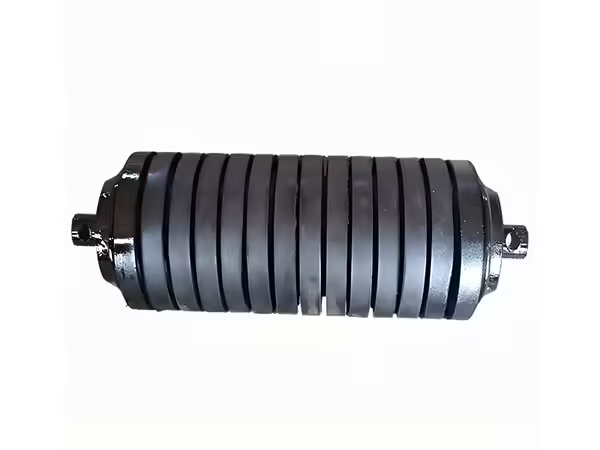
A conveyor roller manufacturing machine is specialized equipment used to process the tubes, shafts, bearing housings, bearings, and related components required to manufacture conveyor rollers. Unlike general-purpose machine tools, many roller manufacturing machines are designed around the geometry and repetitive production requirements of conveyor roller components.
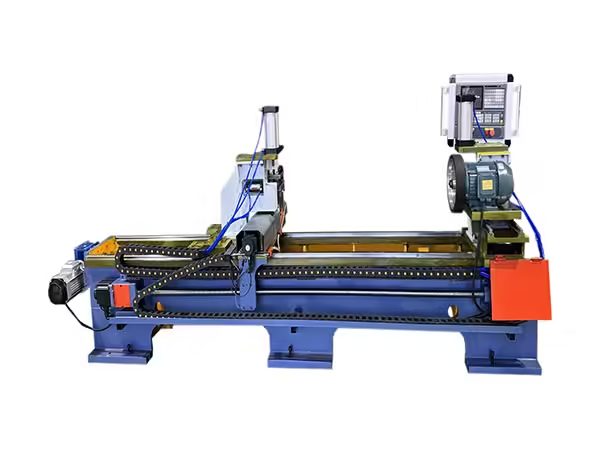
The term can refer to an individual machine or to a group of machines forming a production line. Terok’s Machines de fabrication et de transformation range covers equipment used for tube preparation, roller tube processing, shaft machining, bearing assembly, welding, and other stages involved in conveyor roller manufacturing.
A factory may require an automatic tube cutting machine to prepare roller shells, a double-end lathe to machine both ends of the tube, a shaft milling machine to form flats or grooves, and a bearing press machine to support assembly. Another production environment may add automated welding or specialized HDPE roller machining according to the roller structure being produced.
The main objective is not simply higher output. A suitable conveyor roller manufacturing machine should help maintain repeatable dimensions, simplify repetitive operations, reduce variation between workpieces, and make production easier to organize across different roller specifications.
From Steel Tube to Finished Conveyor Roller
A typical conveyor roller begins with the preparation of the roller shell and shaft. Steel tube is cut to the required length, after which the tube ends may need additional machining so bearing housings or related components can be positioned correctly. At the same time, the roller shaft is processed according to the required end geometry, which may include flat milling, through-flat machining, circlip grooves, chamfering, or center-hole preparation.
After the individual components have been prepared, bearing housings and bearings are assembled with the tube and shaft. Depending on the roller design and manufacturing method, welding may be required to secure components and create the finished roller structure. Final inspection then checks dimensional consistency, rotation, runout, assembly condition, and other characteristics required by the manufacturer’s specification.
Because each stage affects the next, production quality depends on process continuity. A highly accurate shaft cannot compensate for a poorly cut tube, and precise tube machining cannot completely solve problems caused by inconsistent bearing installation. This is why roller manufacturing equipment should be evaluated as a connected process rather than as a collection of unrelated machines.
Key Machines Used in Conveyor Roller Production
The exact configuration of a production line varies according to roller material, diameter, length, bearing arrangement, production volume, and required level of automation. However, several machine categories are commonly involved in the process.
| Étape de production | Typical Machine | Fonction principale | Key Process Concern |
|---|---|---|---|
| Préparation des tubes | Machine de découpe de tubes automatique | Cuts steel tube to required length | Length consistency and cut quality |
| Tube-end processing | Double-end lathe | Machines both ends of the roller tube | Alignment and concentricity |
| Shaft preparation | Double-end milling machine | Machines flats on shaft ends | Symmetry and repeatability |
| Shaft grooving | Circlip grooving machine | Produces retaining-ring grooves | Groove position and dimensions |
| Shaft finishing | Chamfering or center-hole machine | Prepares shaft ends | Positioning and subsequent machining |
| Ensemble de roulement | Bearing press machine | Installs bearings or bearing assemblies | Pressing alignment and consistency |
| Soudage | Double-end roller welding machine | Welds roller components | Weld position and uniformity |
| Polymer roller machining | HDPE roller lathe | Machines roller outer surfaces | Diameter and surface finish |
A well-planned conveyor roller manufacturing machine configuration should correspond to the actual production sequence. Adding automation to only one stage may improve that operation while leaving bottlenecks elsewhere, so manufacturers should consider the balance of the entire line.
Tube Cutting as the Starting Point of Roller Accuracy
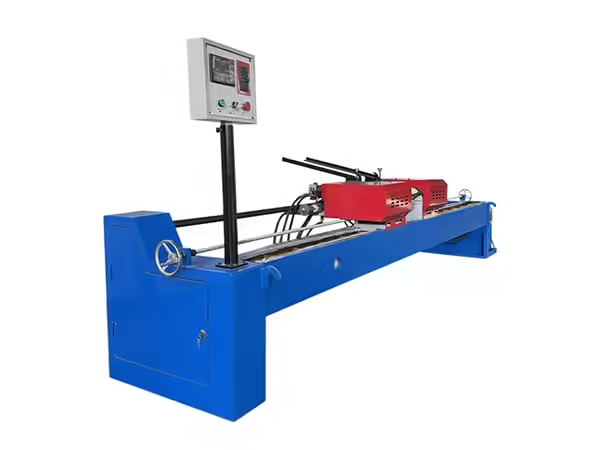
Tube preparation is one of the earliest opportunities to control dimensional consistency. If roller tubes vary significantly in length or have poor-quality end faces, later operations must compensate for these differences, which can make production less stable.
Un Machine de découpe de tuyaux automatique can improve repeatability by controlling feeding, positioning, clamping, and cutting through a defined production cycle. For batch production, programmable length control is especially useful when manufacturers work with several roller specifications during the same production period.
Cut quality also matters. Excessive burrs, uneven end faces, deformation, or inconsistent cutting positions can increase the amount of secondary processing required. For that reason, cutting equipment should be selected according to tube material, diameter range, wall thickness, required finished length, and expected production volume rather than on cutting speed alone.
Why Double-End Machining Matters
Many conveyor roller components are symmetrical, making double-end processing particularly suitable for their manufacture. A double-end machine can process corresponding features on both ends of a workpiece within the same production cycle, helping reduce the positioning differences that may occur when each end is processed separately.
For roller tubes, a double-end lathe can machine both tube ends for bearing housing installation or other assembly requirements. For roller shafts, double-end milling equipment can create flats or other features at both ends while maintaining a controlled relationship between the two processed areas.
This approach is valuable because roller performance depends partly on alignment across the entire assembly. When both ends are machined under controlled positioning, manufacturers can simplify repeated handling and improve consistency between finished components. The result is a process that is more suitable for batch roller manufacturing than repeatedly transferring workpieces between general-purpose machines.
Roller Shaft Machining and Its Role in Assembly
The shaft forms the central structural element of many conveyor rollers, and its geometry must match the mounting and assembly requirements of the final product. Depending on the roller design, the shaft ends may require milled flats, through flats, grooves for retaining components, chamfers, or center holes.
Specialized shaft machines are useful because they are designed around these repetitive features. Instead of manually setting up a conventional milling machine for each shaft, an automatic double-end flat milling machine can control clamping, feeding, machining, and return movements as part of a repeatable cycle.
The same principle applies to circlip grooving. Groove position and dimensions need to remain consistent because they interact directly with retaining components during assembly. Dedicated grooving equipment can make this repetitive operation easier to standardize when large batches of similar shafts are being processed.
For manufacturers evaluating a conveyor roller manufacturing machine line, shaft equipment should therefore be matched to the exact shaft drawings rather than selected only by overall shaft diameter or length.
Bearing Pressing and Assembly Consistency
Bearing installation is another stage where alignment matters. Uneven pressing, incorrect positioning, or excessive manual variation can influence the way the roller assembly fits together and rotates after production.
A roller bearing press machine applies controlled force during assembly and can be designed to press both ends of the roller during the same operation. Hydraulic systems are commonly used because they can provide controlled movement and stable pressing force for repetitive production.
However, machine configuration must still match the roller range. Roller diameter, length, bearing housing design, shaft arrangement, and required pressing stroke all influence whether a particular machine is suitable. Manufacturers producing several roller variants should also consider how efficiently the machine can be adjusted between different specifications.
Automation at this stage is most valuable when it improves repeatability without making specification changes unnecessarily complicated.
Automated Welding in Conveyor Roller Production
Some roller designs require welded components, making welding quality part of the production process rather than a separate finishing operation. Manual welding can work for small volumes or specialized products, but maintaining identical positioning and welding conditions becomes more difficult as batch size increases.
A dedicated roller welding machine can use controlled clamping and positioning to keep the workpiece aligned while the welding operation is completed. Double-end configurations can also process corresponding welding areas within one cycle, depending on the roller structure.
The benefit of automation is not simply speed. Repeatable positioning, controlled movement, standardized process parameters, and reduced workpiece handling can all contribute to more consistent production. When welding equipment is integrated with upstream machining and downstream inspection, the production process becomes easier to manage as a complete system.
Why Process Accuracy Matters More Than Individual Machine Speed
Machine productivity is often discussed in terms of cycle time, but roller manufacturing requires a broader view. Increasing the speed of tube cutting is of limited value if tube-end machining cannot keep pace. Similarly, a fast welding machine does not solve inconsistent shaft dimensions produced earlier in the line.
A more useful measure is balanced production. Each machine should provide sufficient capacity for the next process while maintaining the dimensional requirements of the workpiece. This reduces excessive work-in-process inventory and prevents one operation from becoming a permanent bottleneck.
Accuracy also needs to be considered across stages. Tube length, tube-end geometry, shaft features, bearing alignment, and assembly position are interconnected. A stable production line therefore depends on repeatable fixturing, reliable clamping, suitable tooling, controlled feeds, and inspection procedures rather than on one high-speed machine operating independently.
Automation and PLC Control in Modern Roller Manufacturing
As production becomes more repetitive, programmable control can simplify many operations. PLC-based systems can coordinate feeding, clamping, machining, tool movement, pressing, or cycle sequencing according to the function of each machine.
This is particularly useful when a factory produces repeated batches of standardized rollers. Once suitable processing parameters have been established, operators can follow a more consistent sequence instead of manually controlling every movement.
Automation does not eliminate the need for skilled production management. Tool condition, workpiece setup, material variation, machine maintenance, and inspection still require attention. The main advantage of automation is that it provides a repeatable foundation for these activities, allowing operators to focus more on process control and less on repetitive manual movement.
Matching Machine Configuration to Roller Specifications
There is no universal conveyor roller manufacturing machine configuration suitable for every factory. A plant producing relatively small steel rollers has different requirements from one manufacturing long heavy-duty rollers or polymer rollers.
The first consideration should be the product range. Manufacturers should review minimum and maximum roller diameter, tube length, shaft diameter, bearing housing structure, shaft-end geometry, material type, and expected production volume. These values determine the working range required from cutting, machining, assembly, and welding equipment.
The second consideration is product variety. A machine optimized for one standard roller can be highly efficient in repeated production, while a factory handling many dimensions may place greater value on adjustable fixtures, programmable settings, and practical changeover procedures.
The third consideration is expansion. If production capacity is likely to increase, the equipment layout should leave room for additional automation or parallel processing rather than forcing the entire manufacturing system to be redesigned later.
Quality Control in a Roller Manufacturing Line
Quality control should be incorporated throughout production rather than performed only after the roller is finished. Early checks can prevent a dimensional problem from moving through several additional operations before it is discovered.
After tube cutting, manufacturers can verify length and cut-face condition. After tube-end and shaft machining, relevant diameters, grooves, flats, and positioning dimensions can be checked against drawings. During assembly, bearing position and component alignment should be monitored. Finished rollers may then be evaluated for rotation, dimensional condition, surface quality, runout, and other specified requirements.
Industry references such as the official CEMA standards can provide useful background for conveyor terminology, equipment design, dimensional practices, and industry standardization. Manufacturers should also follow the specifications and inspection requirements established for their particular roller designs and intended applications.
A conveyor roller manufacturing machine contributes to quality when it makes the required process easier to repeat and verify, but equipment capability must still be supported by tooling management, operator procedures, maintenance, and inspection.
Common Production Problems and How Machine Selection Helps
Several production problems can often be traced back to mismatches between the manufacturing process and the equipment being used. Inconsistent tube lengths may indicate insufficient feeding or positioning control. Variation between the two ends of a roller may result from repeated repositioning on conventional machines. Shaft feature errors may come from complex manual setups, while bearing alignment problems can develop when pressing force and positioning are difficult to control consistently.
Dedicated roller manufacturing machines address these challenges by organizing the workpiece around a defined operation. Double-end machines reduce unnecessary repositioning, programmable systems improve cycle repeatability, specialized fixtures support faster workpiece location, and hydraulic or servo-controlled motion can improve the stability of repetitive processes.
However, specialization should match real production needs. A machine that is highly automated but poorly matched to the factory’s roller sizes, materials, or production sequence may create more complexity rather than less. Process analysis should therefore come before equipment configuration.
How to Choose a Conveyor Roller Manufacturing Machine
Machine selection should begin with the roller drawing and production process. Manufacturers need to identify which features must be produced, which tolerances are important, how many specifications will be handled, and how much output the production line is expected to support.
Working range is the first technical filter. The equipment must accommodate the required tube diameter, tube length, shaft size, and component geometry. The next consideration is machining method. Cutting, turning, milling, grooving, pressing, and welding each require different control and tooling strategies, so the machine should be designed specifically for the operation it will perform.
Control system and adjustment should also be evaluated. For batch production, PLC control, automatic feeding, hydraulic clamping, servo positioning, and synchronized double-end operation can reduce repetitive manual actions. For factories with frequent product changes, adjustment convenience becomes equally important.
Finally, machine selection should be considered at line level. The most suitable machine is not necessarily the fastest individual unit. It is the machine that fits naturally into the preceding and following stages while maintaining the required production quality.
Building a Scalable Conveyor Roller Production Line
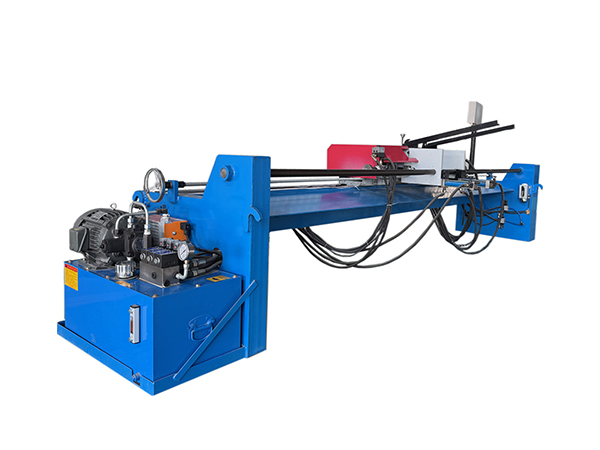
A scalable production line can be developed gradually. Manufacturers may begin by automating the processes that create the largest bottlenecks, such as tube cutting or shaft machining, and then introduce specialized bearing assembly, welding, or additional machining equipment as output requirements increase.
The key is to maintain process compatibility. Workpiece dimensions, intermediate components, material flow, tooling, and inspection procedures should remain coordinated as new machinery is added. This allows the production system to expand without creating unnecessary handling or repeated processing.
For factories producing several roller types, a modular approach can be especially useful. Machines dedicated to individual operations can be configured around a shared production workflow while retaining enough adjustment for different product specifications.
Terok’s machinery range is structured around this type of roller production workflow, covering tube preparation, tube-end machining, shaft processing, bearing assembly, welding, and specialized roller machining. This allows individual machines to be evaluated according to a specific production bottleneck while also considering how several machines may work together within a broader manufacturing process.
Conclusion
A conveyor roller manufacturing machine is most valuable when it is considered as part of an integrated production process rather than as an isolated piece of equipment. Reliable roller manufacturing depends on the combined accuracy of tube preparation, end machining, shaft processing, bearing installation, welding, and final inspection.
Specialized machinery helps manufacturers organize these repetitive operations around controlled clamping, positioning, feeding, machining, and assembly cycles. Double-end processing can reduce repeated workpiece positioning, automated cutting can improve tube preparation consistency, dedicated shaft machines can standardize end features, and controlled bearing pressing or welding can support more repeatable assembly.
The right production configuration ultimately depends on roller dimensions, materials, production volume, required processes, and the desired level of automation. By analyzing the complete manufacturing sequence before selecting equipment, manufacturers can build a roller production system that is easier to control, expand, and adapt to changing production requirements.
FAQ
What is a conveyor roller manufacturing machine used for?
It is used to process and assemble components required for conveyor roller production. Depending on the machine type, operations can include tube cutting, tube-end machining, shaft milling, shaft grooving, bearing pressing, welding, and roller surface machining.
What machines are needed to manufacture conveyor rollers?
The required machines depend on the roller design. A typical production process may include tube cutting equipment, double-end tube machining equipment, shaft milling or grooving machines, bearing assembly equipment, and welding machines. Additional machines may be required for specific materials or roller structures.
Why are double-end machines useful for roller production?
Many roller components require similar features on both ends. Double-end machines can process both sides within a coordinated cycle, reducing repeated positioning and helping maintain a more consistent relationship between corresponding features.
Can one conveyor roller manufacturing machine produce different roller sizes?
This depends on the machine’s working range and adjustment design. Manufacturers should compare the required roller diameter, length, shaft dimensions, and processing features with the machine specifications before determining whether several product sizes can be produced on the same equipment.
How can automation improve conveyor roller manufacturing?
Automation can coordinate repetitive operations such as feeding, clamping, positioning, machining, pressing, and cycle control. When properly matched to the production process, this can improve repeatability, simplify batch production, and reduce unnecessary manual handling.
 French
  English
  Spanish