
Tabla de contenido
Introducción
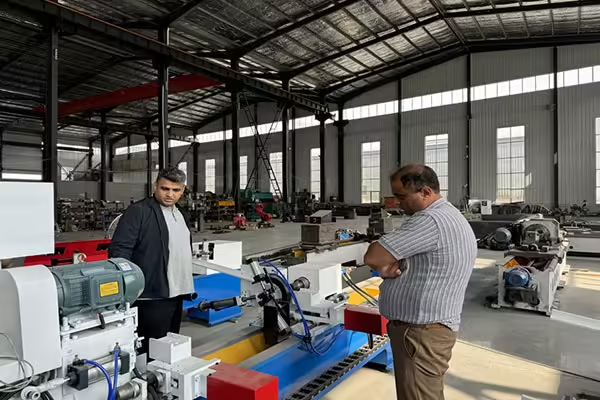
La fabricación industrial continúa exigiendo una mayor eficiencia, una calidad de producto más sólida y procesos de producción más confiables. La tecnología de soldadura juega un papel fundamental para lograr estos objetivos, especialmente cuando se producen componentes cilíndricos, estructuras metálicas y piezas industriales de alta resistencia. Una máquina de soldadura de rodillos es una solución importante diseñada para mejorar la precisión de la soldadura, la consistencia de la producción y la eficiencia operativa en diversas aplicaciones de fabricación.
A diferencia de los métodos tradicionales de soldadura manual, una máquina de soldadura con rodillos proporciona rotación controlada y posicionamiento estable de piezas de trabajo cilíndricas durante las operaciones de soldadura. Al permitir que la pieza de trabajo gire a una velocidad constante, el equipo ayuda a los soldadores a lograr costuras de soldadura más uniformes, mejor productividad y mejor calidad general de soldadura.
A medida que las industrias continúan adoptando soluciones de automatización y fabricación avanzadas, seleccionar la máquina de soldadura de rodillos adecuada requiere una consideración cuidadosa del tamaño de la pieza de trabajo, los requisitos de soldadura, la estructura de la máquina, los sistemas de control y las necesidades operativas a largo plazo.
Esta guía explica los principios de trabajo, las aplicaciones, las ventajas, los factores de selección y las tendencias de desarrollo futuras de la tecnología de máquinas de soldar con rodillos para ayudar a los fabricantes a comprender mejor su papel en la producción moderna.
Comprensión del principio de funcionamiento de una máquina de soldadura por rodillos
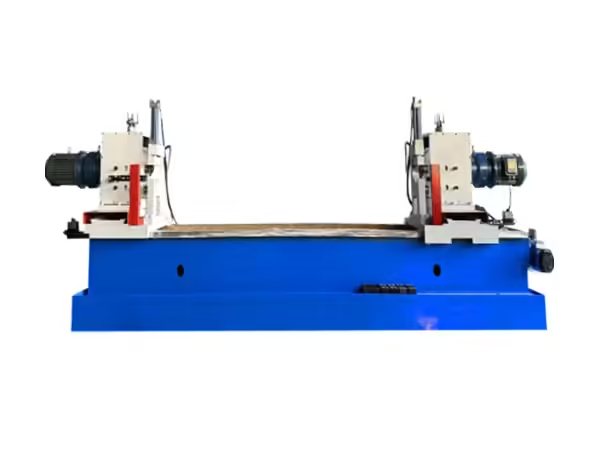
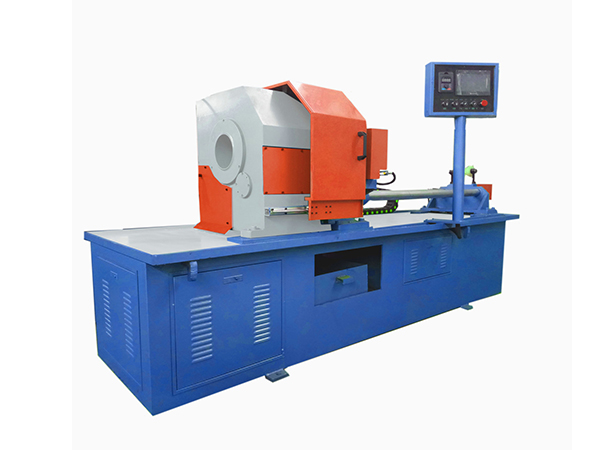
Una máquina de soldadura de rodillos es un sistema de soporte de soldadura especializado diseñado para hacer girar piezas de trabajo cilíndricas durante las operaciones de soldadura. Por lo general, consta de un marco de rodillo, un sistema de accionamiento, una unidad de control y un mecanismo de soporte ajustable.
El objetivo principal de una máquina de soldadura por rodillos es mantener la pieza de trabajo girando suavemente mientras se realiza el proceso de soldadura. Esto permite a los operadores o sistemas de soldadura automatizados mantener posiciones de soldadura consistentes y mejorar la calidad de la soldadura.
El proceso operativo básico incluye:
- La pieza de trabajo cilíndrica se coloca sobre el soporte del rodillo.
- El sistema de accionamiento hace girar la pieza de trabajo a una velocidad controlada.
- El equipo de soldadura realiza soldadura continua a lo largo del área requerida.
- Se inspecciona la calidad y precisión de la soldadura terminada.
Los componentes principales de una máquina de soldar rodillos incluyen:
| Componente | Función |
|---|---|
| Sistema de soporte de rodillos | Sujeta y gira piezas de trabajo cilíndricas |
| Motor de accionamiento | Proporciona potencia de rotación controlada |
| Sistema de control | Ajusta la velocidad y los parámetros operativos |
| Estructura del marco | Proporciona estabilidad durante la operación |
| Mecanismo de ajuste | Admite diferentes tamaños de piezas de trabajo |
Una estructura de máquina estable y un sistema de control preciso son esenciales para lograr un rendimiento de soldadura confiable. Oferta de proveedores profesionales maquinaria de fabricación y procesamiento ayudar a las industrias a mejorar las capacidades de producción proporcionando equipos diseñados para diferentes requisitos de fabricación.
Principales aplicaciones de los sistemas de máquinas soldadoras de rodillos
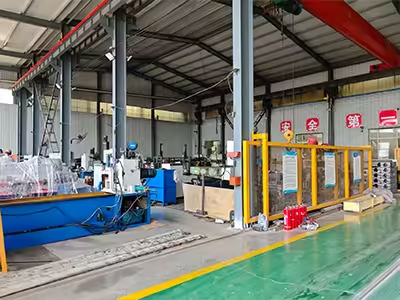
Una máquina de soldar con rodillos se utiliza ampliamente en industrias que requieren una soldadura precisa de componentes cilíndricos o redondos. Su capacidad para proporcionar una rotación estable la hace adecuada para muchos entornos de fabricación de servicio pesado.
Soldadura de tuberías y cilindros
Una de las aplicaciones más comunes de los equipos de máquinas de soldar con rodillos es la soldadura de tuberías.
Ajutați îmbunătățire:
- Consistencia de soldadura
- Calidad de costura
- Eficiencia productiva
- Control de operador
Girar la pieza de trabajo permite a los soldadores mantener una posición de soldadura más cómoda y lograr resultados más suaves.
Fabricación de tanques y recipientes a presión
Los tanques grandes y los contenedores cilíndricos suelen requerir procesos de soldadura precisos. Una máquina de soldadura con rodillos admite una rotación estable durante la fabricación, lo que ayuda a mejorar la precisión de la soldadura.
Aplicaciones incluyen:
- Tanques de almacenamiento
- Contenedores industriales
- Estructuras cilíndricas
- Grandes componentes metálicos
Operaciones de fabricación pesada
Las industrias manufactureras suelen utilizar sistemas de máquinas de soldar con rodillos para procesar grandes conjuntos metálicos que requieren un movimiento controlado durante la soldadura.
Estos sistemas ayudan a reducir la manipulación manual y mejorar el flujo de trabajo de producción.
Ventajas clave de utilizar una máquina soldadora de rodillos
La adopción de la tecnología de máquinas de soldar con rodillos proporciona varios beneficios para las operaciones de fabricación modernas.
Mejora de la calidad de la soldadura
Una de las mayores ventajas de una máquina de soldar con rodillos es la mejora de la consistencia de la soldadura.
La rotación estable ayuda a mantener:
- Velocidad uniforme de soldadura
- Posición de soldadura consistente
- Defectos de soldadura reducidos
- Mejor apariencia superficial
Al minimizar el movimiento irregular, el equipo admite resultados de soldadura de mayor calidad.
Incrementar la eficiencia de la producción
El posicionamiento manual de piezas de trabajo cilíndricas grandes puede llevar mucho tiempo. Una máquina de soldar con rodillos simplifica el proceso al proporcionar una rotación continua.
Acest mejora:
- Velocidad de soldadura
- Flujo de trabajo de producción
- Utilización de equipos
- Eficiencia laboral
Reducir la fatiga del operador
Las piezas de trabajo grandes son difíciles de girar y colocar manualmente. Las máquinas de soldar con rodillos reducen la carga de trabajo física al manejar mecánicamente el proceso de rotación.
Esto crea condiciones de trabajo más seguras y cómodas.
Diferentes tipos de diseños de máquinas soldadoras de rodillos
Los diferentes requisitos de producción requieren diferentes configuraciones de máquinas de soldar rodillos.
Máquina soldadora de rodillos autoalineante
Los modelos autoalineantes ajustan automáticamente las posiciones de los rodillos según el diámetro de la pieza de trabajo.
Ventajas incluyen:
- Operación más fácil
- Flexibilidad mejorada
- Tiempo de configuración reducido
Son adecuados para entornos de producción que manejan múltiples tamaños de piezas de trabajo.
Máquina soldadora de rodillos ajustables
Los diseños ajustables permiten a los operadores modificar manualmente el espaciado entre rodillos según las dimensiones específicas de la pieza de trabajo.
Se utilizan comúnmente cuando los requisitos de producción cambian con frecuencia.
Máquina de soldadura por rotación convencional
Los diseños tradicionales proporcionan un soporte de rotación confiable para aplicaciones de soldadura estándar.
Son adecuados para industrias que requieren asistencia de soldadura estable y rentable.
Factores importantes a la hora de seleccionar una máquina soldadora de rodillos
Elegir la máquina de soldar con rodillo adecuada requiere evaluar varios factores técnicos y operativos.
Capacidad de la pieza de trabajo
La máquina debe coincidir con el tamaño y el peso de las piezas de trabajo que se procesan.
Las consideraciones importantes incluyen:
- Diámetro máximo
- Capacidad máxima de carga
- Longitud de la pieza de trabajo
- Requisitos de rotación
Seleccionar equipos inadecuados puede reducir la eficiencia de la soldadura y aumentar la tensión mecánica.
Control de velocidad de rotación
La velocidad de rotación estable es esencial para lograr una calidad de soldadura constante.
Una máquina de soldar con rodillos confiable debe proporcionar:
- Control de velocidad ajustable
- Rotación suave
- Operación estable
El ajuste de velocidad adecuado ayuda a adaptarse a diferentes procesos de soldadura y requisitos de materiales.
Estructura y durabilidad de la máquina
La estructura del bastidor determina la estabilidad del equipo durante la operación.
Una estructura fuerte ayuda:
- Reducir la vibración
- Mejorar la precisión del posicionamiento
- Amplíe la vida útil del equipo
Para empresas que buscan soluciones confiables de equipos industriales, maquinaria de fabricación y procesamiento proporciona un apoyo importante para mejorar la eficiencia de la producción y optimizar los flujos de trabajo de fabricación.
Cómo la automatización mejora el rendimiento de las máquinas de soldadura por rodillos
La tecnología de automatización está cambiando la forma en que operan los equipos de soldadura en las industrias modernas.
Sistemas de control digital
Los sistemas modernos de máquinas de soldar rodillos suelen incluir controles digitales que permiten a los operadores ajustar los parámetros de rotación con mayor precisión.
Beneficiile includ:
- Mejor control de procesos
- Repetibilidad mejorada
- Operación más fácil
Integración con robots de soldadura
Las instalaciones de fabricación avanzadas combinan cada vez más sistemas de máquinas de soldar con rodillos con equipos de soldadura robóticos.
Esta integración mejora:
- Niveles de automatización
- Consistencia de producción
- Precisión de soldadura
Monitoreo en tiempo real
Los sistemas modernos pueden monitorear las condiciones operativas y ayudar a identificar problemas potenciales antes de que afecten la producción.
Prácticas de mantenimiento para extender la vida útil de las máquinas de soldadura de rodillos
El mantenimiento adecuado ayuda a mantener la confiabilidad del equipo y reducir el tiempo de inactividad inesperado.
Inspeccionar componentes mecánicos
La inspección periódica debe incluir:
- Estado del rodillo
- Rendimiento del sistema de accionamiento
- Estabilidad del marco
- Conexiones eléctricas
La detección temprana de problemas evita fallas más grandes en los equipos.
Mantener los sistemas de rotación
El mecanismo de rotación del rodillo requiere un mantenimiento regular para garantizar un funcionamiento suave.
Prácticas importantes incluyen:
- Comprobación de lubricación
- Inspección de rodamientos
- Ajustar componentes cuando sea necesario
Siga los planes de mantenimiento preventivo
Un programa de mantenimiento programado mejora la confiabilidad del equipo y extiende la vida útil.
El desarrollo de soldadura la tecnología ha mejorado significativamente los métodos de fabricación industrial, respaldando procesos de fabricación más precisos y eficientes.
Tendencias futuras en tecnología de máquinas de soldadura por rodillos
El futuro desarrollo de sistemas de máquinas de soldar con rodillos está estrechamente relacionado con la automatización, la fabricación inteligente y un mejor control de la producción.
Integración de soldadura inteligente
Los sistemas futuros combinarán cada vez más equipos de soldadura con plataformas de control digital y líneas de producción automatizadas.
Control de mayor precisión
Los sensores y sistemas de control avanzados ayudarán a mejorar la precisión de la rotación y la consistencia de la soldadura.
Diseño de equipos energéticamente eficientes
Los fabricantes se están centrando en desarrollar equipos que proporcionen un mejor rendimiento y al mismo tiempo reduzcan el consumo de energía.
Estas tendencias seguirán mejorando el papel de la tecnología de las máquinas de soldar con rodillos en la producción industrial moderna.
Errores comunes al elegir una máquina de soldar con rodillos
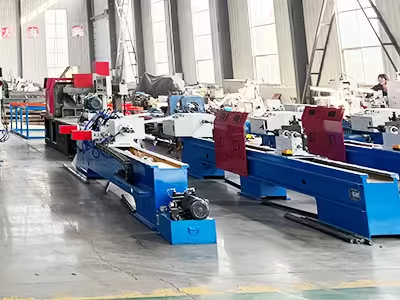
Seleccionar equipos inadecuados puede crear desafíos de producción y reducir la eficiencia operativa.
Ignorar los requisitos de la pieza de
Elegir el equipo sin considerar el tamaño de la pieza, el peso y las condiciones de soldadura puede provocar un rendimiento deficiente.
Funciones de control de miradas
Las operaciones de soldadura modernas requieren sistemas de control precisos. Los equipos básicos sin funciones de ajuste adecuadas pueden limitar la capacidad de producción.
Centrándose únicamente en las especificaciones iniciales del equipo
Los fabricantes deben evaluar la confiabilidad a largo plazo, los requisitos de mantenimiento y el soporte técnico en lugar de comparar solo los parámetros básicos.
Un proceso de evaluación completo ayuda a las empresas a seleccionar una máquina de soldar con rodillos que satisfaga las necesidades de fabricación actuales y futuras.
Conclusión
Una máquina de soldar con rodillos es una solución esencial para mejorar la eficiencia, precisión y consistencia de la soldadura en la fabricación industrial moderna. Al proporcionar soporte de rotación estable para piezas de trabajo cilíndricas, ayuda a los fabricantes a lograr una mejor calidad de soldadura y al mismo tiempo reduce los requisitos de manipulación manual.
Seleccionar la máquina de soldadura de rodillos adecuada requiere una cuidadosa consideración de la capacidad de la pieza de trabajo, el control de rotación, la estructura de la máquina, las características de automatización y los requisitos de mantenimiento. Un sistema adecuado puede mejorar la eficiencia de la producción, reducir las dificultades operativas y respaldar procesos de fabricación confiables.
A medida que las industrias continúen avanzando hacia la automatización y la producción inteligente, la tecnología de las máquinas de soldar con rodillos será cada vez más importante en aplicaciones de fabricación avanzadas. Los fabricantes que elijan el equipo adecuado pueden lograr capacidades de producción más sólidas y un mejor rendimiento operativo a largo plazo.
Preguntas frecuentes
¿Para qué se utiliza una máquina de soldar rodillos?
Se utiliza una máquina de soldadura con rodillos para hacer girar piezas de trabajo cilíndricas durante las operaciones de soldadura. Ayuda a mejorar la consistencia, precisión y eficiencia de producción de la soldadura.
¿Cómo mejora la calidad de la soldadura una máquina de soldar con rodillos
Al proporcionar una rotación estable y un movimiento controlado, una máquina de soldadura con rodillos ayuda a mantener posiciones de soldadura consistentes y reduce los defectos de soldadura.
¿Qué industrias utilizan equipos de máquinas de soldar con rodi
Los sistemas de máquinas de soldar rodillos se utilizan comúnmente en la fabricación de tuberías, tanques, producción de equipos pesados y procesamiento industrial de metales.
¿Cómo elijo la máquina de soldar con rodillos adecuada?
La selección depende del tamaño de la pieza de trabajo, la capacidad de carga, los requisitos de velocidad de rotación, las aplicaciones de soldadura y las condiciones de producción.
¿Cómo se puede mantener una máquina de soldar rodillos?
La inspección, lubricación, verificación de componentes y mantenimiento preventivo regulares ayudan a extender la vida útil del equipo y mantener un funcionamiento confiable.
 Spanish
  English
  French