
Tabla de contenido
Introducción
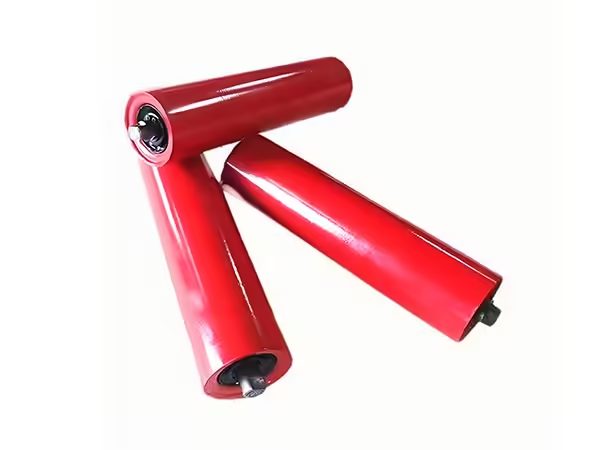
La construcción de una máquina de rodillos determina mucho más que el tamaño externo o la apariencia de una pieza de equipo de fabricación. En la producción de rodillos transportadores, el bastidor de la máquina, el sistema de sujeción, la estructura guía, las unidades de husillo o procesamiento, el mecanismo de accionamiento, el sistema de control, la disposición de herramientas y los componentes de manipulación de materiales influyen en si el equipo puede producir piezas consistentes durante ciclos repetidos. Una máquina puede tener suficiente potencia de motor y automatización, pero aún así tener dificultades con la estabilidad dimensional si su estructura, accesorios o componentes móviles no están diseñados en torno al proceso real de fabricación de rodillos.
Esto es particularmente importante porque la producción de rodillos transportadores implica piezas de trabajo cilíndricas largas, como tubos y ejes de acero. Estas piezas deben permanecer correctamente soportadas y posicionadas mientras se realizan operaciones como corte, mecanizado de extremos, fresado, ranurado, ensamblaje de cojinetes o soldadura. Pequeños cambios en la posición de la pieza de trabajo pueden afectar la relación entre ambos extremos del componente y crear variaciones adicionales durante el procesamiento posterior.
Por lo tanto, un enfoque práctico para la construcción de máquinas de rodillos comienza con la pieza de trabajo y no con una lista de componentes de la máquina. Los ingenieros deben comprender las dimensiones del rodillo, el material, las fuerzas de procesamiento, los datos de referencia requeridos, la gama de productos, el volumen de producción y la siguiente etapa de fabricación antes de determinar la estructura de máquina más adecuada. Cuando estos factores se consideran juntos, el equipo puede proporcionar una base más estable para la automatización, el mecanizado repetible, el cambio más fácil y la producción a largo plazo.
Por qué es importante la estructura de la máquina en la fabricación de rodillos
A máquina herramienta depende de relaciones controladas entre la pieza de trabajo, la herramienta de procesamiento, la estructura de la máquina y el sistema de movimiento. El mismo principio se aplica a los equipos especializados de fabricación de rodillos. El bastidor de la máquina necesita mantener los componentes importantes en la posición relativa correcta mientras las fuerzas de corte, sujeción, mecanizado o ensamblaje actúan sobre la pieza de trabajo.
Esto suena simple, pero los tubos y ejes de rodillos largos crean desafíos estructurales particulares. A diferencia de una pieza de trabajo compacta en forma de bloque, un componente cilíndrico puede extenderse a lo largo de una parte importante de la máquina. Si el soporte es inadecuado, la pieza de trabajo puede hundirse, vibrar o cambiar de posición durante el procesamiento. Si la propia estructura de la máquina se desvía excesivamente, es posible que la herramienta ya no siga la geometría asumida por el sistema de control.
Por esta razón, la rigidez de la máquina no debe entenderse simplemente como “más acero significa una mejor máquina”. La construcción eficaz consiste en colocar suficiente soporte estructural donde las fuerzas realmente viajan a través del equipo. El marco, las guías, las unidades de herramientas, los accesorios y los soportes de las piezas de trabajo deben formar una trayectoria de fuerza estable.
Una estructura de máquina bien diseñada ayuda a garantizar que la posición ordenada de la herramienta produzca una característica predecible en el componente del rodillo real.
La construcción de máquinas de rodillos debería comenzar con el proceso de fabricación
Las diferentes operaciones de procesamiento de rodillos crean diferentes requisitos de máquina. Una máquina cortadora de tubos no necesita exactamente la misma construcción que una fresadora de eje de doble extremo, y una máquina ensambladora de rodamientos funciona según un principio mecánico diferente al de una estación de soldadura.
Por eso la construcción de máquinas de rodillos debe seguir el proceso.
Para el corte de tubos, la alimentación de materiales, el posicionamiento de la longitud, la sujeción y la estabilidad de la herramienta de corte son fundamentales. Para el mecanizado de doble extremo, la relación entre ambas unidades de procesamiento se vuelve especialmente importante. El fresado del eje requiere una ubicación controlada de la pieza de trabajo en relación con el cortador, mientras que el ensamblaje del rodamiento depende más de la alineación y la fuerza de presión controlada.
El sitio maquinaria de procesamiento de rodillos transportadores refleja este enfoque específico del proceso, donde se organizan diferentes máquinas en torno a las operaciones reales requeridas durante la fabricación de rodillos transportadores.
El objetivo no es crear una construcción de máquina que realice todas las tareas de la misma manera. Es adaptar la estructura mecánica a la operación que necesita ser controlada.
El marco de la máquina proporciona la referencia para todos los demás sistemas
El marco es la base de la construcción de máquinas de rodillos porque casi todas las demás unidades mecánicas están montadas en él. Los accesorios, guías, husillos, cilindros, servosistemas, soportes y cabezales de procesamiento dependen de que el marco mantenga sus posiciones previstas.
Si el marco cambia de geometría bajo carga operativa, la relación entre estas unidades también puede cambiar.
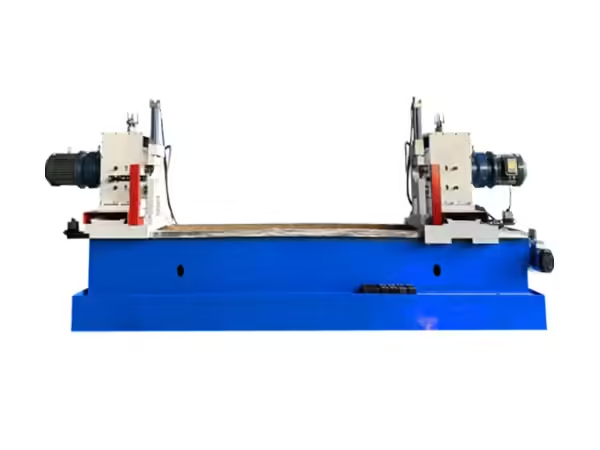
Por ejemplo, una máquina de procesamiento de doble extremo puede tener cabezales de mecanizado ubicados en lados opuestos de un eje de rodillo. Su posición relativa determina con qué precisión se pueden procesar ambos extremos desde una configuración. Si el marco de soporte permite un movimiento excesivo bajo fuerza de corte, las posiciones programadas por sí solas no pueden garantizar la relación dimensional prevista.
Por lo tanto, la construcción del marco debe considerar la dirección de las fuerzas de procesamiento. El material debe distribuirse donde proporcione una resistencia útil a la flexión o torsión en lugar de simplemente aumentar la masa de la máquina.
Las superficies de montaje también importan. Las unidades de procesamiento necesitan interfaces estables para que la alineación establecida durante el ensamblaje permanezca consistente después de operaciones repetidas.
En última instancia, el bastidor de una máquina debería proporcionar un sistema de coordenadas fiable para todo el proceso de fabricación.
El soporte de la pieza de trabajo es fundamental para tubos y ejes largos
La fabricación de rodillos implica componentes con relaciones longitud-diámetro relativamente altas. Esto crea un problema práctico: la pieza de trabajo puede cambiar de forma por su propio peso o reaccionar a las fuerzas de procesamiento de manera diferente dependiendo de dónde esté soportada.
Por lo tanto, la construcción de la máquina de rodillos debe proporcionar un soporte adecuado para la pieza de trabajo antes de que la herramienta llegue al componente.
Un eje largo sujeto sólo en un lugar puede doblarse o vibrar durante el fresado. Un tubo de acero también puede moverse si sus puntos de soporte no coinciden con su longitud y espesor de pared. Estos cambios pueden ser pequeños, pero pueden influir en la geometría del extremo, la posición de la ranura u otras características que luego deben alinearse con la estructura del transportador.
Un buen diseño de soporte considera dónde la pieza de trabajo soporta su propio peso y dónde las fuerzas de procesamiento ingresan al componente. Los puntos de soporte deben estabilizar la pieza de trabajo sin bloquear la trayectoria requerida de la herramienta.
La ajustabilidad también es útil cuando una máquina maneja varias longitudes de rodillos. El sistema de soporte debe adaptarse a la gama normal de productos manteniendo al mismo tiempo una relación predecible con el dato de mecanizado principal.
Esta es una de las razones por las que el rango de trabajo de una máquina debe considerarse junto con el diseño del accesorio y el soporte en lugar de tratarse sólo como una especificación de longitud máxima.
Los accesorios conectan la precisión de la máquina con la pieza de trabajo del rodillo
Los accesorios se encuentran entre las partes más importantes de la construcción de máquinas de rodillos porque determinan dónde se encuentra la pieza de trabajo en relación con la máquina.
El sistema de control puede conocer la posición exacta de un servoeje, pero no sabe automáticamente si el eje del rodillo está en el lugar correcto. Esa relación se crea ubicando y sujetando.
Un dispositivo estable normalmente necesita realizar varias funciones a la vez. Establece el dato, soporta la pieza de trabajo, evita el movimiento durante el procesamiento y permite cargar y descargar sin dificultades innecesarias.
Para componentes cilíndricos, el control de la línea central es especialmente importante. Si el eje o tubo se asienta a una altura o posición lateral ligeramente diferente entre ciclos, las características de mecanizado pueden desplazarse con respecto al eje real del componente.
La fuerza de sujeción también debe ser adecuada. Una abrazadera más fuerte no es automáticamente más precisa. Una presión excesiva puede distorsionar tubos relativamente delgados o desviar ejes largos, especialmente cuando la posición de contacto no se elige bien.
El dispositivo más eficaz sujeta el componente de forma constante y al mismo tiempo le permite permanecer en la geometría requerida por el dibujo terminado.
Las máquinas de doble extremo requieren una fuerte coordinación geométrica
Muchos componentes de rodillos transportadores tienen características significativas en ambos extremos, razón por la cual la maquinaria de doble extremo es común en la producción especializada de rodillos.
Procesar ambos extremos dentro de una configuración puede reducir la inversión y el reposicionamiento repetidos de la pieza de trabajo, pero esta ventaja depende en gran medida de la construcción de la máquina.
Ambas unidades de mecanizado deben mantener la relación prevista con el punto de referencia de la pieza de trabajo y entre sí. Sus guías, posiciones de herramientas, accesorios y movimientos de alimentación deben permanecer coordinados durante ciclos repetidos.
Si la unidad de procesamiento izquierda es precisa por sí misma y la unidad de procesamiento derecha también lo es por sí sola, la máquina aún puede producir una geometría general inconsistente si la relación entre las dos unidades cambia.
Esto hace que la construcción de máquinas de doble extremo sea un problema a nivel de sistema.
El marco debe mantener el espacio entre ambos lados, mientras que la ubicación de la pieza de trabajo debe establecer una referencia repetible. Entonces, el movimiento de la herramienta debe seguir esa referencia de manera consistente.
Cuando estas relaciones son estables, el procesamiento de doble extremo puede reducir los pasos de configuración y al mismo tiempo mejorar el control sobre las características que deben permanecer simétricas o relacionadas dimensionalmente.
Las guías y los sistemas de movimiento influyen en la estabilidad del procesamiento
Las unidades móviles deben viajar por caminos predecibles. Por lo tanto, las guías, los sistemas deslizantes, los husillos de bolas, los cilindros hidráulicos, los servoaccionamientos u otros componentes de movimiento desempeñan un papel importante en la construcción de máquinas de rodillos.
La configuración exacta depende del proceso.
Algunas operaciones requieren principalmente alimentación lineal controlada. Otros necesitan un posicionamiento programable en varias dimensiones del producto. Los equipos automáticos pueden combinar un movimiento rápido durante la carga con una alimentación controlada más lenta durante el mecanizado.
El sistema de movimiento necesita mantener suficiente estabilidad en estas diferentes etapas operativas.
El espacio libre, el desgaste, la lubricación y la carga mecánica pueden influir en el posicionamiento con el tiempo. Una máquina que funciona con precisión cuando es nueva puede requerir gradualmente más ajustes si sus componentes móviles son difíciles de mantener o si no se prevé desgaste en el diseño.
Por esta razón, la construcción debe proporcionar estabilidad mecánica y acceso práctico al mantenimiento. Los componentes que guían movimientos de procesamiento importantes deben poder inspeccionarse y repararse sin desmantelar innecesariamente secciones no relacionadas de la máquina.
Las unidades de procesamiento deben coincidir con la fuerza creada por la operación
No todas las operaciones de procesamiento de rodillos ejercen las mismas fuerzas sobre la máquina. Cortar, tornear, fresar, ranurar, prensar y soldar crean condiciones mecánicas diferentes.
Por lo tanto, la construcción de máquinas de rodillos debe colocar las unidades de procesamiento de acuerdo con la dirección y magnitud de la fuerza esperada.
Una fresadora que actúa sobre un eje crea fuerzas que deben ser resistidas por el accesorio del eje y la estructura de la máquina. Una unidad de corte que procesa un tubo de acero requiere suficiente estabilidad para evitar vibraciones o movimientos de la pieza de trabajo. Una máquina ensambladora de cojinetes necesita mantener la dirección de presión alineada con los componentes que se ensamblan.
La máquina no necesita la máxima rigidez en todas las direcciones posibles. Necesita una rigidez adecuada en las direcciones que importan a su proceso real.
Este principio diferencia los equipos para aplicaciones específicas de una plataforma de máquina genérica. Cuando la operación está bien definida, la construcción se puede optimizar en torno a las fuerzas recurrentes y la geometría de la pieza de trabajo que se encuentran en la producción.
La construcción de máquinas y las herramientas deben diseñarse juntas
La herramienta de corte o cabezal de procesamiento es el punto donde el movimiento de la máquina se convierte en una característica real de la pieza de trabajo. Por lo tanto, las herramientas deben considerarse durante el diseño de la máquina en lugar de agregarse después de que el diseño estructural ya haya sido finalizado.
El acceso a las herramientas, la dirección de corte, la eliminación de virutas, el espacio de ajuste, el método de reemplazo y la rigidez del portaherramientas pueden influir en la construcción de la máquina circundante.
Si es difícil reemplazar las herramientas, el mantenimiento normal puede llevar mucho tiempo. Si se acumulan virutas alrededor del dispositivo, la precisión de localización puede deteriorarse gradualmente. Si el cabezal de procesamiento no tiene soporte suficiente, la vibración de la herramienta puede afectar la superficie o las dimensiones incluso cuando la pieza de trabajo está correctamente sujeta.
Por lo tanto, una máquina lista para producción debería crear suficiente espacio para que la herramienta funcione, se desgaste y eventualmente sea reemplazada.
Esto se vuelve particularmente importante en la producción automatizada porque la máquina puede completar muchos ciclos antes de que un operador inspeccione de cerca el área de procesamiento. Una buena construcción debería reducir la posibilidad de que las astillas, la holgura o el desgaste de la herramienta interfieran silenciosamente con el posicionamiento de la pieza de trabajo.
La automatización depende de la construcción mecánica
Los sistemas PLC, sensores, servomotores, dispositivos de carga automática y controles programables son cada vez más comunes en los equipos de procesamiento de rodillos. Estos sistemas pueden mejorar la repetibilidad, pero su efectividad depende de la construcción mecánica debajo de ellos.
Un sensor puede confirmar que una pieza de trabajo ha alcanzado una determinada posición, pero no puede corregir un accesorio inestable. Un servoeje puede moverse a una coordenada programada repetidamente, pero eso no garantiza la precisión del mecanizado si la unidad de herramienta se desvía bajo carga.
Por tanto, la automatización debería reproducir un proceso mecánicamente estable.
Para la fabricación de rodillos, las funciones automáticas útiles pueden incluir alimentación de materiales, posicionamiento de piezas de trabajo, sujeción, secuenciación de procesos, mecanizado de doble extremo, descarga y parámetros de productos almacenados. Su valor proviene de reducir decisiones manuales repetidas una vez que el proceso mecánico ya ha sido establecido.
Esta relación es especialmente importante al evaluar el maquinaria de fabricación y procesamiento utilizado en toda la producción de rodillos. Las funciones automáticas son más útiles cuando se integran con accesorios, soporte estructural, herramientas y manipulación de piezas de trabajo adecuados en lugar de tratarse como características de control independientes.
La alimentación de materiales debe ser parte del diseño de la máquina
En producción repetida, una máquina de rodillos necesita más que un área de procesamiento. El material debe ingresar a la máquina, alcanzar la posición correcta y salir una vez completada la operación.
Por lo tanto, la construcción debe tener en cuenta el flujo de material.
Los tubos o ejes largos de acero pueden requerir bastidores, guías, mecanismos de alimentación o soportes ajustables externos. Si el material ingresa a la máquina a una altura o ángulo incorrecto, es posible que el sistema de posicionamiento automático deba superar desalineaciones innecesarias antes de cada ciclo.
El área de carga también debe proporcionar suficiente soporte para que el material largo no cree fuerzas inestables en el dispositivo principal.
Después del mecanizado, los componentes terminados necesitan un camino de salida práctico. La descarga automática puede reducir la manipulación manual, pero sólo si la pieza saliente puede salir sin interferir con el material entrante o el siguiente ciclo de mecanizado.
Por lo tanto, el diseño completo de la máquina debe considerarse como:
Entrada de material → localización → sujeción → procesamiento → liberación → descarga.
Cuando estas etapas se organizan lógicamente, la producción se vuelve más fácil de automatizar y mantener.
La eliminación y limpieza de chips afectan la precisión a largo plazo
Los procesos de corte y fresado producen virutas. Aunque la gestión de virutas puede parecer menos importante que la rigidez del marco o la servoprecisión, puede tener un efecto directo en la consistencia de la producción.
Las virutas de metal pueden acumularse alrededor de accesorios, guías, sensores y superficies de ubicación. Si permanecen entre la pieza de trabajo y un punto de referencia, es posible que el siguiente componente ya no se encuentre en la posición prevista.
Esto puede crear una variación dimensional incluso cuando cada movimiento programado de la máquina sigue siendo correcto.
Por lo tanto, la construcción de máquinas de rodillos debería dar al material de desecho un camino natural lejos de áreas críticas. Las cubiertas, bandejas, espacios libres u otros métodos de recolección pueden ayudar a evitar que queden astillas donde es necesario ubicar la pieza de trabajo.
El acceso para la limpieza también importa. Una máquina no debería requerir un desmontaje extenso para eliminar los residuos normales de producción.
En la producción automatizada, la limpieza se vuelve aún más importante porque las máquinas pueden continuar procesando muchos componentes antes de que se haga evidente un problema de localización. Diseñar la gestión de chips en la estructura ayuda a proteger la repetibilidad establecida por el sistema de fijación y control.
La construcción de máquinas necesita respaldar el cambio de producto
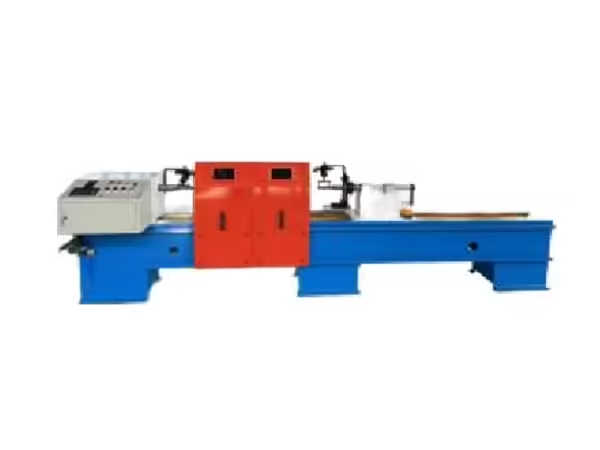
Las fábricas de rodillos suelen fabricar más de una longitud de tubo, tamaño de eje o especificación de rodillo. Por lo tanto, una máquina especializada necesita suficiente flexibilidad para procesar la gama normal de productos sin perder la estabilidad que hace que la maquinaria dedicada sea útil.
El cambio puede implicar posiciones de accesorios, soportes de piezas de trabajo, longitudes de mecanizado, herramientas, topes o coordenadas programadas. La construcción física de la máquina determina con qué facilidad se pueden realizar estos ajustes.
Una máquina con un amplio rango teórico aún puede resultar inconveniente si cada cambio de producto requiere una realineación manual extensa. Un diseño más práctico proporciona puntos de ajuste claros y mantiene relaciones de referencia conocidas en todo el rango de producción normal.
El posicionamiento programable puede simplificar los cambios dimensionales, mientras que los accesorios modulares o ajustables pueden admitir varios tamaños de piezas de trabajo comunes.
El objetivo es la flexibilidad controlada. El equipo debe adaptarse a la variación real del producto sin convertir cada cambio en una configuración de mecanizado completamente nueva.
La mantenibilidad es parte de una buena construcción de máquinas de rodillos
La construcción de la máquina no debe evaluarse sólo cuando el equipo sea nuevo. La maquinaria industrial necesita mantener su capacidad de procesamiento mediante operación repetida, desgaste normal, reemplazo de herramientas, lubricación y ajuste ocasional.
Por lo tanto, los componentes que requieren un servicio de rutina deben ser accesibles.
Esto puede incluir guías, cojinetes, herramientas de corte, accesorios, elementos hidráulicos, sensores, correas, puntos de lubricación y otros componentes de desgaste. Si el mantenimiento normal requiere un desmontaje innecesario, el tiempo de servicio aumenta y los técnicos pueden retrasar inspecciones importantes.
La condición del accesorio merece especial atención porque el desgaste gradual puede cambiar la posición de la pieza de trabajo. Un bloque de localización aún puede parecer funcional al introducir un pequeño cambio dimensional que se vuelve visible sólo después de varios lotes de producción.
Una máquina bien construida hace que estas superficies de referencia sean más fáciles de inspeccionar y reemplazar cuando sea necesario.
Los diagnósticos claros también respaldan la mantenibilidad. Los sistemas de control pueden indicar fallas en los sensores o secuencias, mientras que la construcción mecánica debe permitir a los técnicos llegar a la pieza relevante sin alterar grandes secciones de la máquina.
La confiabilidad de la producción a largo plazo proviene tanto de una construcción robusta como de un mantenimiento práctico.
Cómo influye la construcción de máquinas de rodillos en la repetibilidad de la producción
La repetibilidad es una de las medidas más útiles del rendimiento de las máquinas industriales porque refleja qué tan bien todos los sistemas de las máquinas funcionan juntos en múltiples ciclos de producción.
Una máquina puede producir una muestra correcta en condiciones cuidadosamente ajustadas. Sin embargo, el equipo de producción necesita producir el siguiente componente y el siguiente con resultados similares.
La variación puede provenir de varias fuentes:
| Área de construcción | Posible efecto sobre la repetibilidad |
|---|---|
| Estructura de máquina | El movimiento puede cambiar la posición relativa de la herramienta |
| Soportes para piezas de trabajo | El soporte inconsistente puede alterar la geometría de los componentes |
| Accesorios | La variación del dato cambia la posición del mecanizado |
| Caminos guía | El desgaste o el espacio libre afectan el movimiento de la herramienta |
| Herramientas | El desgaste cambia las dimensiones del acabado o el estado de la superficie |
| Sistema de alimentación | La variación de posición cambia la longitud o ubicación de la pieza de trabajo |
| Reprimición | La diferente posición de la pieza de trabajo afecta la precisión de las características |
| Sensores | Una detección incorrecta puede interrumpir o alterar la secuenciación |
| Control de chips | Los escombros pueden interferir con la localización de superficies |
| Estado de mantenimiento | El desgaste puede crear una deriva dimensional gradual |
Esta tabla muestra por qué la construcción de máquinas de rodillos no se puede evaluar según la especificación de un componente.
La repetibilidad surge del sistema mecánico completo.
Probar varias piezas de trabajo consecutivas en condiciones normales de producción suele proporcionar información más significativa que inspeccionar un componente de demostración.
La construcción de máquinas de rodillos debería considerar la próxima etapa de fabricación
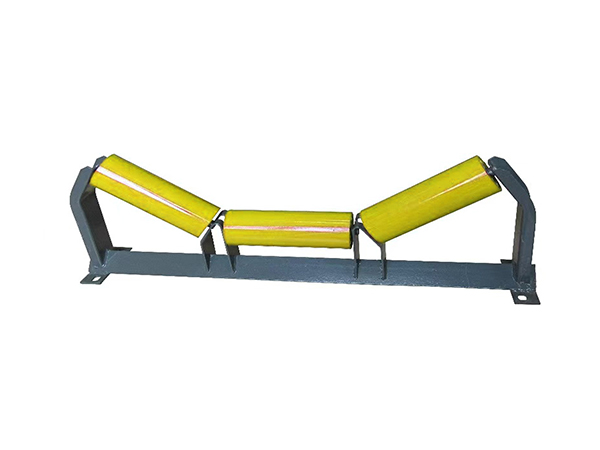
Una máquina de producción no sólo debe completar su propio funcionamiento con precisión. También debería proporcionar a la siguiente máquina una pieza de trabajo predecible.
Por ejemplo, el corte de tuberías establece una longitud de cuerpo que la maquinaria de procesamiento final posterior debe ubicar. La preparación del extremo del eje puede establecer los puntos de referencia utilizados durante el fresado o el torneado. La ranurada debe colocar las características de retención correctamente para su posterior montaje.
Si cada máquina crea su propio dato no relacionado, la variación dimensional puede acumularse a medida que el componente avanza en la producción.
Una estrategia de fabricación más sólida conecta el sistema de referencia entre etapas siempre que sea práctico.
Esto no significa que todas las máquinas deban utilizar exactamente el mismo dispositivo. Significa que los ingenieros deben comprender qué superficie o característica se vuelve importante para el siguiente proceso y asegurarse de que la máquina actual la controle adecuadamente.
Por lo tanto, la construcción de máquinas de rodillos forma parte de la ingeniería de la línea de producción y no sólo del diseño de equipos individuales.
¿qué se debe evaluar antes de elegir un equipo de fabricación de rodillos?
Una máquina debe evaluarse según el componente real y el proceso de producción. La apariencia externa, el peso de la máquina, el nivel de automatización y las especificaciones del motor proporcionan sólo una parte de la información necesaria para comprender si la construcción es adecuada.
La evaluación más útil comienza con el estirado del rodillo y la secuencia del proceso. Los ingenieros deben comprender el diámetro de la pieza de trabajo, la longitud, el material, las operaciones requeridas, las tolerancias críticas, la frecuencia de producción y la forma en que las piezas se mueven entre máquinas.
A partir de ahí, el equipo puede revisarse en cuanto a rigidez estructural, diseño de accesorios, soporte de piezas de trabajo, alineación de unidades de procesamiento, acceso a herramientas, alimentación automática, cambio, gestión de chips, acceso de mantenimiento y repetibilidad de producción.
Una evaluación práctica se puede resumir de la siguiente manera:
| Área de Evaluación | Pregunta principal |
| Estructura de la máquina | ¿el marco permanece estable bajo la fuerza de procesamiento? |
| Soporte de pieza de trabajo | ¿Se soporta correctamente el tubo o eje del rodillo? |
| Diseño de accesorios | ¿el dato es repetible entre ciclos? |
| Alineación de doble extremo | ¿ambas unidades de procesamiento están coordinadas geométricamente? |
| Sistema de movimiento | ¿El movimiento permanece estable bajo carga? |
| Herramientas | ¿La herramienta es adecuada y fácil de mantener? |
| Automatización | ¿Reduce una variación manual significativa? |
| Flujo de materiales | ¿pueden las piezas entrar y salir de manera eficiente? |
| Cambio | ¿se pueden cambiar de forma predecible los tamaños normales de los productos? |
| Mantenimiento | ¿son accesibles los componentes de desgaste críticos? |
| Repetibilidad | ¿Pueden varias partes mantener resultados similares? |
Este tipo de evaluación proporciona una imagen más realista de la capacidad de la máquina que comparar solo un parámetro principal.
Conclusión
La construcción de la máquina de rodillos es la base que determina si los equipos especializados de procesamiento de rodillos pueden permanecer estables durante la producción repetida. El bastidor de la máquina establece la referencia geométrica para las unidades de procesamiento, mientras que los soportes y accesorios de la pieza de trabajo determinan con qué precisión se colocan los tubos y ejes largos. Las guías, los sistemas de movimiento, las herramientas y los cabezales de procesamiento deben mantener esa relación mientras las fuerzas de fabricación actúan sobre la pieza de trabajo.
La automatización puede mejorar este proceso controlando la alimentación, el posicionamiento, la sujeción, las secuencias de mecanizado y la descarga, pero su valor depende del sistema mecánico que se encuentra debajo. Un sistema de control preciso no puede compensar permanentemente el mantenimiento inestable, el soporte insuficiente, las guías desgastadas o la mala gestión del chip. La automatización confiable comienza con una construcción mecánica confiable.
El mismo principio se aplica a la integración de la línea de producción. Una máquina de rodillos debería proporcionar más que un resultado aceptable en su propia estación. Su producción debe convertirse en una entrada predecible para la siguiente operación, ya sea que implique fresado de ejes, ranurado, ensamblaje de rodamientos, soldadura o inspección final. Diseñar maquinaria en torno a estas relaciones ayuda a reducir ajustes innecesarios entre las etapas de fabricación.
Por esta razón, la construcción de la máquina de rodillos debe evaluarse desde la pieza de trabajo hacia afuera. Las dimensiones de los rodillos, las fuerzas del proceso, los datos de referencia, la gama de productos, los requisitos de automatización, el mantenimiento y la fabricación posterior influyen en el diseño de la máquina más adecuado. Cuando se coordinan estos factores, el equipo puede proporcionar un mecanizado más consistente, un control de producción más fácil y una repetibilidad más fuerte en toda la fabricación de rodillos transportadores.
Preguntas frecuentes
¿Qué incluye la construcción de máquinas de rodillos?
La construcción de la máquina de rodillos incluye el marco de la máquina, soportes de piezas de trabajo, accesorios, guías, unidades de procesamiento, sistemas de accionamiento y movimiento, herramientas, mecanismos de alimentación, automatización, sensores, gestión de chips y acceso de mantenimiento. Estos sistemas trabajan juntos para mantener la posición de la pieza de trabajo y la estabilidad del procesamiento.
¿por qué es importante la rigidez de la máquina en la fabricación de rodillos
La rigidez de la máquina ayuda a mantener la relación prevista entre la herramienta y las piezas de trabajo de rodillos largos mientras se aplican fuerzas de corte o mecanizado. El movimiento estructural excesivo puede cambiar la posición de la herramienta en relación con la pieza de trabajo y reducir la repetibilidad incluso cuando el sistema de control ordena las coordenadas correctas.
¿por qué son importantes los accesorios en la construcción de máquinas de rodillos?
Los accesorios establecen la referencia de la pieza de trabajo y mantienen los tubos o ejes en una posición repetible durante el procesamiento. La ubicación y sujeción estables permiten que la precisión del movimiento de la máquina alcance el componente real. Un diseño deficiente del accesorio puede introducir variaciones incluso cuando la estructura y los accionamientos de la máquina son precisos.
¿cuáles son las ventajas de las máquinas de rodillos de doble extremo?
Las máquinas de doble extremo pueden procesar características relacionadas en ambos lados de un componente de rodillo dentro de una configuración coordinada. Esto reduce la inversión y el nuevo sujeción repetidos de la pieza de trabajo y, al mismo tiempo, ayuda a mantener una relación más consistente entre los extremos opuestos, siempre que el marco, los accesorios y las unidades de procesamiento permanezcan alineados adecuadamente.
¿Cómo se debe evaluar la construcción de máquinas de rodillos
La evaluación debe considerar la rigidez de la máquina, el soporte de la pieza de trabajo, el diseño de accesorios, la alineación de la unidad de herramienta, las guías, las herramientas, el manejo de materiales, la automatización, el cambio, el acceso de mantenimiento, el control de chips y los resultados repetidos de producción. Varias piezas de trabajo consecutivas proporcionan mejor evidencia de la estabilidad de la máquina que una muestra.
 Spanish
  English
  French