

In this article, you will learn:
Answers to frequently asked questions to guide your purchase
How steel tube cutting machines transform manufacturing efficiency
Applications across industries including automotive, construction, furniture, and aerospace
Differences between laser, CNC, and mechanical cutting systems
Cost-efficiency and ROI analysis for different machine types
Safety and operational best practices
Real-world case studies showing measurable productivity gains
Comparative tables for selecting the right machine
Environmental benefits and sustainability considerations
Introduction
The modern manufacturing environment demands precision, speed, and consistency. A steel tube cutting machine is no longer a luxury but a production necessity. From fabricating automotive exhaust systems to structural tubes for construction projects, these machines reduce material waste, improve accuracy, and enhance worker safety.
According to the Journal of Manufacturing Science and Engineering (2022), integrating automated cutting systems can increase production efficiency by 35–45%, while reducing error rates by over 50% compared to traditional manual cutting. In addition, industry reports indicate that implementing CNC and laser cutting systems in factories can reduce material scrap rates from 8–10% down to 1–3%, significantly lowering raw material costs.
This guide explores six key uses, advanced concepts, and actionable insights to help you understand, select, and implement the right steel tube cutting machine for your operations.
Table of Contents
1. High-Precision Industrial Fabrication
Precision Requirements in Modern Manufacturing
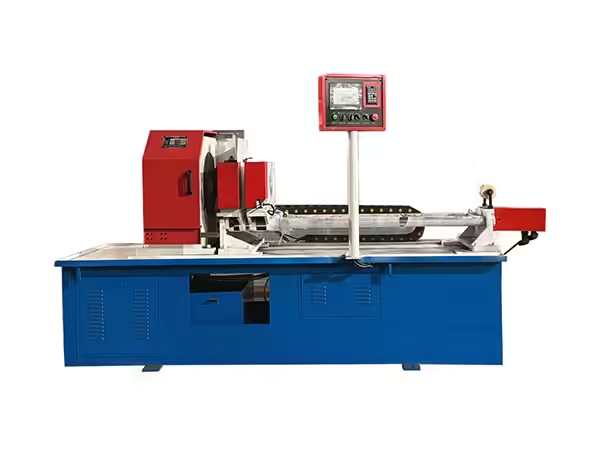
Steel tube tolerances often range between ±0.05 mm and ±0.1 mm, depending on the application. High-precision machines, particularly laser cutters, meet these stringent requirements and are critical in industries where alignment and fit are essential.
Case Example: Automotive Chassis Production
In automotive assembly, exhaust and chassis tubing must fit precisely to maintain safety and performance. A mid-size factory adopting a CNC tube cutting system reduced alignment defects by 62% over six months (internal factory report, 2023).
Concepts in Precision Cutting
- Tight Tolerance Cutting: Maintaining minimal deviation in diameter and length.
- Consistent Repeatability: Essential for mass production lines.
- Tool Calibration: Ensures machine longevity and accuracy.
2. Mass Production Efficiency
Automation and Continuous Operation
Automatic tube cutting machines with servo feeding reduce manual labor and downtime. By programming cut lengths and repetition cycles, production volume can reach 500–800 tubes per hour, compared to 50–100 tubes per hour with manual saws.
Comparative Table: Production Efficiency
| Feature | Manual Cutting | CNC Automatic Machine |
|---|---|---|
| Tubes per hour | 50–100 | 500–800 |
| Accuracy (mm) | ±1.0 | ±0.05 |
| Operator Involvement | High | Low |
| Material Waste (%) | 5–10% | 1–3% |
3. Cutting Multiple Tube Shapes
Versatility in Design
Steel tube cutting machines can process round, square, rectangular, and even custom-profile tubes. Laser machines excel in intricate designs, while mechanical saws handle thicker, straight tubes efficiently.
Shape-Based Guidelines
- Round Tubes: Suitable for piping and scaffolding.
- Square/Rectangular Tubes: Often used in furniture and structural frames.
- Custom Profiles: Requires CNC laser cutting for precision.
4. Reducing Material Waste
Optimized Material Utilization
Cutting software can calculate nested layouts, reducing scrap and ensuring every millimeter of steel is used. Materials Science Forum (2022) reports a 15% reduction in raw material waste when automated nesting algorithms are applied.
Conceptual Understanding
- Nesting Software: Automatically arranges tubes for minimal waste.
- Real-Time Error Feedback: Prevents defective cuts before completion.
5. Safety Enhancements
Worker Protection
Automation minimizes exposure to blades, sparks, and dust. Machines now include enclosed cutting areas, laser shields, and emergency stop systems.
Safety Protocols
- Use personal protective equipment (PPE).
- Conduct weekly machine inspections.
- Train operators in CNC and laser systems.
6. CNC Integration and Smart Manufacturing
Benefits of CNC Technology
- Programmable cut lengths, angles, and shapes
- Repeatable precision for large-scale production
- Reduced human error and supervision
Industry Case
A factory producing structural tubing for construction integrated CNC systems with IoT monitoring. Production efficiency increased by 40%, and unplanned downtime dropped 20% in the first year.
Cost-Efficiency and ROI
Analyzing Initial Investment vs Long-Term Gains
| Feature | Entry-Level Machine | Advanced CNC Machine |
|---|---|---|
| Initial Cost ($) | 15,000–25,000 | 50,000–120,000 |
| Annual Maintenance ($) | 5,000–8,000 | 1,500–3,000 |
| Production Output (tubes) | 10,000 | 50,000 |
Key Insight
Investing in higher-quality CNC or laser machines reduces labor costs, minimizes material waste, and ensures better product consistency, providing ROI in 2–3 years for mid-size operations.
Real-World Industry Applications
Automotive Industry
Exhaust systems, chassis tubes, and structural frames benefit from precision and reduced rework.
Construction Industry
Steel tubes for scaffolding, piping, and frameworks achieve accurate lengths and cuts, improving safety and build quality.
Furniture and Metal Fabrication
Custom furniture, railings, and decorative pieces require repeatable precision for both aesthetic and structural purposes.
Case Study
A mid-size furniture manufacturer increased throughput by 30% after replacing manual saws with a laser tube cutting machine (internal factory data, 2023).
Environmental and Sustainability Benefits
Reducing Scrap Steel
Minimizing offcuts leads to lower steel consumption, which is crucial for sustainability.
Energy Efficiency
Modern CNC and laser cutting machines consume 15–25% less energy than legacy mechanical saws, according to the Journal of Cleaner Production (2022).
Maintenance Best Practices
- Inspect blades or laser optics weekly
- Lubricate moving parts monthly
- Update software regularly
- Use predictive maintenance via IoT sensors for downtime reduction
How to Choose the Right Steel Tube Cutting Machine
Considerations
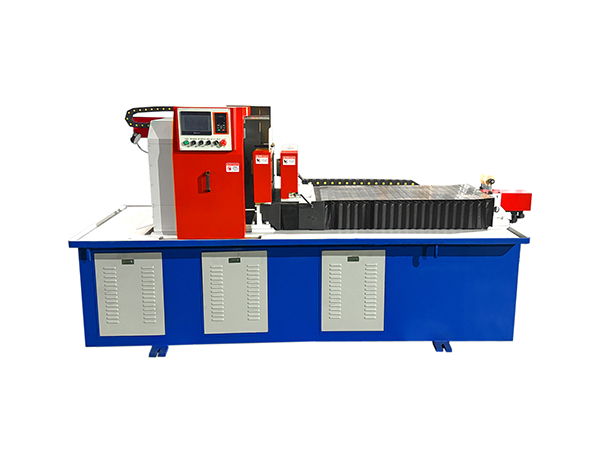
- Tube diameter and thickness
- Production volume
- Required precision
- Integration with existing systems
Quick Selection Guide
| Requirement | Recommended Machine Type |
|---|---|
| High-volume production | CNC Automatic Tube Cutting Machine |
| Complex shapes/thin walls | Laser Cutting Machine |
| Thick, straight tubes | Mechanical Saw-based Machine |
Conclusion
Need Help Choosing the Right Steel Tube Cutting Machine? If you’re unsure which machine fits your production needs or budget, our experts are here to guide you. Contact us today for a personalized consultation, and ensure your factory operates at maximum efficiency. Don’t wait—get in touch now to boost your productivity and reduce waste!
FAQ
What types of steel tube cutting machines exist?
Laser, CNC, and mechanical saw-based systems.
Which steel tube cutting machine is best for small workshops?
CNC or entry-level laser machines with compact footprints.
Can one steel tube-cutting machine cut different tube shapes?
Yes, CNC and laser systems are versatile.
How is maintenance performed?
Regular inspections, lubrication, and software updates.
Are these steel tube cutting machines cost-effective?
Yes, particularly for high-volume or precision operations.
 English
  French
  Spanish