

Table of Contents
When you operate a conveyor system, every component matters. Among these, the head pulley and tail pulley play a critical role in the performance, efficiency, and longevity of your system. As someone managing material handling operations, you need to understand how these pulleys work, how to select them, and how proper maintenance can prevent costly downtime.
In this guide, we’ll explore the technical features, operational importance, common issues, and maintenance strategies for head pulley and tail pulleys. We’ll also provide real-world examples and practical tables to help you make informed decisions.
What Are Head Pulley and Tail Pulley?
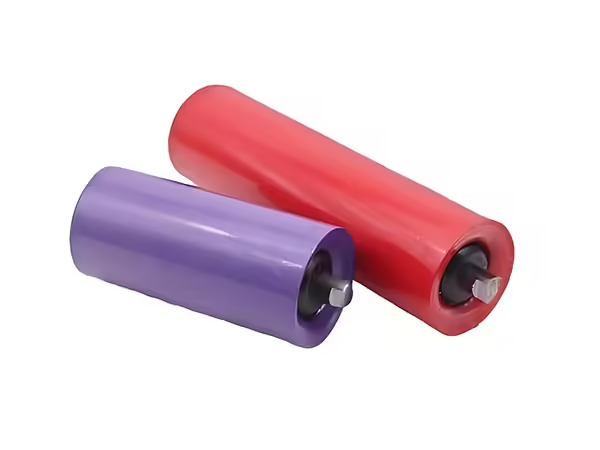
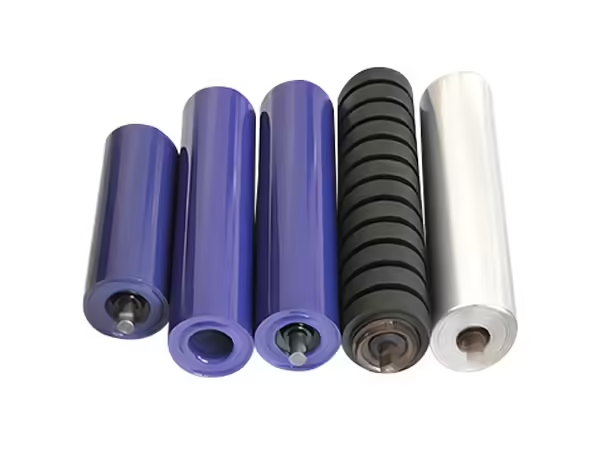
The head pulley is the driving component at the end of a conveyor that powers the belt, while the tail pulley is positioned at the opposite end to guide and support the belt. Together, they ensure smooth material movement and system stability.
- Head Pulley: Converts motor power into belt motion. Often incorporates a drum, lagging, or crowning to increase grip and reduce slippage.
- Tail Pulley: Maintains belt tension and alignment, ensuring that the conveyor operates efficiently without unnecessary wear.
Understanding these roles is crucial because failure in either pulley can lead to belt misalignment, reduced efficiency, or even complete system shutdown.
Key Elements of Head Pulley
Pulley Shell and Diameter
The shell must be strong enough to withstand the tension of the belt. Standard diameters range from 150 mm to 1200 mm depending on conveyor width and load. A larger diameter can reduce stress on the belt and extend its lifespan.
Lagging and Traction
The surface of the head pulley often features lagging made from rubber or ceramic to enhance traction. This reduces belt slippage and minimizes energy loss during operation.
Bearings and Shaft
High-quality bearings ensure smooth rotation, while the shaft must be aligned correctly to prevent eccentric rotation. Misalignment can cause premature wear and energy inefficiency.
Key Elements of Tail Pulley
Pulley Shell and Diameter
Tail pulleys often have a slightly smaller diameter compared to head pulley and tail pulleys. Their primary role is to guide and support the belt without adding extra drive.
End Discs and Crowned Design
Tail pulleys are sometimes crowned to assist in belt tracking, preventing the belt from drifting sideways.
Bearings and Sealing
Tail pulley bearings must resist contamination from dust, moisture, and abrasive materials, especially in industrial environments like mining or cement plants.
Applications of Head Pulley And Tail Pulleys
| Pulley Type | Primary Function | Typical Industries | Material Considerations |
|---|---|---|---|
| Head Pulley | Drive belt | Mining, logistics, manufacturing | Steel, rubber-lagged, ceramic-lagged |
| Tail Pulley | Guide & tension | Mining, food processing, packaging | Steel, polyurethane coating |
| Bend Pulley | Change direction | Material handling systems | Steel, rubber-coated |
| Snub Pulley | Increase belt wrap | Aggregate, cement | Steel, corrosion-resistant coatings |
Each application requires careful selection of size, material, and lagging type to meet operational requirements.
How to Select the Right Head Pulley
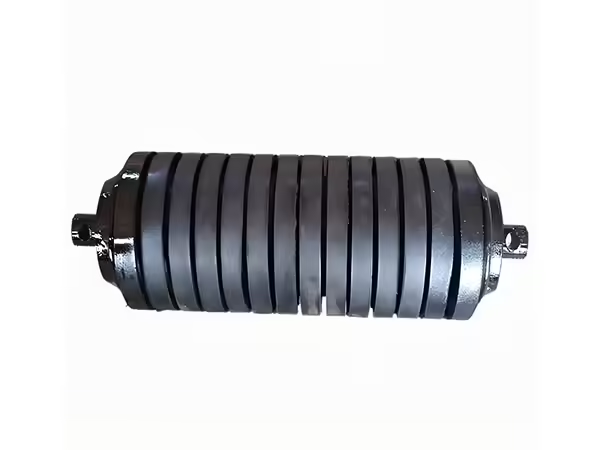
- Determine Belt Speed and Load: Faster and heavier belts require larger head pulley and tail pulleys with robust lagging.
- Check Pulley Lagging: Rubber lagging is versatile, while ceramic provides higher traction and wear resistance.
- Shaft and Bearing Requirements: Heavy loads require reinforced shafts and sealed bearings to prevent downtime.
- Environmental Conditions: For wet, corrosive, or dusty environments, consider corrosion-resistant coatings and sealed bearings.
How to Select the Right Tail Pulley
Tail pulleys may seem simpler, but they are equally critical for efficiency. Consider:
- Diameter & Crown: Slightly larger diameter can reduce belt stress. Crowned designs help keep the belt aligned.
- Bearing Type: Use sealed or heavy-duty bearings for abrasive materials.
- Maintenance Access: Ensure the pulley can be easily serviced or replaced without disassembling the entire conveyor.
Maintenance Best Practices
Inspection Schedule
Inspect pulleys weekly for unusual noises, misalignment, or wear. Check the following:
- Lagging condition
- Bearing lubrication
- Shaft alignment
- Pulley shell integrity
Common Maintenance Tools
- Laser alignment tools for precise shaft alignment
- Ultrasonic sensors to monitor bearing condition
- Torque wrenches for secure fastener checks
Example Maintenance Checklist
| Component | Check Frequency | Action if Issue Detected |
|---|---|---|
| Bearings | Weekly | Lubricate or replace |
| Lagging | Monthly | Replace if worn or damaged |
| Shaft Alignment | Quarterly | Re-align using laser tools |
| Pulley Shell | Bi-Annually | Inspect for cracks or corrosion |
Case Study: Improving Conveyor Efficiency in Mining
A mid-sized mining operation experienced frequent belt misalignment and downtime. By upgrading to high-quality head pulley and tail pulleys with ceramic lagging and reinforced shafts and installing tail pulleys with sealed bearings, they achieved:
- 25% reduction in belt slippage
- 40% fewer maintenance interruptions
- Improved worker safety due to fewer emergency stops
This shows that proper pulley selection directly impacts operational efficiency and ROI.
ommon Issues and Troubleshooting
Belt Misalignment
Often caused by improperly crowned tail pulleys or worn lagging. Regular inspection and alignment can prevent this.
Bearing Failure
Can occur due to contamination, lack of lubrication, or misalignment. Use sealed bearings and maintain lubrication schedules.
Pulley Shell Wear
Excessive wear reduces belt grip. Choose lagging materials based on abrasion and environmental factors.
Noise and Vibration
Indicates misalignment or bearing issues. Immediate action is required to prevent further damage.
Benefits of Optimized Pulley Systems
- Reduced energy consumption
- Extended belt life
- Decreased operational downtime
- Enhanced safety for workers
- Lower maintenance costs
Conclusion
Selecting and maintaining the right head pulley and tail pulley is not just a technical necessity—it directly affects your conveyor system’s efficiency, safety, and cost-effectiveness. By understanding their construction, application, and maintenance needs, you can minimize downtime, extend equipment life, and maximize your return on investment.
If you want to ensure your conveyor systems operate at peak performance, our experts at Cangzhou Terok International Trade Co., Ltd. are ready to guide you. Contact us today for a personalized consultation and take your material handling operations to the next level. Don’t wait—secure your equipment and efficiency now!
FAQ
How often should I replace head pulley and tail pulley lagging?
Depending on the operating environment, lagging should be inspected monthly and replaced every 2-4 years or if wear is visible.
Can head pulley and tail pulleys be retrofitted to improve belt alignment?
Yes, installing crowned tail pulleys or using adjustment kits can significantly improve tracking.
What materials are best for pulleys in corrosive environments?
Corrosion-resistant steel with polyurethane or ceramic coatings is recommended.
How do I know if bearings are failing?
Listen for unusual noises, check for excessive heat, or use vibration monitoring tools.
Are there automated systems for pulley maintenance?
Yes, some systems provide real-time monitoring of bearing temperature, belt tension, and alignment to alert you before failure occurs.
 English
  French
  Spanish