

Table of Contents
Conveyor rollers are essential components in material handling systems, and choosing the right type can significantly impact operational efficiency, cost, and system longevity. Among the various options, small conveyor rollers are increasingly popular in modern industrial setups. But how do they compare to standard rollers, and which should you choose for your application? In this article, we’ll explore the differences, applications, advantages, and maintenance considerations to help you make an informed decision.
Understanding Conveyor Rollers: An Overview
Conveyor rollers are cylindrical components that support and guide conveyor belts while facilitating the smooth transport of materials. They consist of a roller body, bearings, and end caps. While standard rollers are larger and designed for heavier loads, small conveyor rollers are compact and optimized for precision and speed. Selecting the correct roller type ensures your conveyor system runs efficiently, minimizes downtime, and reduces wear on belts.
Defining Small Conveyor Rollers
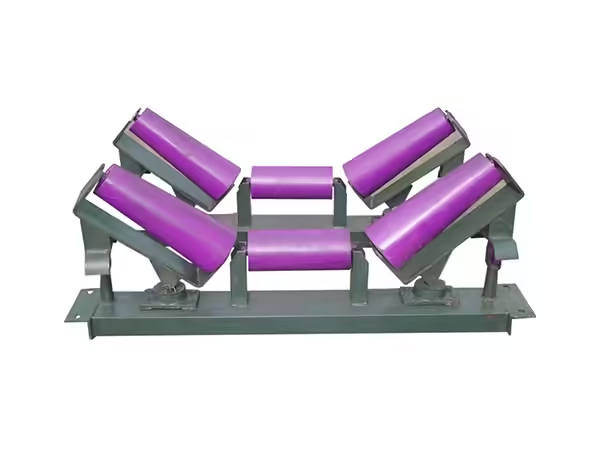
Small conveyor rollers typically feature diameters ranging from 76 mm to 159 mm and lengths adapted to the system’s design. They often use high-quality bearings such as the 204, 205, or 305 series, depending on load requirements. These rollers are ideal for light-duty to medium-duty applications, high-speed conveyors, and space-constrained setups. Their compact design reduces inertia, allowing faster belt response and lower energy consumption, which is crucial for high-throughput operations.
Key Differences Between Small and Standard Rollers
When comparing small and standard rollers, several key differences stand out:
- Size and weight: Small rollers are lightweight and compact, suitable for tight conveyor layouts. Standard rollers are larger and heavier, supporting higher loads.
- Load capacity: Small rollers handle light to medium loads; standard rollers handle medium to heavy loads.
- Energy consumption: Small rollers require less energy to rotate, making them ideal for high-speed lines.
- Maintenance: Smaller rollers are easier to replace and maintain, while standard rollers may require more time and resources.
Applications: When to Choose Small vs Standard Rollers
Choosing between small and standard rollers depends on your operational requirements:
- Small conveyor rollers: High-speed packaging lines, food processing, light assembly, and logistics where precise movement is critical.
- Standard rollers: Bulk material handling, mining, heavy industrial systems, or environments where long conveyor runs carry significant weight.
Advantages of Small Conveyor Rollers
Small conveyor rollers offer several benefits that improve system efficiency and reduce operational costs:
- Space-saving design for compact systems
- Lower inertia for faster conveyor response
- Reduced energy consumption
- Easier and faster replacement
- Suitable for high-speed and precision operations
Advantages of Standard Conveyor Rollers
While small rollers excel in speed and space efficiency, standard rollers are preferred for:
- High load capacity
- Robust performance in harsh environments
- Longer lifespan under continuous heavy-duty operation
- Greater structural stability for long conveyor runs
Factors to Consider When Choosing the Right Roller
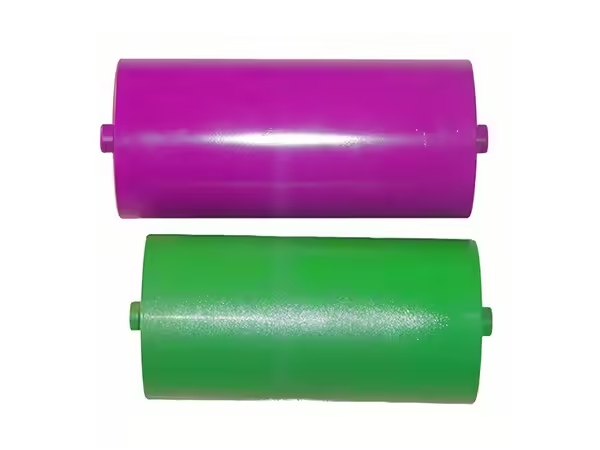
To select the most suitable roller, consider these critical factors:
- Conveyor type and layout
- Material type, weight, and load distribution
- Required conveyor speed and production volume
- Environmental conditions (corrosive, dusty, or wet)
- Maintenance capabilities and replacement frequency
Comparison Table: Small vs Standard Conveyor Rollers
| Feature | Small Conveyor Rollers | Standard Conveyor Rollers |
|---|---|---|
| Typical Diameter | 76–159 mm | 159–219 mm |
| Load Capacity | Low to Medium | Medium to High |
| Energy Consumption | Lower | Higher |
| Installation Space | Compact | Requires more space |
| Ideal Speed | High-speed lines | Heavy-load systems |
| Maintenance | Easier | Requires more attention |
Maintenance Tips for Both Roller Types
Proper maintenance ensures longer service life and smooth operation:
- Regularly clean rollers to prevent debris buildup
- Lubricate bearings according to manufacturer guidelines
- Inspect alignment and replace worn rollers promptly
- Protect rollers from corrosion and environmental damage
Common Issues and How to Avoid Them
Conveyor rollers may face issues such as misalignment, noise, vibration, and premature bearing failure. Prevent these by ensuring correct installation, adhering to maintenance schedules, and using the right roller type for your load and speed requirements. According to industry data from conveyor system reports, proactive maintenance can reduce downtime by up to 40%.
Conclusion
Selecting between small and standard conveyor rollers is not just a matter of size—it’s about optimizing your entire material handling system. Small conveyor rollers provide speed, precision, and efficiency for light-duty applications, while standard rollers excel in load capacity and durability for heavy-duty operations. Evaluate your system’s requirements, production volume, and maintenance capabilities to make the best choice.
If you’re unsure which roller type fits your conveyor system, Cangzhou Terok International Trade Co., Ltd. is ready to help. Contact us today for a personalized consultation to ensure your conveyor system operates efficiently, safely, and reliably. Don’t wait—reach out now and take your material handling to the next level!
FAQ
What are small conveyor rollers used for?
Small conveyor rollers are used for light to medium loads, high-speed lines, and precision applications such as packaging, logistics, and food processing.
How do I choose the right size of small conveyor rollers?
Consider the conveyor width, belt type, load weight, and production speed. Rollers should fit the system layout without causing excess friction or misalignment.
Can small rollers handle heavy materials?
While some high-quality small rollers can handle moderate loads, for consistently heavy materials, standard rollers are recommended to prevent premature wear.
How often should small conveyor rollers be maintained?
Maintenance depends on usage, load, and environment, but a routine inspection and lubrication schedule every 3–6 months is recommended to prevent downtime.
Are small conveyor rollers compatible with standard conveyor belts?
Yes, they can be used with standard belts if properly sized and aligned. Check the belt width, load, and roller spacing to ensure compatibility.
Need Help Choosing the Right Small Conveyor Rollers?
If you’re unsure which small conveyor rollers are best for your conveyor system, our experts at Cangzhou Terok International Trade Co., Ltd. are here to help. Contact us today for a personalized consultation, and ensure your material handling system runs efficiently, safely, and reliably. Don’t wait—reach out now to optimize your conveyor performance and protect your equipment!
 English
  French
  Spanish