
Table of Contents
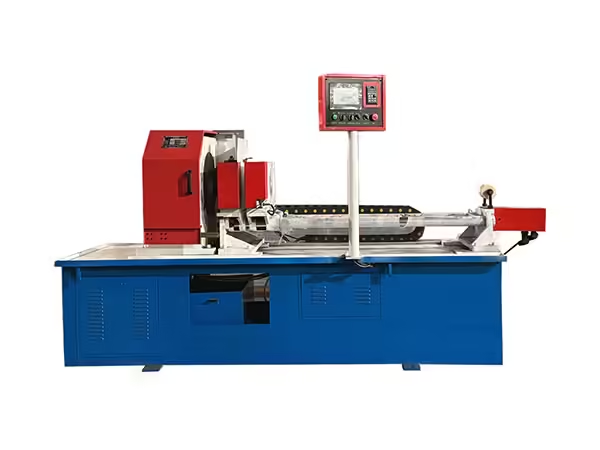
Choosing the right pipe cutting machine can boost your productivity and reduce errors. You need to consider pipe material, size, production volume, and the level of precision required. Advanced features like automatic feeding, hydraulic clamping, and CNC control help you meet modern manufacturing standards. The table below shows important factors that influence your decision:
| Factor | Description |
|---|---|
| Chuck Design and Automation | Improves loading efficiency and reduces manual work |
| Machine Structure and Components | Ensures accuracy and long-term reliability |
| Versatility in Processing | Handles different pipe shapes and sizes |
You should also look for strong after-sales support and machines built for long-term use.
Key Takeaways
- Identify your pipe material and texture to choose the right cutting method. Different materials require specific approaches for effective cutting.
- Measure the outer diameter and wall thickness of your pipes. This information helps you select a machine that fits your size requirements.
- Consider your production volume. For high-volume tasks, opt for fully automatic machines to enhance efficiency and maintain quality.
- Evaluate the level of precision needed for your cuts. Machines like CNC and laser cutters provide high accuracy for demanding applications.
- Look for machines with strong after-sales support. Reliable service ensures quick repairs and maintenance, minimizing downtime.
- Prioritize safety features in your machine. Built-in safety systems protect operators and reduce the risk of accidents during operation.
- Assess the ease of use and maintenance. User-friendly interfaces and straightforward maintenance tasks save time and improve productivity.
- Balance initial costs with long-term value. Investing in quality machines can lead to lower maintenance costs and better performance over time.
Identify Your Cutting Needs
Pipe Material and Texture
Steel, Stainless, and Other Materials
You should start by identifying the material of your pipes. Different materials require different cutting approaches. Steel, stainless steel, and other metals each have unique properties that affect the cutting process. For example, steel pipes are strong and durable, while stainless steel offers corrosion resistance but can be tougher to cut. Some materials, like plastics or composites, need specialized cutting methods to avoid damage.
The table below shows how material properties influence the choice of cutting technology:
| Factor | Effect on Cutting Technology |
|---|---|
| Hardness and Toughness | Harder materials need more force; tougher materials generate more heat, which affects tool wear and cut quality. |
| Thermal Conductivity | High conductivity prevents overheating but makes it harder to keep a high-temperature cutting zone. |
| Corrosion Resistance | Protective layers can increase tool wear; special methods may be needed. |
| Wall Thickness | Thin walls need precision to avoid deformation; thick walls require different techniques. |
| Material Uniformity | Inconsistent properties can cause uneven cuts; advanced sensors help adjust parameters. |
| Cutting Speed and Efficiency | Softer materials allow higher speeds; harder materials need slower speeds for clean cuts. |
| Tool Wear and Maintenance | Harder materials wear tools faster; regular maintenance is important. |
| Quality of the Cut | Some materials need specific methods for a smooth finish; laser cutting works well for stainless steel. |
Cutting Challenges by Material
You will face different challenges depending on the pipe material. Hard metals like stainless steel can cause rapid tool wear and require slower cutting speeds. Soft metals allow faster cutting but may deform if not handled properly. Corrosion-resistant materials often have protective layers that increase tool wear. For pipes with varying textures and hardness, you can choose from several cutting methods:
| Cutting Method | Suitable For | Description |
|---|---|---|
| Abrasive Cutting | Metal pipes | Uses an abrasive saw to cut through metal using shear and friction forces. |
| Band Saw Cutting | Various materials | Employs a seamless band blade to cut by rubbing against the pipe material. |
| Cold Saw Cutting | Metal pipes | A rotating cold saw cuts without generating heat-affected zones, ideal for perpendicular cuts. |
| Laser Cutting | Plastic and metal | Utilizes a laser beam for precise cuts, suitable for various shapes and angles. |
| Shearing | Various materials | Cuts pipes using sheer force between plates and ID punches. |
| Lathe Cutting | Various materials | Involves a single point cutting tool on a lathe for through or groove cutting. |
Pipe Size and Thickness
Diameter Range Considerations
You need to measure the outer diameter of your pipes before selecting a pipe cutting machine. The diameter determines the type of machine you need. For example, Cangzhou Terok offers the QZ160 and QZ220 models, which cover a cutting range from 60 mm to 159 mm. These machines handle most medium-sized pipes used in manufacturing and construction.
Wall Thickness Impact
Wall thickness plays a major role in machine selection. Thicker walls provide more strength and durability, which is important for high-pressure applications. As wall thickness increases, the inner diameter decreases, which can affect flow rates. You must choose the right thickness for safety, performance, and cost-effectiveness. Thin-walled pipes need precise cutting to avoid deformation, while thick-walled pipes require machines with more power and specialized blades.
Production Volume
Batch vs. Continuous Cutting
You should consider how many pipes you need to cut each day. For small batches or occasional jobs, manual or semi-automatic machines work well. These machines offer flexibility and cost savings for low-volume tasks. If you run a large operation with continuous production, you need a fully automatic pipe cutting machine. Automatic models, like those from Cangzhou Terok, boost efficiency and maintain consistent quality in high-volume environments.
Automation Needs
High-volume production benefits from automated features. Automatic feeding, hydraulic clamping, and CNC control reduce manual labor and speed up the process. For small workshops, user-friendly machines are best for occasional use. In batch production, fully automatic CNC models provide both efficiency and precision. Large-scale operations require automated production lines to maximize output and minimize downtime.
Tip: Match your production volume with the right level of automation to get the best results and value from your investment.
Required Precision
Tolerance and Finish
You need to consider the level of precision required for your pipe cutting tasks. Precision refers to how closely the cut matches your desired measurements. Tolerance is the allowable deviation from the specified dimension. If your project demands tight tolerances, you must select a machine that can deliver consistent and accurate results.
Pipe cutting machines and advanced CNC pipe cutters stand out for their ability to achieve high precision. Laser cutters can reach tolerances as tight as ±0.08 mm. CNC pipe cutting machines also provide excellent repeatability and minimal deviation from programmed dimensions. These machines use advanced control systems to maintain positioning accuracy, often within 0.03 mm or less. You get smooth edges and clean finishes, which are essential for applications like hydraulic systems, gas pipelines, and structural components.
Factors that affect cutting tolerances include machine design, material properties, and programming capabilities. Thinner materials allow for tighter tolerances because they experience less heat input and deformation during cutting. The oscillatory movement of some cutting heads enables precise cuts for complex shapes, such as branch connection penetration holes and saddle cuts.
Here is a quick overview of how different technologies compare:
| Cutting Technology | Typical Tolerance | Finish Quality | Best Use Cases |
|---|---|---|---|
| Manual Saw | ±1.0 mm | Rough | Basic construction, repairs |
| Abrasive Wheel | ±0.5 mm | Moderate | Metal fabrication |
| Band Saw | ±0.3 mm | Smooth | General manufacturing |
| CNC Pipe Cutter | ±0.1 mm | Very smooth | Precision engineering, mass production |
| Laser Cutter | ±0.08 mm | Excellent | High-precision, specialty jobs |
Note: If you need burr-free and accurate cuts, choose machines with advanced control systems and high-quality blades.
Application Examples
You should match your precision needs to your application. For example, if you work in the automotive or aerospace industry, you often require extremely tight tolerances and flawless finishes. Laser cutting and CNC pipe cutting machines are ideal for these sectors. If you manufacture furniture or construction scaffolding, you may accept slightly wider tolerances, so band saws or abrasive wheel cutters can suffice.
Some common applications that demand high precision include:
- Hydraulic and pneumatic systems, where leaks can occur if cuts are not exact.
- Gas and oil pipelines, which require smooth edges to prevent corrosion and ensure safety.
- Medical device manufacturing, where every millimeter counts for proper function.
- Custom fabrication, such as architectural features or art installations, where appearance and fit matter.
If you need to cut pipes for branch connections or saddle joints, machines with oscillatory cutting heads offer the accuracy required for complex shapes. For mass production, Cangzhou Terok’s CNC models deliver repeatable, high-quality cuts, ensuring every piece meets your specifications.
Tip: Always check the tolerance and finish requirements for your project before choosing a pipe cutting machine. This step helps you avoid costly mistakes and ensures your final product meets industry standards.
Pipe Cutting Machine Types
Manual Pipe Cutters
Pros and Cons
Manual pipe cutters offer a straightforward solution for basic cutting tasks. You can operate these tools without electricity, which makes them ideal for remote locations or quick jobs. Manual cutters provide good control and allow you to make precise cuts with minimal setup. You benefit from their lightweight design and portability.
However, manual pipe cutters require physical effort and can be slower than powered options. You may find them less suitable for thick or hard materials. They work best for small batches and occasional use.
| Advantage | Description |
|---|---|
| Portability | Easy to carry and use anywhere |
| Low Cost | Affordable for small projects |
| Simple Operation | No need for complex setup |
| Limited Speed | Slower than electric or automated machines |
| Manual Labor Required | Physical effort needed for each cut |
Best Applications
You can use manual pipe cutters in many settings. These tools fit well in construction and infrastructure projects, where you need to cut steel pipes for frameworks, plumbing, or HVAC systems. Maintenance teams in industrial plants rely on manual cutters for quick repairs and pipe removal. Oil and gas workers use them to prepare pipes for welding and ensure safety. Manufacturing lines sometimes use manual cutters for steel components. Plumbers and HVAC technicians depend on them for accurate cuts in installations and repairs.
- Construction and infrastructure projects
- Maintenance and repairs in industrial plants
- Oil and gas extraction and transportation
- Manufacturing of steel components
- Plumbing and HVAC installations
Tip: Choose manual pipe cutters for small jobs or when you need portability and simplicity.
Electric Pipe Cutting Machine
Features and Benefits
Electric pipe cutting machines bring speed and efficiency to your workflow. You can cut pipes much faster than with manual tools. These machines offer better accuracy, which leads to higher quality cuts. You can handle larger and more complex cuts with ease. Electric models help you reduce labor costs because they shorten running times and require fewer production steps.
| Feature | Benefit |
|---|---|
| Faster Cutting Speed | Saves time on each job |
| Improved Accuracy | Delivers clean, precise cuts |
| Handles Larger Pipes | Suitable for bigger and tougher materials |
| Reduced Labor Costs | Less manual effort needed |
| Enhanced Productivity | Supports higher output in busy environments |
Use Cases
You will find electric pipe cutting machines useful in fabrication shops, construction sites, and industrial plants. These machines suit high-volume production and repetitive tasks. You can use them for plumbing repairs, HVAC installations, and manufacturing steel components. Electric models also work well for cutting pipes in refrigeration, ductwork, and gas lines.
- Plumbing repairs and installations
- HVAC system construction
- Industrial manufacturing
- Large-scale fabrication projects
Abrasive and Grinding Wheel Cutters
Efficiency and Suitability
Abrasive and grinding wheel cutters use friction to slice through metal pipes. You can achieve fast cutting speeds and handle tough materials. These machines measure performance using specific power and grinding energy. High efficiency means you spend less time on each cut and get consistent results.
| Metric | Description |
|---|---|
| Specific Power | Power consumed during grinding, shows efficiency at different rates |
| Specific Grinding Energy | Energy needed to remove material, reflects cut quality |
| Performance Evaluation | Helps you choose the best wheel for your needs |
Application Scenarios
You can use abrasive and grinding wheel cutters in metal fabrication shops and construction sites. These machines work well for cutting steel pipes, especially when you need moderate precision and speed. You may use them for structural steel fabrication, metal furniture production, and preparing pipes for welding. Abrasive cutters suit jobs where you need to process thick or hard metals quickly.
- Metal fabrication shops
- Construction projects
- Structural steel work
- Furniture manufacturing
- Welding preparation
Note: Abrasive cutters offer a balance between speed and cut quality, making them a popular choice for many industries.
Band Saw Pipe Cutting Machine
Advantages and Limitations
You can rely on band saw pipe cutting machines for a good balance between precision and efficiency. These machines work well with many metals, including steel, aluminum, copper, brass, and bronze. Band saws operate quietly and produce minimal burrs, which means you spend less time on finishing work. You can cut multiple tubes at once, which increases productivity in busy workshops.
Band saws limit you to straight cuts. If you need complex shapes or angled cuts, you should consider other methods. The precision is suitable for most manufacturing tasks, but some specialized jobs may require higher accuracy.
Here is a comparison of band saw pipe cutting machines with other cutting methods:
| Feature | Band Saw Pipe Cutting Machines | Other Cutting Methods (e.g., Cold Saws, Laser) |
|---|---|---|
| Precision | Good balance between precision and efficiency | May offer superior precision for specific tasks |
| Material Compatibility | Suitable for various metals (ferrous and non-ferrous) | Varies by method, some may cut a wider range of materials |
| Cutting Type | Limited to straight cuts only | Can perform various cuts, including complex shapes |
| Noise Level | Relatively quiet operation | Noise levels vary by method |
| Simultaneous Cutting | Can cut multiple tubes at once | Typically limited to one at a time |
| Burrs | Minimal burrs | Burrs may vary depending on the method |
Ideal Uses
You should use band saw pipe cutting machines in fabrication shops, metalworking facilities, and construction sites. These machines excel when you need to cut steel, aluminum, copper, brass, or bronze pipes for structural components, frames, and supports. You can also use them for batch processing, where cutting several pipes at once saves time. Band saws suit projects that require straight cuts and moderate precision.
Tip: Choose band saw machines for efficient, quiet, and burr-free straight cuts on a variety of metals.
Cold Pipe Cutting Machines
Chipless Cutting Technology
Cold pipe cutting machines offer chipless technology, which means you avoid producing chips or dust during the cutting process. You benefit from higher accuracy because cold cutting does not introduce heat that can warp or distort your pipes. The process is faster than many traditional methods, so you complete jobs quickly.
| Benefit | Description |
|---|---|
| Speed | Cold cutting is generally faster than traditional methods, leading to shorter job completion times. |
| Accuracy | Higher accuracy due to the absence of heat that can warp or distort materials. |
| Cost-effectiveness | Reduces material waste and increases efficiency, leading to long-term savings. |
| Versatility | Can be used on a wide range of materials without compromising quality. |
| Safety | Non-sparking nature makes it safer in volatile environments, reducing fire and explosion risks. |
| Enhanced efficiency | Reduces labor time by eliminating the need for hand grinding to achieve a weld-ready surface. |
| No hot work permit required | Simplifies the cutting process by not requiring a hot work permit. |
| No Heat Affected Zone (HAZ) | Prevents changes in material properties that could impact integrity and structure. |
| Increased safety | Eliminates sparks during cutting, ensuring a safer working environment. |
Dustless Chamfering
You can achieve dustless chamfering with cold pipe cutting machines. This feature keeps your workspace clean and reduces health risks for operators. You do not need to perform extra grinding or finishing, which saves time and labor. Cold pipe cutting machines suit industries where cleanliness and safety matter, such as food processing, pharmaceuticals, and chemical plants.
Note: Cold pipe cutting machines help you maintain material integrity and create weld-ready surfaces without extra steps.
Flame and Plasma Pipe Cutting Machine
Hot Working Methods
Flame and plasma pipe cutting machines use heat to slice through pipes. You input the pipe diameter and intersection angle, and the machine automatically calculates and cuts intersecting lines and holes. You do not need manual programming, which makes the process simple and efficient.
You can use flame cutting for low carbon steel and plasma cutting for high carbon steel, stainless steel, aluminum, copper, and other non-ferrous metals. These machines handle large diameter pipes and thick materials with ease.
Large Diameter Applications
Flame and plasma pipe cutting machines excel in industries that require cutting large pipes, such as shipbuilding, construction, petrochemical, machinery, and metallurgy. You can use them for cylindrical, orthogonal, oblique, and eccentric holes. These machines suit metal structural parts, power equipment, boiler manufacturing, and pipeline construction.
- CNC Pipe Intersecting Line Flame Plasma pipe cutting machine: Used in metal structural parts, power equipment, boiler industry, petroleum, and chemical sectors.
- Automatic CNC Plasma pipe cutting machine: Suitable for machinery, automobile, shipbuilding, petrochemical, military, metallurgy, aerospace, and boiler pressure vessel industries.
- Metal Plasma Pipe Bevel pipe cutting machine: Commonly used in shipbuilding, construction, petrochemical, machinery, and metallurgy.
Tip: Select flame and plasma pipe cutting machines for large diameter pipes and tough materials in heavy industry settings.
CNC Pipe Cutting Machine
Automation and Precision
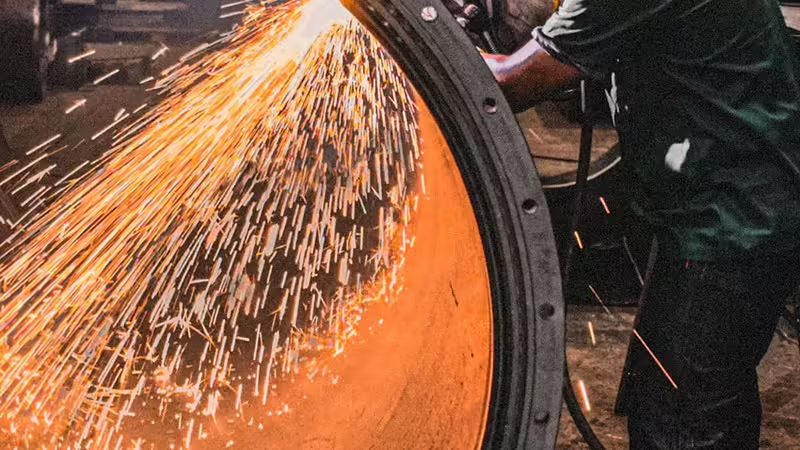
You can achieve remarkable accuracy and efficiency with CNC pipe cutting machines. These machines use computer numerical control (CNC) technology to automate the cutting process. You program the machine with your desired specifications, and it follows them with minimal deviation. This automation reduces human error and ensures every cut matches your requirements.
CNC pipe cutting machines stand out for their ability to deliver high precision. You get consistent results, even when working with complex shapes or tight tolerances. The machine’s advanced control system manages feed rates, cutting speed, and blade positioning. You can cut pipes for hydraulic systems, gas pipelines, and structural components with confidence.
Take a look at the main benefits of CNC pipe cutting machines:
| Benefit | Description |
|---|---|
| High precision for pipe cuts | CNC machines provide accurate cuts, enhancing overall quality. |
| Fast and efficient production | High-speed cutting improves production efficiency significantly. |
| Minimal material waste | Reduces waste, leading to cost savings and better resource use. |
| Versatile for different materials | Capable of cutting various materials, increasing flexibility. |
You can use CNC machines for steel, stainless steel, aluminum, and other metals. The versatility allows you to switch between different pipe sizes and thicknesses without changing equipment. Cangzhou Terok’s CNC models, such as the QZ160 and QZ220, offer automatic feeding and hydraulic clamping. These features help you maintain high productivity and repeatability in mass production environments.
Tip: If you need burr-free, accurate cuts for high-volume jobs, CNC pipe cutting machines provide the reliability and speed you require.
Integration with Production Lines
You can integrate CNC pipe cutting machines into automated production lines. This integration streamlines your workflow and boosts overall efficiency. The machine communicates with other equipment, such as loaders, conveyors, and welders. You set up the system to handle pipes from start to finish without manual intervention.
CNC pipe cutting machines support programmable logic controllers (PLC) and advanced software. You can monitor performance, adjust parameters, and track production data in real time. This connectivity helps you optimize your process and reduce downtime.
Here are some ways CNC pipe cutting machines fit into modern production lines:
- You automate feeding, clamping, and cutting for continuous operation.
- You connect the machine to robotic arms for material handling.
- You use integrated sensors to detect pipe position and quality.
- You collect data for quality control and maintenance planning.
Cangzhou Terok’s automatic CNC pipe cutting machines feature robust construction and user-friendly interfaces. You benefit from high-strength materials that ensure long-term reliability. The machines’ elegant design and safety features protect operators and simplify maintenance.
Note: When you integrate CNC pipe cutting machines into your production line, you create a seamless, efficient process that meets the demands of modern manufacturing.
Selecting a Pipe Cutting Machine
Cutting Quality and Speed
Burr-Free and Accurate Cuts
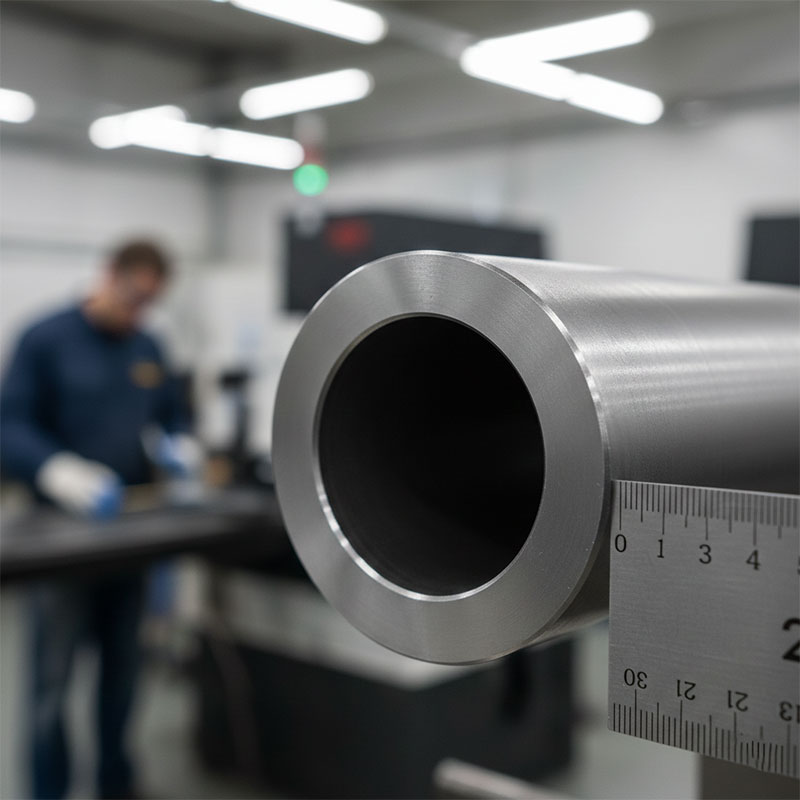
When you select a pipe cutting machine, you need to focus on the quality of each cut. Burr-free and accurate cuts reduce the need for extra finishing work and help you maintain high standards in your products. Machines with advanced features, such as hydraulic clamping and CNC control, deliver consistent results. These features hold the pipe securely and guide the cutting tool with precision. You get smooth edges and exact dimensions, which are essential for industries like automotive, construction, and manufacturing.
The type of cutting technology also affects the quality. For example, cold cutting and CNC machines often produce cleaner cuts compared to manual or abrasive methods. You should look for machines that minimize heat generation and vibration. This approach helps prevent material deformation and ensures a smooth finish.
Cycle Time Considerations
Cycle time measures how long it takes to complete one cut, including setup and material handling. Shorter cycle times mean higher productivity, especially in mass production. You should evaluate the speed of the cutting process and the efficiency of automatic feeding systems. Machines with PLC-controlled automation, like those from Cangzhou Terok, can significantly reduce cycle times.
Here is a table that summarizes key factors affecting cutting quality and speed:
| Factor | Description |
|---|---|
| Laser Source Type | The type of laser (CO2 or fiber) changes cutting capabilities for different materials. |
| Cutting Speed | Faster speeds increase productivity but may require advanced technology. |
| Automation and Features | Automatic feeding and clamping boost speed and consistency. |
| Brand and Reputation | Trusted brands offer reliable machines that maintain quality over time. |
| Support and Training | Good support and training help you use the machine efficiently and reduce downtime. |
Tip: Choose a machine that balances speed and quality to match your production goals.
Safety and Operator Protection
Integrated Safety Features
Safety should always be your top priority. Modern pipe cutting machines include built-in safety features to protect operators. You will find emergency stop buttons, safety guards, and automatic shut-off systems on advanced models. These features prevent accidents and reduce the risk of injury during operation.
You should also consider machines with clear warning labels and easy-to-access controls. Well-designed safety systems make it easier for you to follow safe operating procedures. Cangzhou Terok machines integrate these protections, helping you create a safer work environment.
Compliance Standards
You must follow industry safety standards and best practices when operating a pipe cutting machine. Here are some important safety measures:
- Operator training and qualification ensure you understand how to use the machine and recognize hazards.
- Personal protective equipment (PPE) such as safety glasses, gloves, hearing protection, and safety shoes protect you from injury.
- Regular machine inspection and maintenance keep equipment in good working order.
- A clean, organized, and well-ventilated work area reduces risks.
- Safe operating procedures, including reading manuals and securing materials, help prevent accidents.
- Emergency preparedness, such as having a first aid kit and an emergency plan, ensures you can respond quickly if something goes wrong.
Note: Following these safety guidelines not only protects you but also improves the reliability and lifespan of your equipment.
Ease of Use and Maintenance
User-Friendly Interfaces
A user-friendly interface makes your daily work much easier. Look for machines with clear displays, simple controls, and intuitive menus. These features help you set up jobs quickly and reduce the chance of errors. Cangzhou Terok machines use PLC control systems that guide you through each step, making operation straightforward even for new users.
Maintenance Requirements
Regular maintenance keeps your machine running smoothly and prevents unexpected breakdowns. You should perform daily checks on the cutting head, clean the nozzle and lens, and verify gas pressure and coolant levels. Inspect chucks and guides for wear, and look for loose parts. These simple tasks help you catch small problems before they become serious.
Here is a table showing how different maintenance tasks impact reliability:
| Maintenance Task | Impact on Reliability |
|---|---|
| Daily checks of cutting head | Prevents unexpected failures |
| Cleaning nozzle and lens | Ensures consistent performance |
| Checking gas pressure | Avoids operational stress |
| Verifying coolant levels | Maintains optimal function |
| Inspecting chucks and guides | Identifies potential issues early |
| Visual checks for loose parts | Prevents minor problems from escalating |
Daily maintenance builds good habits and keeps your machine performing at its best. A proactive approach to maintenance turns it into an investment in your business, not just an expense.
Tip: Easy maintenance and user-friendly controls save you time and help you get the most out of your pipe cutting machine.
Cost and Value
When you choose a pipe cutting machine, you need to look beyond just the purchase price. You should consider both the initial investment and the ongoing costs that come with daily operation and maintenance. Understanding these factors helps you make a smart decision that fits your budget and long-term goals.
Initial Investment
The initial investment includes the price of the machine, installation, and any required training for your team. Machines with advanced features, such as hydraulic clamping and PLC control, may cost more upfront. However, these features can save you time and reduce errors, which adds value over the life of the equipment.
You should also think about the size and capacity of the machine. Larger machines or those designed for high-volume production often require a higher initial outlay. For example, Cangzhou Terok’s models offer robust construction and advanced automation, which can increase productivity from day one.
Here are some key points to consider when evaluating your initial investment:
- Machine purchase price: The main cost, which varies by size, features, and brand.
- Installation and setup: Some machines need professional installation or special site preparation.
- Training: Operators may need training to use advanced controls or safety systems.
- Accessories and tooling: You might need extra blades, clamps, or software to get started.
Tip: Investing in a high-quality machine with advanced features can pay off by reducing downtime and increasing output.
Operating and Maintenance Costs
After you buy your machine, you will face ongoing costs. These include labor, replacement parts, repairs, software updates, and facility expenses. You should plan for these costs to avoid surprises and keep your operation running smoothly.
The table below shows typical operating and maintenance costs for different types of pipe cutting machines:
| Cost Factor | CO2 Laser Pipe Cutting Machine | Fiber Laser Pipe Cutting Machine |
|---|---|---|
| Operator and Labor Costs | $20 – $50 per hour; Training: $500 – $3,000 | $20 – $50 per hour; Training: $500 – $3,000 |
| Replacement Parts and Repairs | $500 – $3,000 annually | $200 – $1,000 annually |
| Depreciation | $400 – $2,000 annually | $4,000 – $50,000 annually |
| Software and Licenses | $500 – $3,000 annually | $500 – $3,000 annually |
| Facility Costs | 10-20% of total operating costs | 10-20% of total operating costs |
You can see that labor and training costs remain similar across machine types. Replacement parts and repairs may be lower for fiber laser machines, while depreciation can vary widely. Software and facility costs also add to your total expenses.
Cangzhou Terok machines use high-strength, wear-resistant materials. This design helps reduce the frequency of repairs and extends the life of your equipment. The user-friendly interface and reliable automation features can also lower labor costs by making operation more efficient.
To manage your costs, you should:
- Schedule regular maintenance to prevent breakdowns.
- Train operators to use the machine correctly and safely.
- Choose machines with strong after-sales support for quick repairs.
- Monitor energy and facility usage to find savings.
Note: A well-maintained machine not only lasts longer but also delivers consistent performance, helping you get the most value from your investment.
By carefully weighing both the initial investment and ongoing costs, you can select a pipe cutting machine that meets your needs and supports your business growth.
Match Features to Needs
Industrial Production
High-Volume Manufacturing
You need a solution that keeps up with demanding production schedules. In high-volume manufacturing, efficiency and reliability matter most. Machines with automatic feeding, hydraulic clamping, and CNC control help you maintain consistent output. Cangzhou Terok’s QZ160 and QZ220 models are designed for mass processing, making them ideal for factories that cut hundreds or thousands of pipes each day.
You should also consider how the sourcing of machine components affects your operation. The table below shows important aspects to evaluate:
| Aspect | Description |
|---|---|
| Sourcing | Find the best mix of price, reliability, and lead time for machine components. |
| Custom Fabricated Parts | Fewer custom parts help manage costs and simplify maintenance. |
| COTS Items | Use common, off-the-shelf parts to streamline manufacturing and reduce downtime. |
| Supplier Relationships | Strong relationships with suppliers ensure fast and reliable procurement of parts and support. |
Continuous Operation
Factories often run around the clock. You need a machine that can handle continuous operation without frequent breakdowns. Look for robust construction, wear-resistant materials, and easy maintenance. Cangzhou Terok machines use high-strength materials and advanced automation to support long-term, stable performance. This reliability helps you avoid costly interruptions and meet tight deadlines.
Construction and On-Site Use
Portability and Power Source
Construction sites require equipment that is easy to move and set up. You should choose a machine with a lightweight design and simple assembly. Portability allows you to transport the machine between job sites or different areas of a large project. Some models offer flexible power options, so you can operate them even where electricity is limited.
Environmental Considerations
On-site work often brings unpredictable conditions. You need a machine that adapts to different pipe sizes and materials. Features like interchangeable clamps or orbital rings let you handle a variety of tasks. Cold cutting technology prevents heat damage, which is important for sensitive environments. High operational safety, such as remote controls and automation, protects workers. After-sales service and strong warranties give you peace of mind.
Here is a table summarizing key features for construction and on-site use:
| Feature | Description |
|---|---|
| Portability | Lightweight and easy to assemble/disassemble for on-site operations. |
| High-precision cutting | Delivers vertical, burr-free cuts for efficient installation. |
| Adaptability | Handles various diameters with changeable clamps or rings. |
| Cold cutting technology | Prevents material damage from heat, ideal for sensitive industries. |
| Operational safety | Includes remote control and automation for safer operation. |
| After-sales service | Strong support and warranties protect your investment. |
Tip: Always verify that your machine matches the material type and thickness you plan to cut.
Maintenance and Repair
Versatility and Space Constraints
Maintenance teams need versatile machines that fit into tight spaces. You should select a machine with a wide cutting diameter and length range. Compact designs help you work in confined areas, such as plant rooms or ship holds. High precision and tight tolerances are essential, especially in industries like aerospace or medical device repair.
Quick Setup
Speed matters during repairs. Machines with user-friendly software and quick setup features save valuable time. Automation, such as automatic loading and unloading, reduces manual labor and increases efficiency. Easy maintenance and strong manufacturer support ensure you can keep your equipment running with minimal downtime.
Here are some best practices for maintenance and repair scenarios:
- Use the machine to cut pipes to the correct size before installation.
- Employ it for repairing or replacing damaged pipework.
- Choose models that are easy to program and integrate into your workflow.
- Evaluate the initial investment against long-term savings in labor and materials.
A pipe cutting machine that balances versatility, precision, and ease of use will help you handle a wide range of maintenance and repair tasks efficiently.
Specialty Applications
Precision Cutting
You may need precision cutting for industries like aerospace, medical device manufacturing, or custom fabrication. These fields demand extremely tight tolerances and flawless finishes. Precision cutting ensures that every pipe fits perfectly and performs as expected. You must choose a machine that delivers consistent accuracy, especially when working with complex shapes or small diameters.
CNC pipe cutting machines stand out for precision work. These machines use advanced control systems to guide the cutting tool with minimal deviation. You can program exact measurements and repeat the same cut many times without error. This level of control is essential for applications where even a small mistake can lead to costly failures.
Cangzhou Terok’s automatic pipe cutting machines offer features that support high-precision tasks. The hydraulic clamping system holds each pipe securely, preventing movement during cutting. The PLC-controlled feed mechanism ensures that the tool follows the programmed path exactly. You get smooth, burr-free edges and consistent results, even in mass production.
Tip: For projects that require the highest accuracy, always select a machine with CNC control and robust clamping features.
Exotic Materials
You may encounter exotic materials such as titanium, Inconel, or heat-resistant superalloys. These materials offer high strength and excellent corrosion resistance, making them popular in demanding environments. However, they also present unique challenges during cutting.
- Heat Generation and Thermal Expansion: Exotic materials generate significant heat during machining. This heat can cause thermal distortion and damage cutting tools. You should use high-pressure coolants to keep the cutting area cool and reduce thermal expansion.
- Material Hardness and Machinability: Many exotic materials are much harder than standard metals. Specialized tools and cutting parameters are necessary. Pre-machining strategies, like annealing, can make these materials easier to cut.
- Work Holding Challenges: Securing exotic materials can be difficult. Custom work holding solutions, such as vacuum fixtures or magnetic chuck systems, help keep the parts stable.
You should also consider the following factors:
- Tooling Costs: Tools wear out quickly when cutting exotic materials, leading to higher costs.
- Machine Time: You must use slower machining speeds to prevent work hardening, which increases the time needed for each cut.
- Material Costs: Exotic materials are more expensive than standard options, so mistakes can be costly.
Cangzhou Terok’s pipe cutting machines are built with high-strength, wear-resistant materials. This construction allows you to handle tough jobs with confidence. The advanced automation and secure clamping systems help you achieve clean, accurate cuts, even with challenging materials.
Note: When working with exotic materials, careful planning and the right equipment make all the difference. Always match your machine’s capabilities to the demands of your project.
Additional Considerations
When you choose a pipe cutting machine, you should look beyond just the technical features. Consider the support you will receive after your purchase, the durability of the equipment, and how the investment fits your budget. These factors help you make a smart, long-term decision.
After-Sales Support
Warranty and Repairs
A strong warranty gives you peace of mind. Most manufacturers offer at least 12 months of standard coverage, and some provide options for extended warranties up to three years. This coverage protects you from unexpected repair costs. Fast repairs matter, especially in busy production environments. Local distributors can supply spare parts quickly, reducing downtime from weeks to just days.
| Support Option | Details |
|---|---|
| Warranty Duration | Minimum 12 months standard; extended coverage (2–3 years) available. |
| Technical Support | 24/7 access to OEM engineers via chat or phone for urgent repairs. |
| Parts Availability | Local distributors reduce spare part lead times from weeks to days. |
Cangzhou Terok offers comprehensive after-sales support. You can rely on their quick repair services and easy access to technical help.
Technical Assistance
You may need expert advice when you face technical issues or want to optimize your machine’s performance. Many suppliers provide 24/7 technical support through chat or phone. This service helps you solve problems quickly and keeps your production running smoothly. Cangzhou Terok’s dedicated team stands ready to assist you with troubleshooting, maintenance tips, and software updates.
Tip: Always check the level of after-sales support before making your final choice. Good support can save you time and money over the life of your machine.
Durability and Reliability
Material Construction
A durable pipe cutting machine stands up to heavy use in tough environments. Look for machines built with high-strength, wear-resistant materials. This construction ensures the equipment can handle thick-walled pipes and demanding jobs, such as those found in oil and gas projects. Cangzhou Terok uses robust materials and precision engineering to deliver machines that last.
Long-Term Performance
You want a machine that performs reliably year after year. High efficiency, often above 95%, means less energy wasted and lower operating costs. Precision-engineered gears and solid construction extend the lifespan of your equipment. When you maintain your machine properly, you can expect it to deliver consistent results for many years.
| Feature | Description |
|---|---|
| High Efficiency | 95–98%+ efficiency minimizes energy loss, ideal for high-output machines. |
| Heavy Load Capacity | Suitable for thick-walled pipes in demanding applications like oil & gas projects. |
| Long Lifespan | Precision-engineered gears extend the operational life of machines when properly maintained. |
| Moderate Noise | Acceptable vibration levels in industrial environments, ensuring operational efficiency. |
Cangzhou Terok’s machines are designed for long-term stability and minimal maintenance, making them a reliable choice for continuous production.
Budget Planning
Cost vs. Value
You should balance the initial cost of your machine with the value it brings over time. A higher upfront investment in a quality machine often leads to lower maintenance costs, fewer breakdowns, and better productivity. Consider the savings from reduced downtime and longer equipment life.
Financing Options
Many suppliers offer flexible financing plans to help you manage your budget. You can spread payments over time, making it easier to invest in advanced technology without straining your finances. Ask about available payment options and choose the plan that fits your business needs.
Note: Careful budget planning ensures you get the best value from your investment and supports your long-term growth.
By considering after-sales support, durability, and budget, you set yourself up for success. Cangzhou Terok’s commitment to comprehensive support and high-strength materials ensures you receive a reliable, long-lasting solution for your production needs.
You can choose the right pipe cutting machine by matching its features to your specific needs. Look for advanced technology, strong safety systems, and reliable after-sales support. Always check the technical specifications and support options before you buy. If you have questions, talk to suppliers or experts like Cangzhou Terok. Careful planning helps you get the best results for your business.
FAQ
What pipe materials can Cangzhou Terok pipe cutting machines handle?
You can cut steel, stainless steel, and other common metals. The machines work best with round pipes in medium thickness ranges. Always check the machine’s specifications for material compatibility.
How do I choose the right model for my pipe size?
Measure your pipe’s outer diameter and wall thickness. The QZ160 and QZ220 models cover diameters from 60 mm to 159 mm. Select the model that matches your pipe’s size for best results.
Do I need special training to operate these machines?
You do not need advanced training. The user-friendly interface and PLC control make operation simple. Cangzhou Terok provides manuals and technical support to help you get started quickly.
What maintenance does a pipe cutting machine require?
You should clean the cutting head, check for loose parts, and inspect the clamping system daily. Regular maintenance keeps your machine running smoothly and extends its lifespan.
Can I use these machines for high-volume production?
Yes. Cangzhou Terok’s automatic pipe cutting machines support continuous, high-volume production. Features like automatic feeding and hydraulic clamping help you maintain efficiency and consistent quality.
What safety features do these pipe cutting machines include?
You get emergency stop buttons, safety guards, and automatic shut-off systems. These features protect you and your team during operation.
How does after-sales support work?
You receive warranty coverage, fast repairs, and 24/7 technical assistance. Cangzhou Terok’s support team helps you solve problems and keeps your equipment running.
Are financing options available for purchasing a pipe cutting machine?
Many suppliers offer flexible payment plans. You can ask about financing options to spread out your investment and manage your budget more easily.
 English
  French
  Spanish