
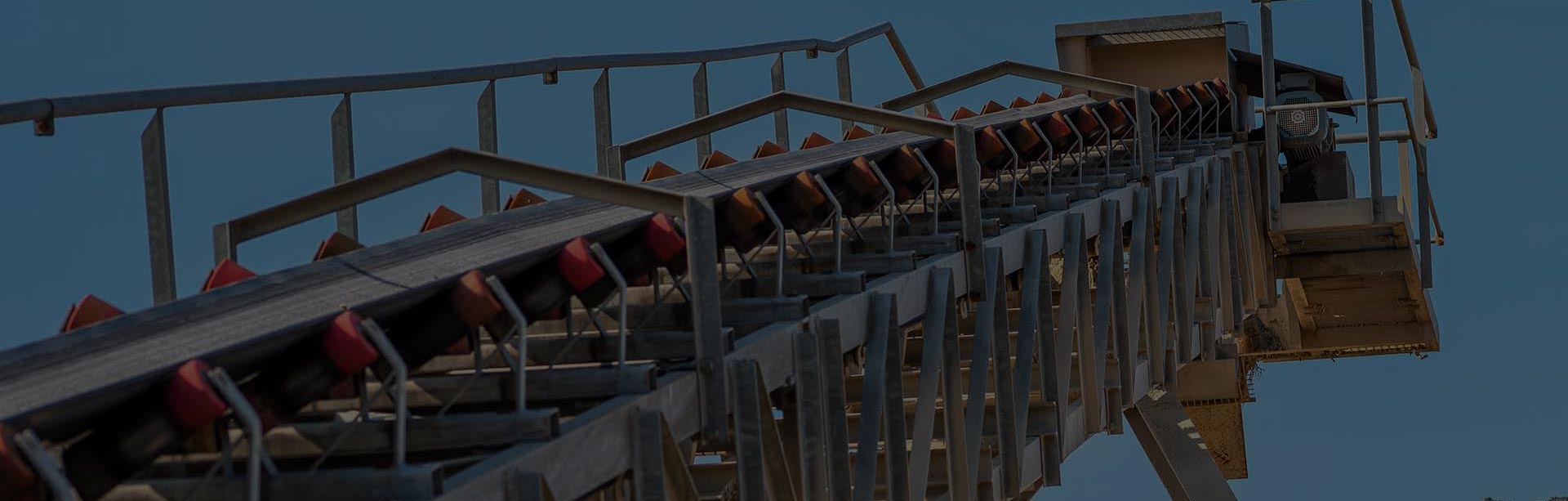
Dans la fabrication moderne de rouleaux de convoyeur, l'efficacité n'est plus définie uniquement par la vitesse de coupe ou la sortie de la machine Au lieu de cela, le facteur de performance réel réside dans la cohérence de l'usinage, en particulier lors de la production d'arbres de rouleaux de convoyeur qui doivent répondre à des exigences strictes d'alignement et de précision dimensionnelle.
L'un des processus les plus critiques de cette chaîne de production est le fraisage à plat à double extrémité des arbres de rouleaux. Toute déviation de planéité, de symétrie ou de précision dimensionnelle peut affecter directement la stabilité de l'assemblage des rouleaux, l'alignement des roulements et les performances du convoyeur à long terme.
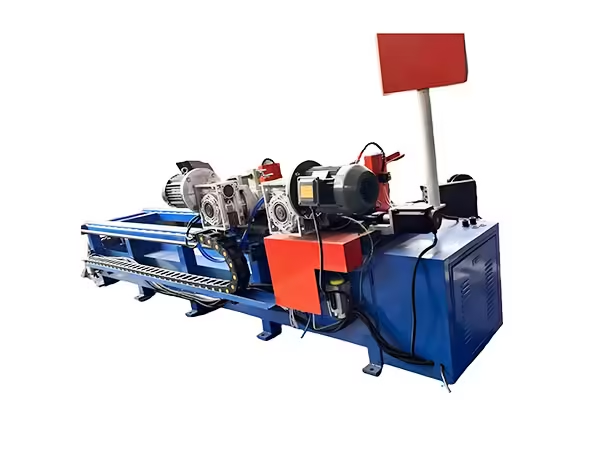
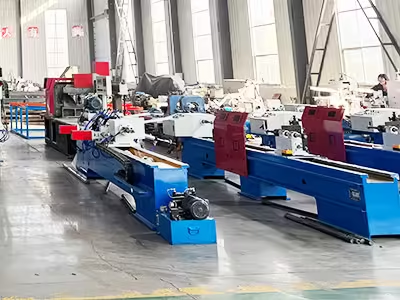
C'est là que l'arbre à rouleaux de convoyeur automatique double extrémité à travers la fraiseuse plate devient essentiel Il est conçu pour assurer les deux extrémités de l'arbre sont traitées simultanément avec une grande précision, améliorant la cohérence et réduisant considérablement les erreurs d'usinage manuel.
Dans cet article, vous apprendrez comment cette machine améliore l'efficacité de la production, pourquoi un fraiseuse double extrémité est essentiel pour la fabrication de rouleaux de convoyeur et pour la manière dont l’automatisation remodèle les lignes de traitement d’arbres modernes.
Table des matières
Pourquoi la précision de l’arbre à rouleaux du convoyeur compte plus que vous ne le pensez
Dans les systèmes de convoyeurs, les arbres ne sont pas seulement des composants structurels, ce sont des noyaux d'alignement.
Même des erreurs d'usinage mineures peuvent conduire à ce qui suit
- Désalignement du roulement
- Rotation inégale du rouleau
- Augmentation des vibrations dans les systèmes de convoyeurs
- Usure prématurée du joint et du boîtier
- Durée de vie réduite du système
Selon les normes de fabrication mécanique référencées dans les ressources de génie industriel telles que (, la cohérence dimensionnelle dans les arbres rotatifs est essentielle pour la stabilité mécanique à long terme).
Dans la production de rouleaux de convoyeur, la précision de l'arbre détermine directement la fiabilité du produit final.
Ce qui différencie le fraisage à double extrémité de l’usinage par arbre traditionnel
Les méthodes traditionnelles d’usinage des arbres traitent généralement une extrémité à la fois, nécessitant plusieurs configurations et repositionnements.
Cela introduit plusieurs risques :
- Écart de positionnement entre les opérations
- Planéité inégale de la surface
- Participation accrue au travail
- Consistance de production inférieure
En revanche, une fraiseuse à double extrémité traite les deux extrémités simultanément dans une seule configuration.
Cela garantit:
- Symétrie parfaite entre les deux extrémités de l'arbre
- Réduction des erreurs de positionnement cumulées
- Répétabilité plus élevée dans la production de masse
- Temps de cycle plus rapide par arbre
Ceci est particulièrement important dans les lignes de production de rouleaux convoyeurs où des milliers d'arbres doivent conserver une géométrie identique.
Comment le fraisage automatique améliore l'efficacité de fabrication des rouleaux de convoyeur
L'automatisation ne consiste pas seulement à réduire le travail manuel, mais également à stabiliser la qualité de la production.
La fraiseuse automatique à double extrémité à arbre de rouleau de convoyage prévoit ce qui suit
- Fonctionnement contrôlé par PLC pour la stabilité du processus
- Système d'alimentation automatique pour la production continue
- Serrage hydraulique ou mécanique pour un positionnement de précision
- Usinage synchronisé à double extrémité pour des résultats uniformes
Les études d'automatisation industrielle référencées dans les informations sur la fabrication montrent que les systèmes d'usinage automatisés réduisent considérablement la variation dimensionnelle dans les environnements de production de masse.
Rôle du fraisage des arbres dans les lignes de production de rouleaux de convoyeur
Pour comprendre son importance, il faut voir où il s'inscrit dans la chaîne de production :
- Préparation de tuyaux en acier
- Coupe et alignement des arbres
- Fraisage double extrémité (cette étape machine)
- Ensemble de boîtier de roulement
- Soudage de la coque du rouleau
- Installation du système d'étanchéité
- Essais d'assemblage final
Cette étape d'usinage garantit que chaque arbre entrant dans l'assemblage répond à des normes géométriques strictes.
Vous pouvez explorer les composants de convoyeur associés ici :
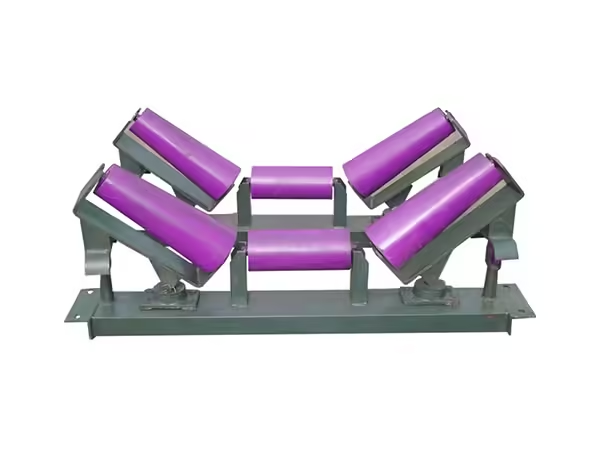
- Système de jeu de rouleaux de convoyeur →
- Rouleaux de convoyage robustes →
- Fendeurs de bandes transporteuses →
Insight technique : pourquoi la symétrie dans les extrémités des arbres est critique
Un arbre de rouleau transporteur doit conserver une symétrie parfaite car : X est un arbre de rouleau transporteur qui est un arbre de rouleau
- Les roulements nécessitent une répartition égale de la charge
- Un désalignement provoque une usure inégale
- Les vibrations augmentent lors d'une rotation à grande vitesse
- Les performances du joint dépendent d'une géométrie d'axe stable
Même un petit écart entre les extrémités des arbres peut se multiplier entre les systèmes de convoyeurs, en particulier dans les lignes de manutention longue distance.
Une fraiseuse à double extrémité élimine ce risque en assurant l'usinage des deux extrémités dans des conditions identiques en un seul cycle.
Scénario de production réel : ligne de fabrication d'arbres à rouleaux de convoyeur
Dans une installation typique de fabrication de rouleaux de convoyage, l'usinage incohérent des arbres entraîne souvent
- Retards d'assemblage dus à des retouches
- Augmentation du taux de ferraille
- Problèmes de port d'inadaptés
- Vibration du rouleau pendant les tests
Après avoir introduit les systèmes de fraisage automatique à double extrémité, la production change considérablement :
- La cohérence de l'arbre s'améliore dans les lots
- Les erreurs de ligne d'assemblage diminuent
- La rotation des rouleaux devient plus douce
- Les taux de retravail baissent sensiblement
- Le flux de production global devient plus stable
L’amélioration la plus importante n’est pas seulement la normalisation rapide.
Pourquoi l'automatisation remodèle la production de rouleaux de convoyeur
La fabrication moderne se déplace vers l'automatisation en raison de
- Demande d'une précision plus élevée
- Exigences accrues en volume de production
- Nécessité d'une erreur humaine réduite
- Normalisation dans l'ensemble des chaînes d'approvisionnement mondiales
L'automatisation garantit que chaque arbre répond à des paramètres d'usinage identiques, quel que soit le volume de production.
Cette tendance est largement discutée dans les communautés de fabrication industrielle et les forums d'ingénierie tels que. .
Principaux avantages techniques des fraiseuses à double extrémité
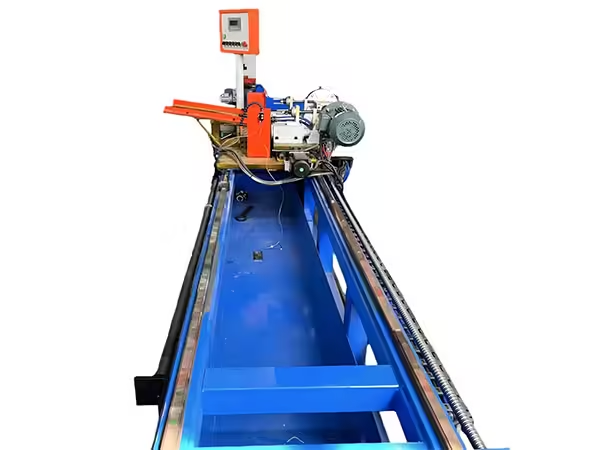
Lors de l'évaluation de ce type de fraiseuse à double extrémité, les principaux avantages techniques comprennent notamment
- Usinage synchrone à double extrémité
- Précision de positionnement de répétition élevée
- Serrage hydraulique ou pneumatique stable
- Système de contrôle basé sur PLC
- Temps de cycle d'usinage réduit
- Amélioration de la consistance de la planéité de la surface
Ces caractéristiques améliorent collectivement l'efficacité de la chaîne de production et l'uniformité du produit.
Considérations d'installation et d'exploitation
Pour assurer une performance optimale de la fraiseuse, il convient de
- Assurer une installation stable de la fondation
- Maintenir la stabilité de la pression du système hydraulique
- Alignement du calibrage avant la production
- Utilisez des dimensions de matière première cohérentes
- Effectuer une inspection périodique des outils
Une configuration appropriée garantit une cohérence d’usinage à long terme.
Stratégie de maintenance pour la stabilité des machines à long terme
Même les systèmes automatisés nécessitent une maintenance structurée :
- Lubrifiez régulièrement les composants mobiles
- Inspectez les outils de coupe pour les porter
- Vérifier les performances du système hydraulique
- Surveiller les signaux du système PLC
- Nettoyer l'accumulation de résidus d'usinage
La maintenance préventive assure une efficacité de production continue.
Valeur industrielle : pourquoi cette machine améliore le retour sur investissement
Du point de vue de l'ingénierie de production, cette machine améliore le retour sur investissement en :
- Réduction des erreurs d'usinage
- Augmentation de la vitesse de production
- Réduire la dépendance au travail
- Améliorer la cohérence des produits
- Réduire les taux de ferraille et de reprise
Dans la fabrication de rouleaux de convoyage, la cohérence est directement liée à la fiabilité du système en aval.
Réflexions finales
L'arbre à rouleaux de convoyeur automatique double extrémité à travers une fraiseuse plate n'est pas seulement un outil d'usinage est un système de cohérence de production En assurant un usinage symétrique et de haute précision des deux extrémités d'arbre en un seul processus, il élimine la variabilité et renforce la fondation de la fabrication des rouleaux de convoyeur.
FAQ
Qu'est-ce qu'un arbre de rouleau de convoyeur automatique double extrémité à travers la fraiseuse plate utilisé pour ?
Il est utilisé pour usiner simultanément les deux extrémités des arbres de rouleaux de convoyeur pour une précision et une symétrie élevées.
Pourquoi le fraisage à arbre est-il important dans les rouleaux de convoyeur
Parce que la précision de l'arbre affecte directement l'alignement des roulements et.
L'automatisation améliore-t-elle la précision
Oui, l'automatisation réduit l'erreur humaine et améliore la cohérence de la production de masse.
Cet arbre de rouleau de convoyeur automatique à double extrémité traversant une fraiseuse plate peut-il être utilisé pour une production en grand volume ?
Oui, il est spécialement conçu pour les environnements de production en continu et par lots.
Qu'est-ce qui cause des erreurs d
Les causes courantes incluent le désalignement, le repositionnement manuel et le serrage incohérent.
Comment améliore-t-il les performances du système de convoy
En assurant une qualité uniforme de l'arbre du rouleau, il améliore la stabilité globale du convoyeur et réduit les vibrations.
 French
  English
  Spanish