
Table of Contents
In material handling systems, conveyor transfer rollers are essential components that ensure smooth, reliable, and efficient operation. These rollers are specifically designed to support and guide conveyor belts, reducing wear and tear while protecting both the belt and conveyed materials. By understanding the types, benefits, and proper usage of conveyor transfer rollers, you can significantly enhance the performance and longevity of your conveyor system.
What Are Conveyor Transfer Rollers and How They Work
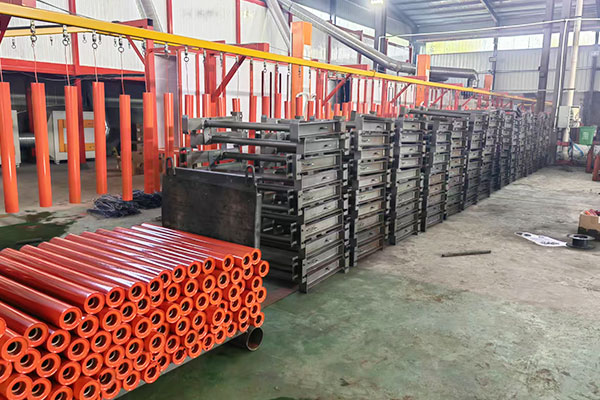
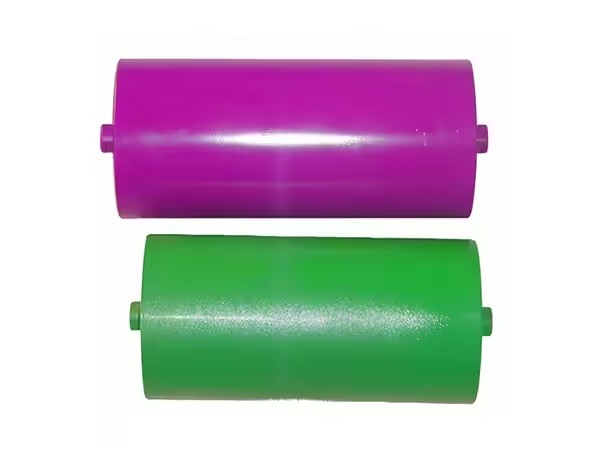
Conveyor transfer rollers are cylindrical components installed beneath conveyor belts to support the weight of materials during transfer points. They maintain belt alignment, absorb impact, and prevent sagging, which can lead to belt damage. Their simple yet effective design allows for continuous rotation, minimizing friction and enabling smooth material flow.
The working principle is straightforward: the roller rotates as the conveyor belt moves over it, distributing the load evenly across the belt. Bearings inside the rollers facilitate this rotation, ensuring minimal resistance and extended operational life.
Types of Conveyor Transfer Rollers
There are several types of conveyor transfer rollers, each designed for specific applications:
Standard Transfer Rollers
Used in most conveyor systems for general material support, available in various diameters and lengths.
Impact Transfer Rollers
Designed for heavy materials or high-impact zones, these rollers absorb shock to protect the belt.
Adjustable and Fixed Rollers
Adjustable rollers allow fine-tuning for belt alignment, while fixed rollers provide consistent support in stable sections.
The following table summarizes common types and specifications:
| Roller Type | Diameter (mm) | Length (mm) | Bearing Type | Typical Application |
|---|---|---|---|---|
| Standard | 76, 89, 108 | 180–2000 | Deep Groove Ball | General conveyors |
| Impact | 108, 133, 159 | 300–2200 | Spherical Roller | High-impact transfer points |
| Adjustable | 89, 108 | 180–2000 | Deep Groove Ball | Belt alignment zones |
| Fixed | 76, 89, 108 | 200–2500 | Deep Groove Ball | Stable conveyor sections |
This data is based on industry standards for conveyor roller manufacturing and typical applications in material handling systems.
Key Benefits of Using Conveyor Transfer Rollers
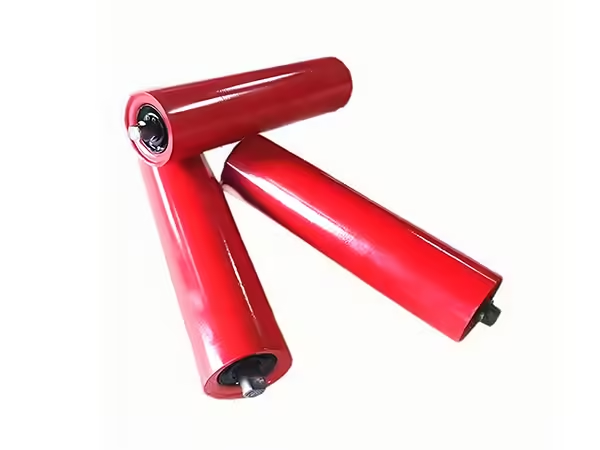
Using high-quality conveyor transfer rollers offers multiple advantages:
- Reducing Belt Wear and Damage: By absorbing impact and maintaining proper alignment, rollers extend belt life. Studies by the Material Handling Industry Research Group indicate properly installed transfer rollers can reduce belt wear by up to 30%.
- Improving Efficiency: Smooth rotation of rollers minimizes friction and energy consumption, increasing system throughput.
- Minimizing Downtime: Durable rollers with reliable bearings decrease the frequency of maintenance and unexpected shutdowns.
- Enhancing Safety: Proper support of materials prevents spillage and reduces risks to operators.
Applications Across Industries
Conveyor transfer rollers are used across a wide range of industries:
- Mining and Bulk Material Handling: Protect belts from heavy or abrasive materials.
- Logistics and Warehousing: Ensure smooth handling of packages and pallets.
- Food and Beverage Processing: Support light-to-medium loads while maintaining hygiene standards.
- Chemical Plants and Harsh Environments: Corrosion-resistant rollers withstand aggressive substances and extreme conditions.
How to Select the Right Conveyor Transfer Rollers
Choosing the correct rollers requires careful consideration:
- Roller Diameter and Length: Must match conveyor width and load capacity.
- Bearing Type: Deep groove ball bearings for standard loads, spherical roller bearings for heavy or impact zones.
- Material: Steel for durability, coated or stainless for corrosion resistance.
- System Compatibility: Rollers should support the belt speed and material weight without causing sag or misalignment.
Installation and Maintenance Best Practices
Proper installation and maintenance are critical:
- Ensure correct spacing between rollers according to belt width.
- Inspect bearings regularly and replace if worn or noisy.
- Lubricate bearings as recommended to extend life.
- Keep rollers and surrounding areas free from debris to prevent damage.
Common Problems and Troubleshooting
Even with quality rollers, issues can occur:
- Belt Misalignment: Often caused by uneven roller placement or worn bearings.
- Noise and Vibration: Indicative of damaged bearings or improper mounting.
- Excessive Wear: May result from high loads or inadequate roller spacing.
Regular inspections and proper roller selection can prevent these problems, ensuring consistent operation.
Conveyor Transfer Rollers vs Other Rollers
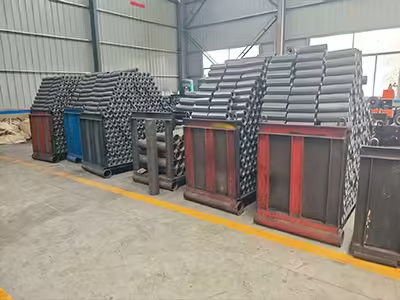
It is useful to compare transfer rollers with other types:
- Troughing Rollers: Support belts in a V-shape, mainly for bulk materials.
- Impact Rollers: Absorb shock at loading points.
- Idler Rollers: Standard rollers for flat belt support.
Transfer rollers are ideal for zones where belt protection and smooth material transfer are crucial, offering a balance of durability and cost-efficiency.
Future Trends and Innovations
- Development of corrosion-resistant coatings and high-strength materials.
- Integration of sensors for predictive maintenance and real-time monitoring.
- Improvements in energy efficiency and noise reduction for automated systems.
Conclusion
Choosing the right conveyor transfer rollers is essential for optimizing material handling, reducing maintenance costs, and protecting your equipment. Proper selection, installation, and maintenance ensure a reliable and efficient conveyor system that can operate consistently under various conditions.
Need Help Selecting the Right Conveyor Transfer Rollers?
If you’re unsure which conveyor transfer rollers are best for your system, our experts at Cangzhou Terok International Trade Co., Ltd. are ready to help. Contact us today for a personalized consultation, and ensure your conveyor system operates efficiently, safely, and reliably. Don’t wait—reach out now to maximize your operational productivity and protect your equipment.
FAQ
How often should conveyor transfer rollers be replaced?
Replacement depends on load, material, and usage. Inspect rollers every 6–12 months for wear or bearing issues.
Can conveyor transfer rollers handle heavy loads?
Yes, especially impact or high-capacity rollers designed for industrial applications.
What materials are used for conveyor transfer rollers?
Commonly steel, sometimes coated or stainless for corrosive environments.
How do I prevent belt misalignment with transfer rollers?
Ensure proper roller spacing, correct installation, and regular bearing maintenance.
Are there specialized rollers for harsh conditions?
Yes, corrosion-resistant and flame-retardant rollers are available for chemical, mining, or outdoor applications.
 English
  French
  Spanish