

Table of Contents
Introduction
Conveyor rollers are the backbone of any material handling system. Choosing the wrong roller can lead to premature wear, reduced efficiency, and even unexpected downtime. Many industrial operators focus on price or convenience, overlooking critical factors like diameter, length, bearing type, and material quality.
In this guide, we’ll break down the top five mistakes in conveyor roller selection and provide actionable strategies to avoid them. Whether you manage a mining operation, a logistics hub, or a manufacturing facility, understanding these factors can save you time, reduce maintenance costs, and extend the life of your conveyor system.
Mistake 1: Choosing the Wrong Roller Diameter
Pain Point
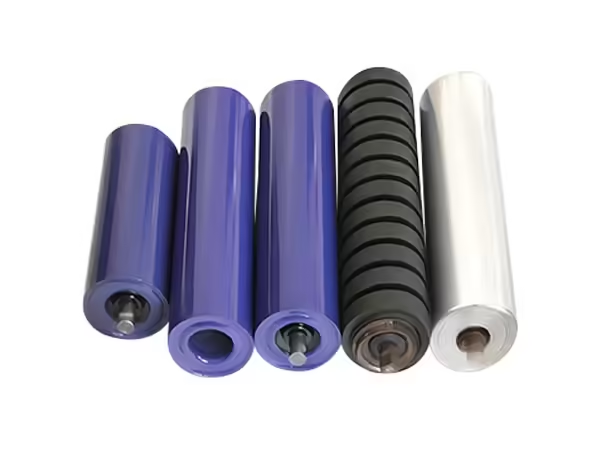
Selecting a roller diameter that doesn’t match your conveyor belt and load requirements can create significant inefficiencies. Too small, and rollers will wear out quickly; too large, and energy consumption increases while increasing stress on the belt.
How to Avoid
- Assess your conveyor system’s belt width and load specifications.
- Choose a diameter that balances load capacity with smooth material flow.
- Consider long-term wear and maintenance schedules.
Industry Insight: Studies from material handling research indicate that mismatched roller diameters can increase energy consumption by up to 15% and shorten roller life by 20% (Source: Material Handling Research Institute, 2023).
Mistake 2: Ignoring Roller Length and Custom Requirements
Pain Point
Incorrect roller length can lead to belt misalignment, uneven load distribution, and excessive wear. Many operators select standard lengths without considering their specific conveyor setup, resulting in operational problems.
How to Avoid
- Measure your conveyor width and spacing requirements carefully.
- Consider custom lengths for wide belts or specialized applications.
- Ensure compatibility with the conveyor frame to prevent lateral belt movement.
Example: For a φ89 roller, lengths of 180–200 mm might suit a standard conveyor line, while φ219 rollers may need lengths from 2200–2800 mm for heavy-duty industrial lines. Custom sizing can prevent misalignment and reduce maintenance.
Mistake 3: Overlooking Bearing Type and Load Capacity
Pain Point
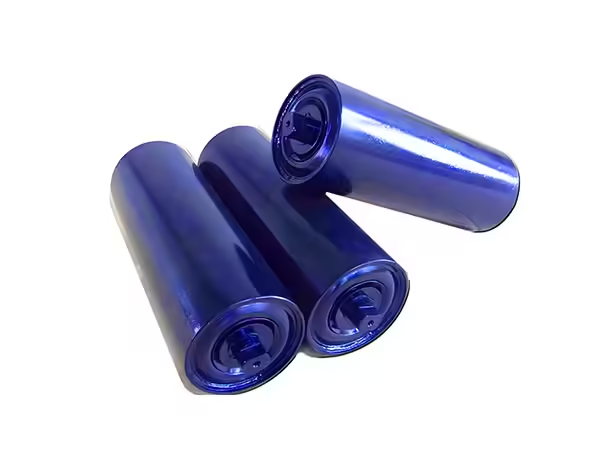
The wrong bearing type or load capacity can lead to frequent breakdowns and increased operational costs. Bearings are critical for smooth rotation and supporting heavy loads, and a mismatch can compromise your entire conveyor system.
How to Avoid
- Match bearing types with roller diameter and expected load. Common types include 204, 205, 305, and 306 series.
- Consider sealed bearings for dust, moisture, or harsh environments.
- Evaluate bearing life relative to operational speed and load cycles.
Expert Tip: Using properly rated bearings can increase conveyor roller lifespan by 25–30%, significantly lowering replacement and maintenance costs.
Mistake 4: Neglecting Environmental and Operational Conditions
Pain Point
Conveyor rollers are exposed to heat, dust, moisture, chemicals, and heavy loads. Ignoring environmental conditions often results in corrosion, premature wear, or unexpected downtime.
How to Avoid
- Choose materials and sealing options suited to your environment (e.g., HDPE, stainless steel, or sealed steel bearings).
- Schedule routine inspections and cleaning.
- Apply protective coatings if operating in corrosive or abrasive environments.
Insight: Rollers operating in dusty or wet conditions without proper sealing fail up to 50% faster than rollers with appropriate protective measures.
Mistake 5: Focusing Only on Cost, Not ROI
Pain Point
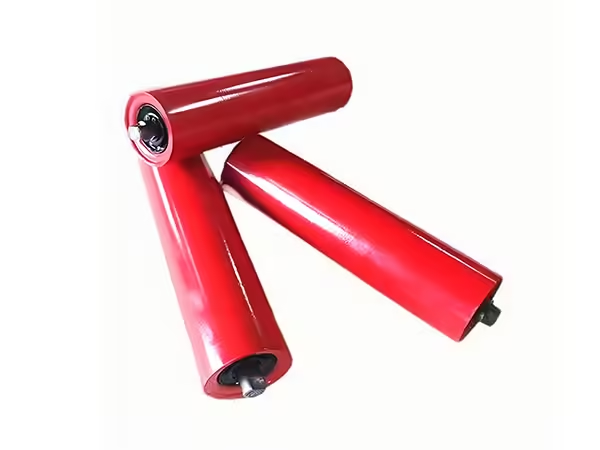
Many procurement teams prioritize the cheapest option, but low-cost rollers often result in higher maintenance, energy costs, and unplanned downtime.
How to Avoid
- Evaluate total cost of ownership (TCO), including maintenance, energy consumption, and replacement frequency.
- Factor in productivity gains and reduced downtime.
- Work with reputable suppliers to ensure reliability and technical support.
Insight: Investing in high-quality conveyor rollers can reduce maintenance costs by 20–30% and improve system uptime, making the initial higher cost a worthwhile investment.
Comparison Table: Key Conveyor Roller Selection Factors
| Factor | Common Mistake | Recommended Approach |
|---|---|---|
| Roller Diameter | Too small or too large | Match belt width and load |
| Roller Length | Ignored or non-standard | Customize for conveyor width |
| Bearing Type | Wrong model or rating | Match load, speed, and environment |
| Material & Sealing | Overlooked | Use HDPE, steel, or sealed bearings |
| Cost Consideration | Focus only on cheap price | Evaluate total cost of ownership and ROI |
Conclusion
Selecting the right conveyor roller is more than just choosing a component — it’s about ensuring the smooth, efficient, and reliable performance of your entire material handling system. A well-selected roller minimizes friction, reduces wear on belts, and keeps your operation running at peak efficiency. By understanding load requirements, material compatibility, and environmental factors, you can avoid the five most common mistakes that lead to costly downtime and maintenance issues.
When you make informed decisions and invest in high-quality conveyor rollers, you not only extend the life of your equipment but also improve operational safety and reduce long-term costs. Ultimately, the right roller choice is an investment in consistency, reliability, and performance — the foundation of a productive conveyor system.
FAQ
What factors should I consider when selecting a conveyor roller?
When choosing a conveyor roller, consider roller diameter, length, bearing type, load capacity, material, and sealing. Proper selection ensures system efficiency, reduces maintenance, and extends roller lifespan.
How do I know if my conveyor rollers are suitable for harsh environments?
Check if the rollers have sealed bearings, corrosion-resistant materials (like HDPE or stainless steel), and adequate load capacity. These features help rollers withstand dust, moisture, and heavy-duty operations.
What is the difference between steel and HDPE conveyor rollers?
Steel rollers are strong and durable for heavy loads, while HDPE rollers offer corrosion resistance, lighter weight, and quieter operation. Choose based on load requirements and environmental conditions.
How often should conveyor rollers be maintained or replaced?
Maintenance frequency depends on usage and environment. Regular inspections every 3–6 months, lubrication if applicable, and cleaning debris can prevent premature wear. Replace rollers when bearings fail or surfaces are damaged.
Can choosing the wrong conveyor roller affect production efficiency?
Yes. Incorrect roller diameter, length, or bearing type can cause belt misalignment, increased friction, and frequent downtime. Selecting the right roller improves throughput, reduces energy consumption, and minimizes maintenance costs.
Need Help Choosing the Right Conveyor Rollers?
At Cangzhou Terok International Trade Co., Ltd., we specialize in high-quality conveyor components tailored to your operational needs. Our experts can guide you through selecting the ideal rollers to enhance system efficiency, reliability, and longevity.
Contact us today for a personalized consultation and ensure your conveyor system operates smoothly and cost-effectively. Don’t wait—reach out to Cangzhou Terok International Trade Co., Ltd. now and take your material handling performance to the next level!
 English
  French
  Spanish