
Table of Contents
Conveyor systems are indispensable in modern material handling—from mining and manufacturing to logistics and ports—yet one component often overlooked by many operators is the conveyor idlers. These seemingly simple sets of rollers play a crucial role in maintaining belt alignment, reducing wear, maximizing uptime, and ultimately keeping your system running smoothly and cost-effectively.
In this comprehensive guide, you’ll gain a deep understanding of conveyor idlers, including their types, how they work, selection criteria, maintenance best practices, real-world examples, and common problems you can solve proactively. By the end of this article, you’ll have practical insights that help you optimize your conveyor performance and slash operational costs.
For detailed engineering background, you can also explore the Introduction to Conveyor Rollers and Idlers article for additional context.
What Are Conveyor Idlers and Why Do They Matter?
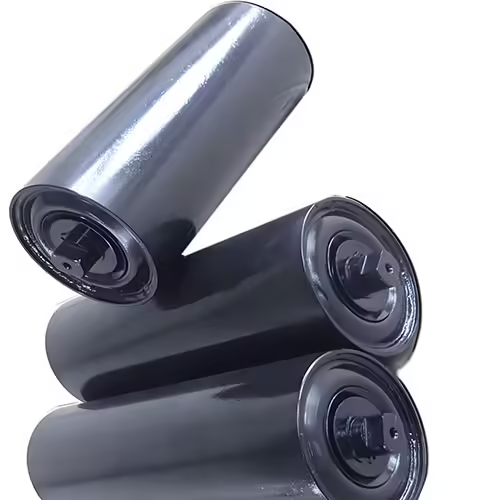
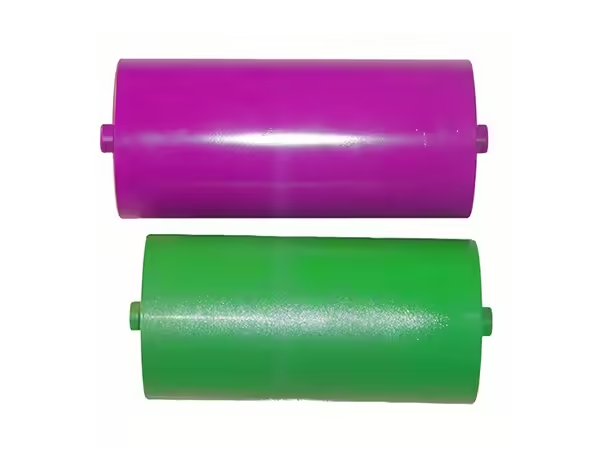
Conveyor idlers are rollers mounted in a frame that support and guide the conveyor belt. They reduce friction, support weight, maintain alignment, and minimize wear. Without idlers, conveyor belts would sag under load, cause material spillage, and lead to premature system failure.
Idlers are used along the length of a conveyor to support the loaded belt and return belt, absorb impact in high-load zones, and help maintain correct belt tracking.
The Conveyor Idler Handbook emphasizes that properly selected idlers can improve system efficiency and reliability by distributing load evenly and reducing friction losses.
How Conveyor Idlers Work
Most idlers consist of rotating rollers mounted on bearings and supported by a frame. They are strategically placed along your conveyor to match belt width and load requirements. The rollers support both the carrying and return sides of the belt.
- Support: Idlers support the weight of the material and belt, preventing sagging.
- Alignment: They guide the belt and prevent lateral drift.
- Friction Reduction: Rollers reduce contact resistance between belt and frame.
- Impact Absorption: Impact idlers cushion heavy loads at key points.
Types of Conveyor Idlers
Choosing the right idler type is a critical step in system design. Here’s a breakdown of the most commonly used idler types and their key functions:
Carrying Idlers
Support the loaded side of the conveyor belt, forming a trough shape to cradle the material and maintain proper belt alignment.
Return Idlers
Support the unloaded belt after material is delivered, preventing belt sag.
Impact Idlers
Designed to absorb shock and protect both the belt and roller when heavy or abrasive materials drop onto the belt.
Transition Idlers
Help the belt transition from flat to troughing shape smoothly, reducing stress and potential belt damage.
Training Idlers
Assist with belt tracking by influencing the belt’s position when misalignment occurs, thus stopping drift before it becomes a problem.
Real-World Case: Improving Conveyor Performance with Idlers
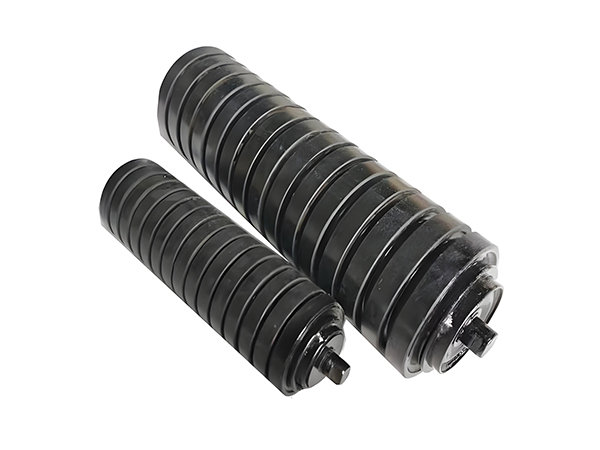
A bulk material handling plant transporting limestone experienced frequent belt misalignment, causing downtime. Engineers replaced generic rollers with a combination of impact idlers at loading points and training idlers at misalignment zones. Within weeks:
- Belt misalignment incidents dropped by over 60%
- Material spillage reduced significantly
- Maintenance costs lowered
This demonstrates the real-world impact of correctly selected idlers.
How to Select the Right Conveyor Idlers
Factors to consider:
- Material Characteristics: Abrasive materials need tougher impact idlers.
- Load Capacity: Heavier loads require larger rollers with robust bearings.
- Belt Speed and Application: High-speed operations demand precision bearings.
- Environmental Conditions: Corrosive or dusty environments need sealed or corrosion-resistant idlers.
- Maintenance Access: Easy access increases uptime.
Conveyor Idler Selection Table
| Idler Type | Application | Best For | Notes |
|---|---|---|---|
| Carrying Idlers | General load support | Bulk materials, packaging lines | 3–5 roller sets typical |
| Return Idlers | Belt return support | All conveyor types | Often flat |
| Impact Idlers | Loading zones | Heavy impact, abrasive material | Shock absorbing |
| Transition Idlers | Trough to flat transitions | Variable belt geometry | Reduces stress |
| Training Idlers | Belt alignment correction | Misalignment-prone installations | Adjusts belt path |
Conveyor Idler Maintenance Best Practices
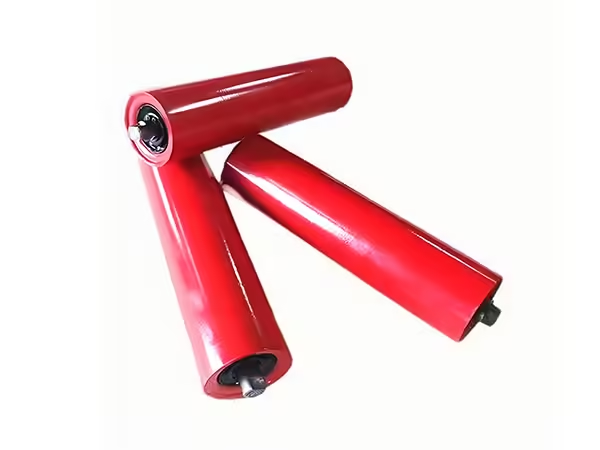
- Regular Inspection: Look for wear, noise, or vibration.
- Bearing Lubrication: Follow proper grease intervals.
- Roller Alignment: Misalignment accelerates belt wear.
- Debris Removal: Clean buildup regularly.
Preventive maintenance can reduce unexpected belt failures by up to 40%.
Common Challenges and Solutions
- Belt Tracking Issues: Correct misaligned idlers.
- Excessive Belt Wear: Adjust spacing or idler type.
- Noise and Vibration: Lubricate and replace worn rollers.
Advanced Considerations: Idler Materials
- Steel Rollers: Strong and durable
- Rubber-Coated Rollers: Reduce noise and slip
- Polyurethane Rollers: Abrasion and chemical resistance
- Composite Rollers: Lightweight and corrosion-resistant
Future Trends in Conveyor Idlers
With automation, conveyor idlers now monitor vibration, temperature, and alignment, allowing predictive maintenance to prevent failures.
Need Help Choosing the Right Conveyor Idlers?
If you’re unsure which conveyor idlers are best for your system, the experts at Cangzhou Terok International Trade Co., Ltd. are here to help. Contact us today for a personalized consultation, and ensure your conveyor system operates efficiently, safely, and reliably. Don’t wait until downtime impacts your operations—reach out now to protect your equipment and optimize your material handling workflow!
FAQ
What are conveyor idlers used for?
They support the belt, guide movement, and ensure load distribution.
How often should idlers be inspected?
Monthly inspections are recommended for high-usage conveyors.
Can idlers prevent belt misalignment?
Yes, strategic use of training idlers corrects drift.
Which idlers are recommended at loading points?
Impact idlers reduce belt damage under heavy loads.
Are different idlers needed for different materials?
Yes, abrasive materials require tougher rollers.
 English
  French
  Spanish