
Pipe cutting machines have become an essential part of modern steel fabrication and industrial production. With automation transforming the way workshops operate, investing in the right pipe cutting machine can dramatically improve efficiency, precision, and overall productivity. In this guide, we will provide an in-depth look at fully automatic round steel pipe cutting machines, including their design, features, applications, maintenance, and how to choose the ideal model for your production needs. This information is based on industry reports and technical research to ensure accuracy and reliability.
Table des matières
Introduction
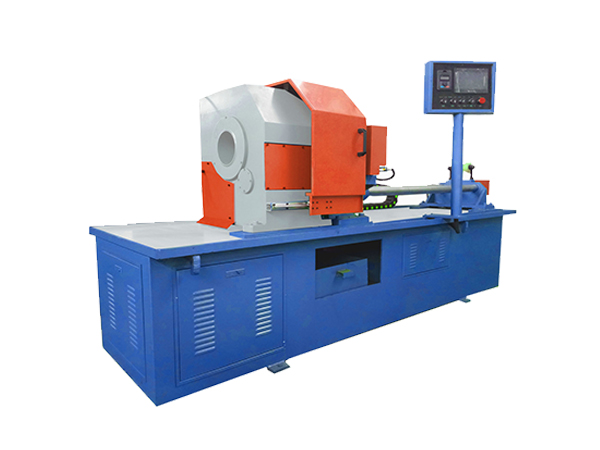
Pipe cutting machines are automated devices designed to cut steel and other metal pipes with high precision and speed. Unlike manual cutting methods, these machines can complete the entire process automatically, including feeding, clamping, and cutting. The result is consistent, high-quality cuts, which is particularly important for workshops producing medium-wall steel pipes on a large scale.
Modern pipe cutting machines are widely used in heavy-duty industrial applications, including roll manufacturing, structural fabrication, and other processes that demand repeatable precision and high throughput. According to industry research, automated pipe cutting reduces production time by up to 40% while maintaining cutting tolerances within 0.1 millimeters, making them highly efficient for continuous production lines.
Features of Fully Automatic Round Steel Pipe Cutting Machines
Fully automatic pipe cutting machines offer several advantages over conventional or semi-automatic systems:
- Automatic feeding, clamping, and cutting, eliminating the need for manual intervention.
- High-precision production suitable for medium-wall steel pipes.
- PLC-controlled feed mechanism with timed cutting and rapid return.
- Repeated positioning accuracy, reducing errors and material waste.
- Rotating tool design while the workpiece remains stationary, increasing cutting speed.
- Safety features including emergency stops, stable clamping, and easy-to-operate controls.
These machines are designed for workshops that require large-scale continuous production without compromising quality or precision.
Pipe Cutting Machines Design and Operational Advantages
One of the key innovations in modern pipe cutting machines is the design where the cutting tool rotates while the workpiece remains stationary. This configuration has several advantages:
- Minimizes vibration and ensures stable, accurate cuts.
- Reduces wear on clamps and feed systems.
- Simplifies the feeding mechanism as pipes pass through a hollow spindle equipped with a fixed material receiving tube.
- Interchangeable tool heads allow processing different pipe diameters with consistent quality.
- Supports both stainless steel and carbide cutting tools for versatile material handling.
The combination of a fixed workpiece and rotating tool ensures high-quality results even under continuous, heavy-duty operation.
Models and Specifications
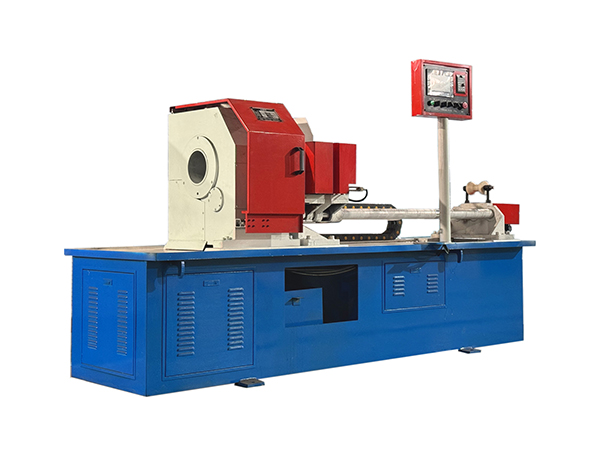
This type of pipe cutting machine typically comes in two models, QZ160 et QZ220, each tailored for different production needs. While both models feature automated feeding, hydraulic clamping, and PLC-controlled cutting, their capacities and performance specifications differ, allowing workshops to select a machine that best matches their production volume and pipe sizes.
Paramètres techniques :
| projet | paramètre |
| modèle | QZ160 |
| Comment ça marche | La pièce est immobile et l'outil tourne |
| Gamme de coupe de tubes | Ф 60-159 mm |
| Épaisseur de coupe | 3 mm-8 mm |
| Puissance du moteur principal | 5,5 kW |
| Vitesse de broche | Régulation de vitesse en continu par conversion de fréquence |
| Méthode de serrage | Serrage hydraulique à centrage automatique |
| Méthode d'alimentation | Servomoteur, vis à billes |
| Longueur d'alimentation | Jetable 20-1200 mm |
| Matériau de l'outil | Couteau en acier blanc, couteau en carbure |
| Alimentation | 0,09/r |
| Vitesse de coupe | About 15 seconds at φ89 × 2.5 |
| Dimensions des machines-outils | 3100 × 1100 × 1460 |
Principaux détails de configuration :
| nom | Caractéristiques | Fabricant |
| Station hydraulique | Kanghao | |
| Système de servocommande | BP410 | Delta de Taïwan |
| contacteur CA | CJX2 | Délixi |
| Bouton | SB2 | Délixi |
| Interrupteurs de proximité | LJ12A3-4 | Shanghai |
| DC6-36V | ||
| Changement de vitesse de broche | 2VF9-3,7 kW | Shanghai |
| transformateur | BK-100 | Délixi |
| Alimentation CC | SD-250-20A | Mingwei |
This table can be customized with exact parameters, including spindle speed, feed rate, and tool type, to give potential buyers a clear comparison of capabilities.
Applications and Suitable Industries
Fully automatic pipe cutting machines are highly versatile and are used in multiple industries:
- Steel pipe manufacturing lines requiring high-volume output.
- Fabrication workshops producing structural components.
- Roll manufacturing processes that demand precision and repeatability.
- Industrial plants that require large-scale continuous production without operator fatigue.
By automating the cutting process, these machines reduce labor costs, increase throughput, and minimize human error, making them essential for workshops seeking high efficiency.
Key Components and Technical Features
Several components ensure the machine performs reliably under heavy-duty operations:
- Hydraulic clamping system secures the pipe during cutting, preventing slippage.
- PLC-controlled feed system allows for precise timing and cutting intervals.
- Rotating tool design enables fast, stable cuts while maintaining the workpiece in place.
- High-rigidity frame and durable components ensure long service life and reduced maintenance.
- Tool heads are interchangeable, allowing adaptation to different pipe diameters and materials.
Maintenance and Operational Best Practices
To maintain high performance and longevity, follow these guidelines:
- Regular lubrication of guide rails and moving parts.
- Cleaning the cutting area and removing debris to prevent interference with the feed system.
- Inspecting tool wear and replacing cutting heads as needed.
- Checking hydraulic and feed systems periodically for leaks or alignment issues.
- Providing operator training to ensure safe and efficient operation.
Industry data shows that workshops implementing structured preventive maintenance can extend machine lifespan by up to 30% while minimizing unexpected downtime.
Cost Considerations and ROI
Investing in a fully automatic pipe cutting machine involves evaluating both upfront costs and long-term benefits:
- Factors influencing price include model, motor power, automation features, and optional upgrades.
- Fully automated systems often yield ROI within 18–24 months due to labor savings, reduced material waste, and higher throughput.
- After-sales support, warranty, and spare parts availability are crucial for sustained operations.
Selecting the right machine ensures that your production line remains efficient and cost-effective over the long term.
How to Choose the Right Pipe Cutting Machine for Your Workshop
When selecting a machine, consider:
- Production volume and pipe diameters required.
- Material types and wall thicknesses.
- Precision and repeatability requirements for your products.
- Availability of technical support, spare parts, and training from the supplier.
Testing machines and requesting demonstrations can help verify performance and ensure the machine meets your operational needs.
Conclusion
Fully automatic pipe cutting machines are indispensable for workshops that require high precision, efficiency, and continuous production of medium-wall steel pipes. By selecting the right model, maintaining the equipment properly, and utilizing its automation features, you can maximize production throughput, reduce material waste, and improve overall operational reliability. Consulting with suppliers about specifications, optional configurations, and technical support ensures you make the most informed investment in your workshop’s productivity.
FAQ
Can this machine handle different pipe diameters and wall thicknesses?
Yes, with interchangeable tool heads, the machine can handle a variety of pipe sizes without compromising precision.
How accurate are the cuts with a stationary workpiece and rotating tool?
This design maintains high positioning accuracy, typically within 0.1 millimeters, ensuring consistent quality.
What types of cutting tools are recommended for various materials?
Stainless steel and carbide cutting tools are recommended depending on material hardness and wall thickness.
Is training required to operate the QZ160 or QZ220 model?
Yes, operators should be trained in PLC programming, tool installation, and safety procedures to maximize efficiency and safety.
 French
  English
  Spanish